Monday, November 09, 2009

cleaning off the spam

Every morning begins with me checking my spam bins. Tedious but true. People who get in touch with my website aren't email experts, and those messages which aren't one-line, misspelt and sent from an unlikely-sounding hotmail address are probably going to be in multi-coloured html and sent to a slightly random address. I exaggerate, but so do my spam filters, and if I don't check the filters, things get lost.

As a person who's written poems and comics about spam, as someone who finds delight in the random collision of words, and has had (over the years) a series of favourite spambots from Nanaimo to Hello/Hi, I'm probably one of the better selections for such a job. But still, the endless run of viagra, violence, fraud, diet, porn and phish grinds me down. It's like taking a dip in humanity's effluent, every morning.

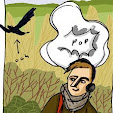
But while I'm fishing the spam sewer for legitimate communication, I take snapshots of the weirder freaks in the stream. Most of them get filed in online communities with names like "spampoetry", but the ones with a side-helping of doodle (like this one) end up in my blogs.

doodle,spam

Tuesday, September 22, 2009

will anybody use a ning?

I went to chat to a young volunteer who was keen to support a local youth council/forum group to make a website yesterday. They'd done some layouts in word, and wanted to know about "what was possible"?

It's very much one of those "how long is a piece of string?" questions. If you want to buy a web address, get some web space, and knock together something using the free templates provided, you just can, assuming you've got no problem with shelling out a few dollars, know a bit of html and are prepared to fiddle with the settings a bit. Setting up a blog and sorting out some photo hosting and tying it into a Facebook Group is even easier and completely free.

In fact, it's so easy, that the world is littered with built-and-abandoned websites, blogs, streams profiles and forums. So I asked them a few questions:

  • What do you need the website for?
  • What are the expectations of the young people?
  • How will you maintain it?

They're going back to the group to ask about the first two (they'd already considered the third, well done!). I've also suggested that they ask around the group to find out:

  • Which social networking site is most widely used and would they like a group set up?
  • Is there a young person with experience of creating websites who could make them a website?
  • Here's what I can do for you, is it what you want?

They were, however, disappointed. They wanted me to recommend a short training course that would teach the young volunteer how to make a website, ideally one run by the volunteer's manager's employer. Then she would make the website.

Maybe I should be running one. I'm sure I wrote one, a few years ago.

But, instead, I suggested that they set up a Ning. I'm in three or four, and I think they ought to fit the needs of a group of young people who want something to be:

  • Separate from the main social networking sites
  • Serious in appearance and use, but easily cutomisable and flexible
  • Friendly to multimedia content
  • Closed, only accessible to a particular group

I don't know if they'll go for it yet, but the last two groups I suggested it to did not, and I'm still not quite sure why not -- or why I don't use my Nings as much as I should, for that matter.

Although it might have something to do with the comment notification, which irritates me every time it turns up; it says there's a comment, but not what it says. It has that in common with Fiends Reunited; it won't tell you what's going on until you're actually on the site. And frankly, that's not very social.

Wednesday, August 26, 2009

risking the wrists

I'm breaking up the office at the moment, in anticipation of the upcoming office move, and in a pile of recycling I came across this doodle drawn at a conference. It's a good reminder, this one; don't stress, the stress makes the wrists worse.

doodle,conference

I've had my brushes with RSI in the past of course; there's hardly a webmonkey from the turn of the century who didn't get it, one way or the other. I didn't get it bad; just some problems in my wrists and shoulders, a bit of pins and needles in a forefinger and thumb. But it's chilling when you get it; I remember being in absolute panic that the only way I knew to earn a living was being chopped off, removed, placed beyond my reach. Of course, the panic makes the pain worse, part of the trick is learning to approach your work in a way which makes it less stressful.

Therefore, I'm trying to take it easy, for this office move. Breath deeply and let it happen. Who knows, maybe it will all go well...

Wednesday, July 15, 2009

consultation and information

I'm clearing my office prior to an upcoming move and I keep on finding bits and bobs from all over the place. This is from the Oxfordshire County Council Consultation Team. It's introducing the the Oxfordshire County Council Consultation Tracker which allows the public to keep in touch with ongoing consultations.

The function of the snakes should I hope be fairly clear: they're reminding you that every consultation needs to have a clear, defined format, purpose, timescale, location, method and audience. Below the snakes I've added three notes:
  • demonstrate and report effects of consultation
  • management of the empowered - empowerment of the powerless
  • increased communications is a normal outcome
The first note is very important for communicators: it's not enough just to listen and make changes based on what you've heard, these changes must then be feed back to the consulted body. The second is a reminder that the groups being consulted are going to have different levels of personal empowerment and expectations, and that these must be managed. In particular, those who feel marginalised and disempowered will need encouragement to participate. The third point is a warning; that a dialogue, once started, is likely to continue.consultation system

Monday, June 15, 2009

how many social networking sites can you think of?

Attended a talk about young people, social networking and contraceptive health, by Barbara Hastings-Asatourian, inventor of Contraception, the Board Game. Lots of interesting stuff, both from her presentation and the reaction from the workers.

One of the things she asked us was how many social networking sites we were aware of. For me, this was a question than ran and ran, throughout the presentation, and I eventually ended up with the list below:

contraception,young people,social networking,meeting notes

Pretty scary stuff. In a world with so many social networks, how can messages like safer sex penetrate successfully?

This second page has some of my ideas, but I probably have to interpret:

social networking,young people,contraception

Not sure of the significance of the woman on wheels? Let me elucidate:
  1. Select a few big services and link up your service/message across them. Who's on the page? Blogger, Twitter, Facebook, Myspace -- Bebo should be there, too.
  2. Use these services to network and make connections with other people working in the same area (either geographically or a topic area).
  3. Join groups, post links, create stuff and generally use your social networks socially.
  4. Targeted advertising on Facebook -- probably worth a try.
  5. Don't put large amounts of resources into one thing; the internet is fickle.
During the session, Barbara encouraged staff to share their anxieties about social networking, always useful, and a lot of the regular anxieties you always see turned up; privacy, timewasting, social/work blurring, alienation, potential for abuse.

There was also a staff member who was more forthright about the value of social networking and online communication in general (including email!) "People aren't socialising properly, they're not learning the skills to talk face to face any more, they're just talking online and that's not real communication, it's all happening in their head. They're just sitting behind screens, tapping away, what's that doing to them, mentally and physically?"

An interesting question. I didn't answer during the session, though I had to bite my tongue hard not to; I remember my first time, on telnet, talking to people in America. It was amazing, and it didn't replace offline communication, it enabled it. It made it better, and broader and less parochial. For the first time I felt like a world citizen, even if only in a small way, in a small out-of-the-way part of the world. But, OK, what has it done to me?
  1. Enabled regular contact with a broader and larger group of people
  2. Created social contacts outside my immediate geographic and social area
  3. Allowed me to hold onto friends I would otherwise have fallen out of touch with
  4. Enabled me to sample broader sets of information and advice
  5. Made it possible for me to revisit/rediscover/run away from friendships from the past
  6. Made me a more flexible and thoughtful friend
  7. Let me find out about far more things than I would have done otherwise
  8. Added a new dimension to existing friendships
  9. Helped me keep in touch with family members
  10. Taught me new and interesting ways of socialising
Physically? I'm average.

Tuesday, May 12, 2009

twitter promoted to standard list

There are a bunch of websites I talk about to people who are running things like local youth projects, clubs, young people's centres, and so on. It's not a long list, because all these people are very busy either running work with young people IRL, or in the back room doing admin.

But is a useful list, because a Social Networking presence is both a point of contact and a way of promoting your work; engagement and participation, if you're lucky. It's less work and more fun than running your own website, and young people are often already there, on the look out for new contacts and things to do.

These websites used to be as follows:
  • Myspace - the choice for young people's music projects, art, creative
  • Facebook - for youth parliament, volunteering, young campaigners and sport (seniors)
  • Bebo - good for health and social groups and sport (juniors)
These aren't hard and fast divisions, of course. There are some big campaigns on Bebo like It doesn't have to happen (knife crime), and there are lots of major, minor and local health providers on Facebook (like the Oxford Chlamydia Screening Project), and there's plenty more than music on myspace (the British Youth Council, for example). All the social networks have the tools to post tunes, picture, updates and so on, and all allow graded privacy, so you can let some people in, but not others. Often the only really key question is what do you use, and what do your young people use?

Which led me to someone coming in for this chat, and starting by saying, "What about Twitter?" Received wisdom says Twitter is not popular with the right age group, not a good way of forming groups, and not a good way of disseminating information (as the updates are too short). Or had everything changed again? I went off to check.

Short answer; it's changed a bit. The age distribution has crawled down a little, and the emerging conventions for linking and topic threading have made it a more useful communications channel. And I've made myself a work Twitter in anticipation of it changing some more, and so I can demonstrate Twitter safely to colleagues.

However, as far as advising workers goes, I'll be sticking with saying (much as I do for blogs, in fact) , don't do it unless it's something you would do anyway. At the moment there's just not enough value added -- or enough of your local young people there to reach out to.

Sunday, April 26, 2009

chasing accessibility

Part of the redesign work at the moment is improving accessibility. Not in the sense of making things sound comprehensible to as screen-reader or having adjustable type size; although that sort of thing is certainly on the cards, I'm expecting that to come in through design. My concern is mostly with content, and with making it more accessible to all.

To this end, I had a meeting with a specialist who helps young people with delayed language or learning difficulties access information. Very interesting. I was expecting that she would be producing translated materials, may even have some I could adapt. That wasn't the case, as the group of young people she supports has issues so diverse that each one needs an individual approach.

However, she explained, there are concepts which everyone can use, to make information more accessible to all:
  • Cut up information into single concepts
  • Step through each concept bit by bit
  • Use subheadings to divide up information
  • Highlight key words
  • Use one sentence to say one thing
  • Use active sentences and short, unambiguous words
  • Use explanatory images, not decorative images
  • Keep things clean and clear, without additional, distracting content
  • Use CAPTIONED video
... a very useful starting point -- one that suggests perhaps a "simple view" style sheet? We'll have to see.

In the meantime, I obviously went off researching websites which provided good free information resources. for young people with LDD. Mostly, I just found people selling packs, but I did turn up this: Songs for Your Body presents Personal, Social and Health Education for Young People with Learning Disabilities through the medium of catchy songs!