Friday, December 02, 2022

the world of not being able to finish anything

We were down the pub this week talking about being in the middle of micro-sub-divisions of technical tasks. Quality assurance, error testing, version control. Passing chunks of developing digital infrastructure back and forth without bloating, ballooning or dropping important functions out through suddenly compromised bottoms. Of the peculiar, impossible joy of building on skittish foundations that upgrade and sidegrade and downgrade around you, endlessly.

And then back to work, like you do, and trying to figure out how to break into a useful webinar that you've certainly signed up for and that will be useful because the ideas in the public-private-academic sphere this year will wash up on the operational-functional-design shore next year, or likely sooner.

This combination of booking system and delivery system had been playing nicely last time I used it, but today was just offering a momentary glimpse of a light grey square, vanishing into whitespace. I tried again a few times, like you always do, pavlov-trained by the sometimes-that-works effect.

Then I noticed that someone had rapidly edited the last of the four invitation emails to include a directlink to seminar. Great. I swifted through the hack-run needed to access this particular video conferencing tool from inside secure virtual network and arrived only half a sentence late.

The following day I got a rating email, and mistaking this for being from the organisers, filled it in and submitted it, at which point I was taken to a page on the booking website, where I could fill it in and add a comment, and at the end of this process I was given this message:

Thank you message provided after completing a feedback questionnaire on a popular events website
The rating system was as detached as everything else. Not, I suspect, that you couldn't set it all up to work seamlessly and tidily, but that's not in the bare minimum needed to make it work; and if it was, that would mark a fall-off point, a too-much-bother moment for the person who absolutely, yes, could work out how everything works given will enough and time.

And then, today, back to work, like you do, and signing up for a conference via a terrifying sawn-off, hacked together e-booking system full of more red flags than a rebound date with a problematic ex-partner. Because, you know welcome to the world of not being able to finish 


Tuesday, September 06, 2022

slippery concepts and time displaced interactions

Digital Wellbeing is a slippery concept, but a very useful one. I think. From the physical impact of increasing levels of sedentary and screen-moderated work to the psychological impact of the unbounded online task space we are in a zone now where digital wellbeing is a core self-care skill at every age. 

Digital needs vary throughout lifespan, also. Right now, the pioneers of the ubiquitous online digital space and presence are starting to move into a life stage where they need to define the needs of older people online. This will need a move from a digital deficit model to one of digital enablement, sensory support and less of the constant upchurn of new irrelevant system learning. 

At the other end of the agespan, children online need to move from a behavioural approach defined by fear of online risk to one which embraces online possibilities and asserts digital rights. Children (and teenagers, especially) need space to experiment, learn, construct identity and make mistakes. You don't get to that in a tediously constant risk environment.

For many adults the endlessly spawning nature of online digital administration has created online work, education and home administration spaces of dystopian intensity where tasks proliferate, endlessly and boundlessly. Not least among these task-spawning areas is wellbeing, where bots, apps, tasks, calendars, to-dos, alerts and more all cluster around the increasing task space of maintaining happiness and optimism in a complex modern world.

My digital wellbeing task list includes three social actions for each hundred comments read

I scan the comments section. People are talking about: peace of mind and safety; navigating wellbeing; reducing their use of digital activities to increase their wellbeing; information and relatable sources.

Five useful tips for getting the most out of your course

Interested to see the five useful tips essentially reduce to: self identify, interact, follow, bookmark, record and resist the urge to lurk. The same basic rules of interacting on forums. 

The potential unfamiliar term here, lurking, is a concept that has been around since well before the online social space. Group-created magazines and resources such as APAs (amateur press associations) and Zines (amateur produced magazines) used the term RAEBNC (pronounced ray-b-nik or rayb-nich in conversation) to stand for "Read and Enjoyed but no Comment" for exactly that moment in time when you have completed viewing the information item but have nothing to add. 

In physical space training (I train in both environments) there is a body language equivalent of RAEBNC - eye contact, a nod, a look, it varies student by student. The urge (expressed by some of my fellow trainers and most of my fellow managers) to have everyone "turn on their cameras" during sessions, meetings, etc. may come partly from that need to feel that the information you have shared has landed. 

The Teams/Zoom/etc. thumbsup 👍 is sometimes seen used in this way during group learning or sessions, but feels comparatively vague and unreliable. 

and.... where are you from?

Questions to start a conversation is a core part of online course building, of course. Why have you decided to join us on this course? is a classic up there with Well, what do you do?

Hm. I am procrastinating by doing this course. I actually need to be building an online course. But I don't want it to contribute the heavy exhausting online digital task burden we are all labouring under constantly at the moment. I want it underpinned by principles of digital wellbeing. So I'm starting by gathering ideas about how to do this. 

That probably has covered most of my key learning aims for completing this course, although there is another; I am recovering from illness and building up my speed at both reading and writing. Ideally I ought to be doing this as an exercise, a bit a day. That has not really happened. 

Final question is as ever: How will you use the information you get from this course? Well, the course is linked to my area of work, but this is coming from a very different angle from my usual work task space of social care's preoccupation with digital risk and safeguarding and online child protection. 

This library and information studies approach of providing core information and enabling the individual to construct their own actions and solutions is very crucial in Early Help practice, and a space I hope to develop.

Thursday, August 25, 2022

is there no end to maladaptive helpfulness?

Today I've been partly transferring things from a system where they have been kept in directories to one where the individual files hold metadata. There's a web page tangled up in it and several different versions of versioning. But at least people are agreed on one thing:

We can't go on like this

This is awkward because of course there is no dedicated person resource to put on this. That's normal now. As the joke goes, the person holding the old systems while we are waiting for the new systems to be ready for transfer is never out of work. But at some stage their workloads slide into overflow, and then they really need another system to help them manage the unmanageable build-up of systems. A system system, if you like. Which I probably won't? But one thing is certain: 

There are too many wizards playing with my expectations

Never mind though, because there are a whole raft of wellfullness and mindbeing tasks to perform to keep my panic on the even side of my keel. Some of them can be turned off, others are easier to simply live with. My CBT app, for example, stopped being helpful some time ago. But I find myself feeling awkward about turning it off. I know in the abstract that it's just a set of decision trees that frequently repeat, a non-intelligent-conversational-generator if you like. But it still feels like an inappropriately harsh rejection, to delete. But I probably will. Hm, tomorrow.

can I get to open window zero?

So here I am, frantically closing windows because the working day ended about an hour and twenty minutes ago.  I have too many windows. Too many tasks. Just one more thing. But then there always comes the point at which the working day meets a vanishing point even though the tasks won't, couldn't, wouldn't, and maybe even shouldn't.

References:
XKCD Standards - Print out this comic giant size and tape it to the table under your brainstorm.
Wikipedia's System of Systems page - Currently, systems of systems is a critical research discipline for which frames of reference, thought processes, quantitative analysis, tools, and design methods are incomplete.
Download Woebot App  - Life changes, and so do we, with the help of a non-intelligent database-driven interaction toy
VANISHING POINT: The Curation and Preservation of Virtual Reality - A lecture from the Digital Preservation Coalition at St Martin's College, with lunch and refreshments. Past event, you missed it.

Sunday, December 05, 2021

a world of procedurally generated social contact and AI created content

Happy birthday to me. July 24 of this year, a constructed social network centred around a fictional researcher spread... well, it's hard to say what, exactly.  

But coordinated inauthentic behaviour occurred. 

Muddled, semi-automated activity. Feels like a future. One unasked for. Emergent.

[Infill entry: during this time I was too ill to post, and these are based on sparse notes]


Friday, July 02, 2021

a gentle rain of overgrown hedges, friendly cats and pot plants left by garden gates

Each missive starts with the awkward statement: I am still alive. Didn't disappear into the pandemic or my medical disaster or whatever other crises I navigated when my head was in a difficult place. And here I am and I am back and I am just coming off a day of online discussions, a popular videoconferencing software solution re-envisioning us as Brady Bunch heads alongside social chatter on a variety of different channels and devices, time-sliced through my past and present, a world of buzzes and chimes and lines left hanging. This is the future now, and the conversations never stop, that channel just pauses or you drift off, midsenten

Like a lot of people, I did a variety of things during the pandemic lockdown of 2020-21 to reduce social isolation, with variable levels of success:

  • Joined local community messaging boards. This has lead to knowing some of the names of the friendlier local cats, along with more unexpected results like making banana bread for the first time; 
  • Chatted with contacts and colleagues via various work-based closed messaging services;
  • Folded friends, acquaintances and family into various discrete technologically-enabled closed chat groups, with rich multimedia content; and
  • Experimented with leaving a video chat channel open during work hours. That didn't last!
I might have done more, but I got very ill. The illness had a hard impact on my visual cortex, so my eyes are impacted. This left me struggling with some things. Minecraft motion sickness, visual distortion migraines. It also left me dragging through low energy levels, and nervous about communication.

Through all that the various channels have continued to offer a slow steady rain of news and notices. A gentle dusk-dawn chorus of : here is the news. It turns up in the timeline, like a soft keep-in-touch from your surrounding environment.  .

It's shoddy telepathy, but you never really wanted good telepathy. The mental channels are busy enough with your own thoughts. This is more like tide-washed debris caught in a filter; the detritus and flotsam of the noosphere, the dataspace, the information nation.

Monday, July 13, 2020

if in doubt, do an online course on it

My response, when I'm struggling with anything pretty much, is to read a book on it or do a course on it. So when lockdown started to bite, I got stuck into a course on FutureLearn on Covid-19.  It was thrown together fast, of course. Everything is right now. But I figured a quickly thrown-up course would still give me space to think, and maybe also some core concepts to help navigate unknown space.

I've been e-learning for a few years now. Delivered some, written some, done plenty. I was expecting this one to be interesting, but hard work. Most people don't participate in e-learning, they just work through the materials. As someone who learns through dialogue, discussion, I'm always being the annoying chatty one in the comments, often answering myself in a void. I'm aware that lots of learners aren't being silent - they're finding ways to discuss things with a person instead of a computer. I remember the slightly humiliating experience of discovering that other people on my distance learning course had been regularly calling the tutors to discuss things by phone; something I had not even considered, even though we'd been given phone numbers.

That was before lockdown, and before the entire world turned attention starved. The comments under this course were so numerous and fascinating I had to confine myself just a limited number of pages, or risk losing days in them. They were full of personal stories, ideas, reflections, insights. They were thoughtful and constructive. They were from all over the world and from many different experiences and backgrounds. Some were confused, some showed signs of grieving. The responses to these were compassionate, kind and careful. Don't read the comments is a nostrum of the internet now, but this was the opposite of that. It was read the comments, the action is in the comments.

For this reason alone, it was a real privilege to do the course. the content was good, it was very work relevant, lots of good ideas, some clear steers, overview of existing research into effects of quarantine, effects on the micro and macro scale, all that. But it was also an opportunity to be online in a group large enough (or attention starved enough) to comment without fear of social anxiety or overexposure, yet closed enough (or shocked into seriousness enough, or inexperienced with the dominant discourse modes online enough) that the comments weren't a mess of bangs and bashes and actually-you'll-find and oh-my-opinion and shut-up-you-shouldn't-be-talking-noob and oh-I-didn't-realise-honest-push-button-rants, and cruelty-because-I-can-and-to-prove-that-I-can and all of that other dull, tiresome, boring stuff that clogs up the signal, endlessly, depressingly.

Sharing without fear. I'd say it reminds me of the old days on the web, but the old days were only sometimes open and kind. People like to say that it's only since we opened the web up to everyone that so many jerks turned up. Not true, that's just rose-tinted screens. They were here all along. Kind and constructive voices were too, of course. But check the old usenet logs before you categorise the early web as a place of polite conduct. You'll find plenty of people racing to see how low they can go.

The course described the group of people who normally socially support an individual, who protect, help and nurture them, as a "supportive container". This container allowed the individual a space to make mistakes, experiment and explore ideas without being attacked, undermined, or socially (or indeed physically) damaged. It wasn't an uncritically accepting area, it was socially negotiated, and that includes discussion and appropriate challenge. But that challenge started from a position of social support and respect for the individual.

The course described the pandemic as a serious disruption to this "supportive container", particularly those parts of it that were not online, and not in the household. My experience has certainly supported this view.


Friday, June 12, 2020

getting human voices into my working day

One of the things I have noticed about lockdown is the lack of human voices. Of course, I don't live alone, and there are kids and dogs and neighbours shrieking/barking/having fun in the back gardens (I live in a terrace) and workmen and dog-walkers and daily health walkers doing their job and business out front, but it's not the same as someone in your workplace gently discussing a problem five desks away, far enough to be screenable if you need to concentrate, close enough to tune in if you lack interest. Work had a music to it; the undernoise of the city centre (buses, weather, crowds) the intrusive squawks of buskers and vehicle alarms, the soft clatter of blinds, ventilation, machines and the sound of people talking to themselves, concentration humming, foraging for tea and biscuits, chatting, discussing, swearing gently at recalcitrant technology, hmming, aha-ing, tapping, typing and generally making the sound of working.

In its absence, I've struggled to concentrate. At work, when things get too noisy, or the tinnitus shrieks, I use that Youtube Classic, Ten Hours of Pink Noise. At home, that just makes me feel more isolated. So I've taken to listening to work-related seminars and short videos. But everyone overperforms and is too exciting, too groundbreaking, too sincere. I don't belong to the Youtube generation. This pitch and intensity is so needy, I can't do other work while it's going on.

In my quest to find someone calm enough, I turned to the motherlode of mindful narration, Sir David Attenborough. I can't listen to him during the working day, as the subject matter is always too thrilling, but the calming, measured tones approximate the professional sounds I am familiar with. My species' morning chorus, if you like. So I let him talk briefly through an observation or two (Life Stories is good) while I check my morning emails and meeting schedule, pick up yesterday's lists and reminders and sketch out the work of the day.

It has to be audio only, of course. Try to listen to David Attenborough on Youtube and he'll mention something you just have to look at. Don't take my word for this. Try playing this video in a hidden tab. You'll look, I promise.

Friday, May 08, 2020

the joy of random newsletter subscriptions

I've spoken before about my love of municipal building supplies newsletters (fruit of a period of time I shared a name and city with someone in the business who got me onto lots of mailing lists), but for sheer excellent read-this-during-the apocalypse, which-apocalypse?, doesn't-matter-just-pick-one value, nothing beats my newsletter subscription to the the Centre for the Study of Existential Risk (CSER).

I don't know how I got subscribed to them. Maybe I knew someone working there for a while (it's in one of the home town constellation cities) or maybe I saw a news story; maybe I took part in a survey or some online research. I am, after all, apocalypse-interested. In case you're unclear about what they, do, they are an interdisciplinary research centre dedicated to the study and mitigation of existential risks, and in case that is not clear enough for you, they are in the business of the study and mitigation of risks that could lead to human extinction or civilisational collapse.

They're often quite focussed on AI, but this month the CSER newsletter has linked through to a big list of 313 potential non-medical methods for reducing transmission of Covid. Some of these are very bleak:

  • Discourage unnecessary speaking when people are in close contact.
  • Constrain ‘long’ connections between people in different social groups who seldom or rarely interact.
  • Split and separate teams doing key work in case one team gets infected.
  • Design system so doors automatically shut once numbers exceed a given threshold as detected by phone signals.
  • Individuals queue online and are told when their turn is to leave house, office or desk for e.g. doctor’s appointment or lunch.
  • Encourage or enforce walking clockwise around shared spaces.
  • Eat at own desk where possible.
But others are intriguing and imaginative, narrowing in on the CSER's central premise; that the fear of impending apocalypse is a great motivator for creative problem solving.
  • Create convention that different people touch different areas of objects, for example design refuse bins so collectors touch different areas from householders (e.g. centre element of handle red and marked “do not touch” or designed with separate handle)
  • Store items that could be contaminated (e.g. shopping bags) so the one stored longest is taken first.
There are also a few in the can't-believe-this-isn't in-place-already area such as:
  • Encourage or require people to stop spitting in public places.
But lock-down traffic silence means that the sound of people spitting is carrying quite a way, and I can confirm that I have regularly heard people spitting in public places during the pandemic, and I really wish that they wouldn't. We have no "No spitting" signs in the UK as local social convention prohibits spitting in any case, but maybe we need to come up with some wording?

"We appreciate that you would never under normal circumstances consider spitting in public, but should you find yourself in a position where this is impossible and you absolutely have to spit (for example while jogging, or as a result of hayfever) make sure you carry a suitable receptacle and dispose of it in safely, your household rubbish."
Reassuringly, the rest of the CSER newsletter is the same tone as usual; how to make AI "trustworthy", biosecurity issues, alternative food production (algae!) to reduce carbon footprint, antibiotic resistance, and generalist doomsday pathogens.

Sounds intriguing? Sign up here.

Monday, April 06, 2020

she's doesn't mind the lagging it's the sarcasm she don't need

For a bit I was holding on for this message, just for the sheer novelty. But then I got sick of it and started hanging up early. It's the way it seems to be questioning your life choices. How did you end up being the only one on this web call, in an overcrowded room not set up for work, that really needs a thorough clean, especially the bits with black mould on, hmm?


You'll notice I have terrible eye drift there. My vidwindow (a little Max Headroom for you there p-p-p-p pop pickers) is a long way from my cam. What's the solution? Skype eyes:


Every time I catch my eyes flipping to little postage-stamp me I draw them back to the skype eyes. Eye contact when I'm making a point. Stare down the blank cyclops of the cam. Would they work better if they were less cartoony? Would it work better if they were Tilda Swinton's eyes?

It's weird how contemporary Max Headroom still sounds, even though it's just that dude from Orphan Black in a load of prosthetics with an MTV spot playing in the background:


While you're watching your colleagues and family and friends going full block-and-stutter, imagine that you're r-r-r-r-running some semi-wet-ops investigative journalist/sleb/social worker into a handy plot-configuration that will starkly expose the bleak dystopianism of m-m-m-m-modern life. Which, honestly, you probably are.

Sunday, February 23, 2020

in a world where everybody's famous, does that make everyone a legitimate target?

I'm thinking a lot about suicide at the moment. Professionally, not personally, although, as for any emotive issue (and my work is, mostly, emotive issues) there is personal spillover. Very few (if any) people have lives entirely untouched by suicidal thoughts, feelings, impact, loss or report, and I'm certainly not on that list. So we're starting with:

Trigger alert - activate your coping mechanisms 

Like most people touched by suicide, I've created a practical accommodation which embraces the unthinkable and reframes it as something we can work with, help, treat. This idea is very important to me, even though it is entirely challengable, may not reflect other peoples' experiences and may not be entirely backed up by evidence. Technically, the term for this is a "cherished idea", and it's important to understand that cherished ideas attached to emotive issues are a point of vulnerability for the individual. Loss of cherished idea is a dislocating bereavement; challenges to them feel like intense personal attack. Even writing them down is risky. But nevertheless, here is my thought about suicide:
Suicide is a health crisis akin to a stroke or heart attack, where an interruption of normal function (in this case, of emotional self-regulation) creates a brutal deficit that is over corrected and/or corrected in the wrong direction which leads to a further abrupt adjustment, which also fails, and so on, and so forth, until the person's usual capacity for emotional self-regulation is radically incapacitated and becomes completely incapable of sustaining life. If the crisis can be managed, stopped, interrupted, paused or stabilised, this can create a pathway back to good-enough emotional function, and then the underlying factors can be addressed.  
This helps me personally think about suicide analytically, and in a way that won't cause me constant pain. It is a coping mechanism. You may have a different accommodation, or think about suicide differently. Whatever your accommodation is, I am going to be talking about suicide, so use it. you need to make sure that reading about suicide doesn't raise your own suicidality. Use mine, if yours isn't working too well.

Everybody's unhappy nowadays

Let's start by stating the problem. Children are anxious. Children are unhappy. This unhappiness includes suicidality. Some people say social media is to blame, and while the picture is certainly, as the saying goes a bit more complicated than that, mitigating the negative effects of social media seems a sensible enough use of time. I'm on it, lots of people are, and yes, there are other issues, and they are important. But lets concentrate on this one for a moment.

Everyone's a celebrity nowadays

This Guardian article, by well-known anti-social-media polemicist Richard Seymore, caught my eye, but you don't need to read it all, let me skip you to the good bit:
Less well known is that the rate of suicide for celebrities is anything between seven and several thousand times higher than that for the wider population. And now their breakdowns have become riveting social media spectacles, with celebrities often driven over the edge by supposedly outraged followers.
Yet if all of us are now celebrities – or at least all of us on social media – then that cruelty is also masochism. The thrill of the chase is accompanied by the thrill of realising that we are all at risk, all potential targets. Today’s bloodhound is tomorrow’s fox. So the more we extol the virtues we find wanting in others as we take them down on spurious grounds, from Natalie Wynn to Jameela Jamil, the more we are gleefully setting ourselves up for the same fall.
This idea, of everyone being a celebrity nowadays, is a fresh spin on Warhol's famous proclamation; "In the future, everyone will be famous for fifteen minutes." I remember, steeped in the DIY culture of the mid-90s, with its widespread (and quickly shed, should any actual fame come along) rejection of fame-culture and mainstream success, thinking: what rubbish, no: in the future everyone will be famous for fifty people.

The expanded social group

Being famous for fifty people is kind of cosy and nice. You can throw out the difficult ones. You can remember everyone's names. They are close enough to friend that they make you smile, and you can smooth difficulties. But fast forward five years and I was already wrangling 200+ contacts on one of the proto-social-networks, the ones that turn up in the histories of the early web. They weren't the easy list of fifty fans, either; there were friends who didn't like my work; fans who weren't my friends; interesting strangers, people I admired, people who admired me; friends of friends who might become friends; people I'd shared projects, crises, workplaces, interests with... and of course now even that many people seems like not really enough. With the advent of social media, now it's more like everyone is famous for 500 people, and our cosy house party has suddenly become a party large enough to require professional planning and staff.

We all need an entourage 

Which brings me to the obvious next point. If everyone really is marginally famous nowadays - Z-1 list, if you like - then what actual celebrities do in order to avoid falling into the various traps of of the over-scrutinised life (substance misuse, nervous breakdown, crippling anxiety, eating disorders, suicide, etc. and oh what a familiar list that is) could perhaps be applied on an individual level. For example:
  • Bouncers, bodyguards, muscle, security  - These individuals (or attitudes) step between you and the slings and arrows of your over-enthused public. They deflect the eggs, mop up the milkshakes, report the stalkers and have firm discussions about what isn't OK, which is pretty much everything that makes you uncomfortable. Move along now.
  • PAs, private secretaries, relations managers, schedulers - These are the ones who guard your time. They make sure that your you time is in place and the things that help you gets their due. Those things that won't help you develop or make you happy? They schedule them away and set up auto-replies and shortcuts that mean they won't keep eating time.
  • Personal trainers, masseurs, therapists, nutritionists, private doctors -  This lot keep you on the good drugs and off the bad ones. They help you optimise your fitness, health and looks. They advocate for the needs of your body and mind. They insist on good food, adequate rest and absolutely forbid you to do anything that might unreasonably hurt, harm or disturb.
  • Drivers make sure you get to where you need to go, they help you make it to the things you want to do and escape from the situations you don't want to be in. They listen to you decompress and play you soothing music in a safe space. They lose the paparazzi in Chinatown, pick up some friends for a jolly and find you a Waterloo sunset to watch.
  • Butlers, minders, buddies and Persons Friday - These ones save you from you; they scrape you up off the floor. They suggest that some of your ideas may not be the best choice, for you, right now. They check that when you're on your way to bed, you get there. When you're up or down or stressed they keep an eye or give you space or intervene as needed.
These five types mesh to create a protective cocoon around the public person nowadays. They help you dodge some problems and sort out others. Chances are, if you have a good friend or a partner, or a kid, or whatever, you've probably played some of these roles for them, and felt the virtuous thrill of enabling someone else's social and emotional safety. But a moment of reflection; have other people played these roles for you? Have you played them for yourself?

Entourage issues and how to solve them

Celebrities attract problems entourage members, too, of course. Predatory therapists, black hole charity cases, quack doctors, knife-smile tabloid journalists, I'm-your-friend-honest dealers, high maintenance partners, poison arm candy, and spiky, fragile fame moths who detonate like social grenades. Aspects of celebrity life compress people who may have been reasonable in other contexts into these difficult, risky roles. Your own behaviour probably has a lot of impact on who becomes an invaluable Person Friday and who ends up selling you black thoughts, dodgy investments and heroin. Sometimes these problem entourage members can prove fatal.

So, another moment of reflection. Have you been part of the dark entourage for someone else? Can you recognise those thoughts in yourself?

The limits of learning from celebrities

There are lots of other things that famous people do to cope, of course; they give problematic interviews, become Scientologists, develop dramatic substance misuse issues, get plastic surgery, book themselves into weird clinics, write books etc., but a lot of these solutions are dysfunctional and/or actively risky unless you have a big fat money cushion to fall back onto. The celebrity industry also is a risky space to learn from, littered as it is by dramatic failures and cautionary stories.

But I would argue that in the world where everyone is experiencing some level of fame, then we need to look to the people who have managed that, badly or well, for lessons. Because whether you're famous for seventy year-group "friends" on Instagram, two hundred twitchy tweeters on twitter or five hundred geographically and temporally scattered social contacts on Facebook, you are famous.

So activate your entourage, wrap yourself round in support, fire the bad voices and work that fame.

Monday, February 03, 2020

signs of the times

I'm being softly wrapped around in a digital prompt-space, like overdecorated wrapping paper, or a bunch of gentle hooshers and herders. I don't feel nagged, oddly. I've herded animals myself. I know it's necessary sometimes. Some examples:

  • The Trainline app wants me to earn badges through travelling. Will I collect them all? It seems unlikely!
  • The Puregym app has given me a benchmark badge. They're super-impressed by my commitment to fitness. Good for them!
  • Gardening Express want to give me flowers. If I buy some, I'll get some free. They're pretty tailored to my taste to be honest; rooted 9cm pots of perennial beauty, fancy shrubs, a few exotics. Such a lovely thought.
  • Bandcamp have some fancy vinyl and a new release from a band that doesn't even use the same alphabet as I do. Are interested???? Of course I am.
  • Spotify really, really want me to join their service. It's been getting freer every two weeks as far I can see. And I do probably want to? I do need a social music arranger, after all; Youtube's a bit weird nowadays after all. Nyeh.
  • Petplan are suggesting I train my cat. Brilliant idea, I love training my cat. It's so cute and yet simultaneously pointless. Plus, we get to compete over who loses interest fastest!
  • My health econsult services aren't quite linking. But you can sense them trying! They'll get there I think, and in the meantime I can use a few different health portals as I travel on through my current health grumbles.
I know that some people do feel hassled and hedged by this sort of thing. Am I unusual in my level of sign-up and subscribe? Not to worry though. Butler & Wilson want to show me something shiny, and that sound absolutely worth a magpie glance.

Monday, December 02, 2019

closing multiple dialogue boxes in my sleep

I've been on a lot of websites recently researching all sorts of things, mostly unfamiliar sites, but some I visit far too regularly for the amount of GDPR punishment beating the site is handing out, particularly considering that I tick "yes" to all tracking cookies.

For anyone bristling at that and saying harrumph-glumph-what-about-your-privacy, well, yes. Fair. There was a hilarious column in the Guardian last week where a reader had written in to ask if anything terrible would happen if she accepted cookies.

EVERY SINGLE REPLY read "Never accept cookies!!!!!!!!!!! Here is how not to accept them!!!!!!!!!!!! Your privacy is being STOLEN!!!!!! with an occasional side-helping of "People are all wrong about the internet, and this is why and let me tell you about my book on this very topic, Sheeples". Although of course, it being the Guardian, the grammer was perfect and of naturally there were no actual ALLCAPS and !!!bangs!!! But fortunately I am fluent in middle class and can detect caps and bangs in the mildest and most reasonable of sentences.

Not a single one answered the original question. So yes, on that. I have been mindfully, and in full self-awareness, ticking yes to all cookies since the notifications came in, bar some basic safety behaviours relating to untrustworthy pop-ups and untrusted sites. Nothing has happened at all, and this, I'm afraid, disappoints me.

You see, I had been hoping that clicking yes to these would stop them appearing, all the time, and usually all over things I wanted to look at.

It hasn't. Many sites fail to remember your preferences, and you still continually get assaulted by endless requests, even on one browsing visit.

Plus this has opened a floodgate for other information barriers, like whining requests to turn your adblocker off (mmmm, dear, I would, but your damn adverts keep crashing my browser, turning on my speakers to auto-play talk-radio obnoxious videos, and slowing page load to a reluctant I-can't-squeeze-the-information-through-this-tiny-space-left crawl), demands to sign up to mailing lists I'm already signed up to, and the terrible, terrible robot-chat dialogue boxes.

Frequently I do the browser equivalent of storming out of the shop because the shop assistant wouldn't stop saying things to you in a pointed, are-you-actually-a-shoplifter tone. Leave. Me. Alone. I'm just looking.

You don't have to read all of the above, by the way - this 2018 video sums it up nicely, except a few extra pop-ups have been added since then. You can just watch the videos.


If we carry on at this rate, we'll be spending all of our browsing time in Futurama's accessing the internet sketch, drowned in ads, quasi ads and worse, cookie-shackled into endless cycles of saying, YES, I want to access the information on this page.


It might be bearable, I heard someone say on a popular social networking site that does not bother with such things, if there was an option to type 'f*ck off'' into a dialogue box. 

True that. Like them, I frequently find myself typing 'f*ck off'' into imaginary dialogue boxes in my head, especially when I get to the sixth on one website.

So, Firefox. Could you make us a nice browser extension that does that? Pretty please?

Best make the exact wording customisable, though I guess, as lots of cultures are less sweary than the Brits. 

N.B. Grammatical and spelling errors included for extra authenticity.

Sunday, November 17, 2019

ten thousand photographs

When I got a new camera for a new project which would involve taking a lot of photographs I bought a big memory card. The largest one that seemed sensible, in fact. The camera, however, was but a gussied-up compact. The sort of camera that provokes feelings of puzzlement; for anyone not serious enough to get a proper camera would surely just use their phone. I had my reasons, of course. I needed to take a lot of photos. But at the same time they needed to be snapshots. Not semi-pro flushed up gussied brochure picturelings. They needed to feel real; like a reference shot taken by a location scout, or an image taken by a pre-surveyor, just to show where everything is. They needed to be point and click, point and crunch, point and blur.

Ten thousand shots later, I find I have made a mistake. I plug in the camera as an external drive as normal and cannot see the latest set of photographs. Further investigation finds that the shots are on the camera, but everything above shot 9999 is labelled as shot 9999. Further investigation discovers that under some circumstances windows machines can be left unable to see the data as a result of the 9999 limitation. But this is a pretty rare problem. It doesn't always happen. But it has done, to me, now.

I've dropped the camera a few times, like you do, so that may have had an impact. The memory card is doubtless not the item of purest perfection it was back in its blister pack, thanks to the rigours of heat, humidity and a hard knock pocket life. Both are bits of hardware that deal more in replacement than repair. The computer is due an upgrade, but I found the exact same problem occurring on his more up-to-date sister. And that's me all out of easy fixes.

So now I'm setting up a human system to manage the 9999 limitation without eating up all of my time. But really, what a faff.


Monday, October 21, 2019

access revoked: sleepio one year on

Just over a year since I completed my Sleepio course, my access suddenly expired. You can tell whether you're using something, whether it matters to you. Within the hour I'd emailed them twice, from both registered email addresses. They were prompt in responding - a missing warning email was the culprit, although their logs should have shown them that the account was in active use. But on the other hand, it's supposed to be a four week programme. What am I doing, still using it, twelve months on?

I'd say there's a series of factors:

  • I'm still suffering from insomnia, periodically. It's not so often, but it does still happen.
  • I still feel I should be sleeping more and more restfully than I am
  • Sleepio membership acts as a strategy reminder; remember, you know this and you can do this
  • I'm using it as a useful daily sleep journal, taking impressions of sleep every morning
  • I have a year's worth of quite accurate sleep data, which is sunk effort

I was back online within hours and back on Sleepio the following day, thanks to their excellent customer service. But it got me wondering. Should I be weaning myself off Sleepio? I do a lot of daily diary actions. Do I really need this one?

And then the season started changing, my insomnia started biting, and I needed it again.

Maybe I'll let it go in the new year.

Sunday, October 06, 2019

the leaving work tab-dump and the professional twitter

The professional Twitter @mrsjeremyday might be getting more use than the personal one nowadays. Partly that's the intensification of the middle aged public sector career. You're always either in frantic catch-up or being flung around by outsourcings and restructures, or both, and there is less left over for personal life, even the tiny, interstitial bits of it. Partly it's that, like everyone else, I'm more of a visual communicator nowadays in my personal life, and as a super early-adopter (I started using it back when it was a text-message service) I never got the habit of putting pictures in my tweets.

That's OK for the professional twitter, though, because she has two pretty solid jobs to do. Number one will be familiar to most: the dreaded conference twitter-huddle, the scramble for #hashtags, the quick run-through the half-dozen other profiles tweeting, the little boom as your professional circle expands, and you get another dozen news-threads bringing you the good - or at any rate, novel - stuff. So yes, I'm one of those who suddenly messing up your trending list with an inexplicable acronym periodically.

The other job is maybe a bit more personal. Most working days include a bit of click-around, a bit of research, a bit of checking, reading, discovering. That stuff gets dissolved into the work I'm doing of course, but I also usually don't want to just close all these useful things when the light drops out of the sky and the cleaners turn up with their increasingly futuristic hoovers. Spread the joy. And so the ritual is born of the end of day tab-dump, excerpted fragments and useful diagrams dropped into my twitter stream in a tea-time splurge as I'm trying to leave the office.

Sometimes, the tab-dump allows me to pick up a fresh news perspective on something that has relevance to my work head, but another tto my home head, as I'm sliding between the two. Consider this tweet, for example:
I'd been checking out loot box information to improve our gaming and regulation advice for parents and carers, and had managed to hack through to some actual research. Almost the sweetest meat in this paper was in their limitations section, where they reflected that recruiting survey respondents via Mechanical Turk may have queered their sample. As an online piece-worker myself (I Yougov, which is lower risk and reward than Mechanical Turk, but comes with its own problems - generally a stab of guilt when I discover it commissioned to produce yet another dead cat or dog whistle for a problematic think tank) I keep an eye on the innovations in the area, and I agree with the authors of the paper. They recruited exclusively from optimistic, gambling-prone, system-gamers, and this probably did change their results, although the actual findings from this generator of headlines and policy change were modest, and in essence came down to this; a small number of adolescents are vulnerable to becoming problem gamblers, in line with adults.

Monday, August 26, 2019

into the digital inferno

I have an admission to make; I save up my papers. I save up my long reads especially. So I'm writing about this article digesting a twitter-is-awful book by Richard Seymour days late. And he's talking about one of Mary Beard's twitter scandals, which might have made the news but not in any way that the signal intruded far enough for me to see it, and I'm thinking about Mary and the Troll, and also Anonyjournalist and Troll, and it's all the fault of the Guardian, once described to me by a digital marketing workshop-leader as the single biggest source of high accessible quality content items online, honestly this (stuff) just pouring out of them, constantly, all of the time in tones of such spitting outrage I couldn't even. His point? You don't need to burden the world with more content. Just find a suitable article in the Guardian Archives and use that.

So here I am, doing that, but also adding my 2porth of course, as that is blogger right.

These two stories about trolls tell you pretty much everything about why Trolls exist, why they're engaged with and why they're even approved and tolerated:

Mary and the Troll

Mary was repeatedly targeted by a troll on twitter. Well actually, lots of them, but she picked out one, the worst, the most horrible of all of the trolls. She engaged with him personally and found out a way to make him respond back in a way that inserted information packets into the abuse. With hard work and determination she managed to engage her troll and get him talking to her. Eventually she managed to meet him. They had a satisfying discussion, and (so the story goes) they are still in touch today and she values him as an interesting and helpful friend. The entire internet said to that, Well done Mary, you did really well there.

The Journalist and the Troll

There was once a journalist who wrote online. He was a prominent and sometimes controversial figure and attracted trolls. These did not much bother him; he saw them as part of the job, and did not engage with them. The journalist had a wife. She was an intellectual, and a Jew, and beautiful and had her own career. The journalist was very proud of his wife. One day, one of the trolls started to target his wife. The journalist said that this was part of the job and that she should ignore it. The trolling got worse. The troll found out where she lived and started leaving little hints in the abuse. Eventually things started turning up on her car, on their doorstep. Imaginative, horrible things. The journalist hired a private detective who found out that the troll was the teenage son in a family they knew a little, socially. The detective and the journalist went to visit the family. The parents said: we are not surprised. The journalist and the detective spoke to the boy. He promised to stop. The journalist's wife never went back on the internet. 

These little stories (and it's worth saying both are more complicated than my folk tale digest versions above) roll everything in, from acceptable performances of femininity to the eternal pressure to forgive young men for unforgivable behaviour. But they also place the Troll firmly in its value space; consensus-maintainer, societal attack dog foaming at the throat of the non-conformative, catspaw of the faux-liberal, chaser of dissenting voices out of the media-cultural-normative state.

I'm a Twitter user, personal and professional, but I don't get into fights. It's not my mode, as they say. My original interaction with Social Networking sites wasn't the reality-show flicker of watching social chaos unfurl, but grounded in observation and practicality - organise a party, find my friends in a field, take a field note about bees. This means that a lot of the time, as now, I'm reading people writing about using Twitter and thinking: you're doing it wrong. But, out of the chaos, as ever (hurrah for the internet hive mind), items of information value emerge

time on device

What's your TOD daily? It's something to keep an eye on. And also something to watch out for. I play Candy Crush, which is rotten with bullshit screens that do nothing but keep you in-game for another millisecond, and I don't pay for my scrabble which means it contains a variety of tedious adverts. These both string your TOD - learn your countermeasures.

incentives and choke points

Here's an interesting thing; incentives are obvious, but why do choke-points also motivate? We're the problem-solving ape and want nothing more that a figure-out solution with a sweet reward. A puzzle box with a sweet inside. Trying to motivate yourself? The sweets are great, but don't forget the puzzle box!

soft, nacreous glow

Ah, full fathom five my dear friends lie, those are pixels that were their eyes. I also go into the social net to visit my dead. As we build up the social layers, it becomes a digital underworld, redolent with the distractions of the past. In 1990, just as I was going onto the internet for the very first times, Peter Greenaway and Tom Phillips created A TV Dante, which reimagined that sink into the past, death and silence as a mush of trancey digital animation, phrasal fragments and hyperstimulation, the Orb car-crashed into the back end of an English Degree, and right now I'm playing little fluffy clouds and the TV Dante in my back-tabs, and honestly? You should try this.

mercurial reward zone

It's a nostrum that uncertain rewards keep you returning. But actually, if it's just mercurial and not very rewarding, you don't come back unless there is pleasure in the act of being confused. I was trying to explain this to a friend last week. It didn't go well. But all games designers do this. They make a mercurial reward zone, where people can wander, dizzy and delighted. And it can just keep on applying out - friendships, parties, houses, relationships,  an entire world of giddy delights.

blackpilling - online self abuse

When I cover this in training, I call it self-trolling. Others prefer terms like cyber self-harm. When I saw this article call it blackpilling, I felt he'd missed a nuance. And yes, the black pill is the sucking lie that all is bullshit, blackpilling is the act of airing this socially and none of this is quite the stimulating, rewarding/risky game of sock-puppeting your own troll, except in the broadest sense. But it's useful to see concepts like this emerge, become actualised, and cracked out into online social space, and always welcome to see another axis added into the blue pill/red pill dichotomy.

Final word to Jarvis today; take the time on device that supports you, but watch out for the incentives and choke points as you bathe in the soft nacreous glow of timeless space, because, without blackpilling here, this mercurial reward zone can steal your life:


Sunday, August 04, 2019

an unprecedented avalanche of data

One of my main aims in life is to have enough available data to reconstruct me from recordings (of course) and in thinking about this I came across this discussion of big data where, slightly lovably, the introduction declares that "there’s no need to worry about insufficient sample sizes or test group results—because the sample size is no less than everything".

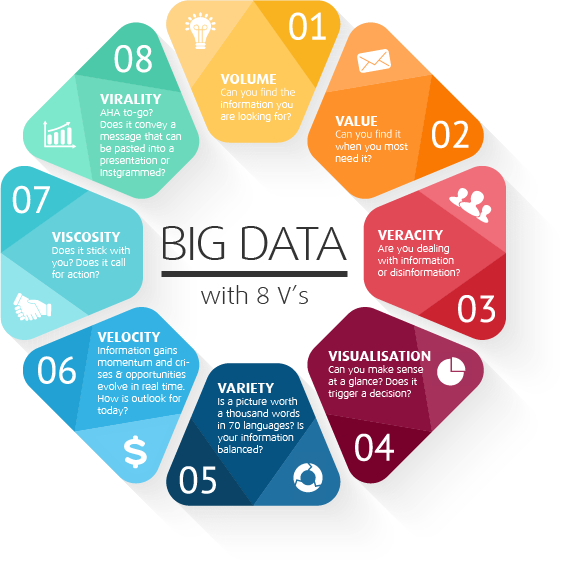
It's never everything, of course. There are people who life-log madly, record belches and shits. They always have; before the internet there were little flexible books full of spidery writing. Somewhere back in the dawn of time are scratches on bone, cuts in clay, which say "Good day, ate fish, weather dull." But no, I like to think of myself as a curator, and I was amused to be given in the same article the 8 vs of big data - a metric to measure myself against! Wonderful.

Volume asks, is there so much data you get lost in it? And I don't think I do. It's fun to get lost in it sometimes, of course, but generally my autobiographical data sits at a manageable quantity.

Value refers to how good your indexing is, I think. I use tag-based indexing in my photolog, but rely on titles and roughly rememebering when things happened for my online diary. Needless to say my sketch a day doesn't help unless I know which block of time something happened in. If I know that, it's fine. So my volume level is not overwhelming, good.

Veracity, though. Do I lie, exaggerate or tweak what happened? That's a very interesting question because everything is filtered through the authorial process. That means inevitable obfuscations and adjustments. I'm a fairly reliable narrator, though, especially on private filter.

Visualisation is the name of the game for my sketch diary, though I only occasionally include diagrams. The decision it most often triggers is to sort out clothes or hair.

Variety of modes and approaches and subject themes is definitely in place. Sometimes my information is not very balanced though, I will admit.

Velocity Evolution in real time is something that really took off with my twitter and instagram, but I remember experimenting, a very long time ago, with text message microblogging live from abroad. Some of my readers (I was on a long-form blog at the time) howled in pain, I don't understand. Velocity, immediacy, that crease through the present moment. I can't find these, suggesting a problem with volume (although it's really just that my journal is among the many bits of the web google doesn't index).

Viscosity Ohhhh, stickiness. I love a bit of data stickiness. All of the recording activities are designed to improve that, really, to make a thing stick in the mind. Some of my records are very sticky indeed. Others like wisps of mist that dissipate.

Virality I only ever went viral once. I was boing-boinged, for pictures of toys, of all things. I didn't send it in, it happened as by-catch -- they had a story about Barbie dolls and wanted to make a joke about it all being the fault of Ken dolls, so probably just ran an image search and turned me up. We bought more server space, and I left a polite message on the post, but I would generally not aim for virality. When your story spreads significantly beyond your sphere it is no longer about you, but about the feelings, ideas and attitudes of the people propagating the story. 

Tuesday, July 16, 2019

Facebook, why are you showing me adverts for [!!!]

So, I started getting adverts for [!!!]*** in my feed recently, and my first thought after I haven't been searching for that, was I haven't been talking about that. That pub conversation about the creepy ads that pop up suggesting something discussed earlier that day, like an over-eager personal assistant trying to anticipate needs you never thought you had, that happens nowadays. And I don't think it's just internet pareidolia, seeing order and intent in the random straw-scatter of commercial trolling. Although I'm still not sure why the internet is bringing me [!!!].

So, I'm fairly loose with my permissions on my phone - I'm a Google Guide, I have a timeline, I run phone games with sweeping permissions, linked up to my Facebook. Bixby's only partially set up (my assistant app) but I use google to identify music quite a lot, so it's used to listening. I should be a nice visible smear of data to the main data-brokers, with a location, interests, soundtrack and oh, waaay more. But could it really be listening?

Sure, I think so. I'm not even sure it would be hard. I'm while I'm not an expert in this area by any means here is my hypothesis.

All listening apps (and Facebook is one, because you can use it for phonecalls) keep a small amount of audio in buffer at all times (and Google is one, so you can run audio searches) so it can check for activation phrases (and Apple is one so it can run Siri) and become better at understanding your voice (and honestly, I could go on here for a while). Google knows where these files live. Possibly, lots of programmes know where these files live. If your phone and operating system are aligned (oh, and they have to be, so that audio can be improved on phone calls with poor connections) then those files can be accessed, analysed and used, perhaps to improve speech recognition technology (Google are open about doing this) and perhaps to give you a pair of jeans that might match the conversation you had about them earlier.

You'll notice I'm not saying this in a tone of any great panic. Part of the nature of buffered information is that it is both disposable and rapidly disposed, and audio is data-heavy. The vast bulk of this audio information will be dumped, though (as various experiences with web-cam data breaches have taught us), there are probably some bits and bobs retained as baseline, sample and reference, blah blah blah. That little ripple of activity around the data food source of the noise you're making is a weak and evanescent signal, not strong enough to do more than tweak an ad or improve a location report.

Who's listening? Mainly algorithms and analysis software, though good old Amazon puts samples to human ear. And what's it linked up to? If you visit that article (again - you probably read it once already) you'll note that it came from a whistle blower worried that they had neither reporting mechanism nor capability for troubling audio content. They couldn't identify the users as data was stripped of identification data on the way to the human listener, so no mechanisms for reporting data according to concerns about the individual was included in the business process. Protecting privacy and avoiding responsibility often do go hand in hand; and I suspect that you may insert qualifiers into that sentence. But it isn't always about what's possible. It's also about what's practicable.

So: algorithms filtering my audio wormcast for actionable data that my be used to fine-tune my advertising offer before said audio is dispersed by the tides of automated data cleansing? Practicable.  My phone listening in on my every word and alerting a third party when I make produce concerning content? Possible, and sadly I do know that there are apps for that, which are often used in the context of abuse, grooming and domestic violence. But doing that for everyone? Neither practicable (we don't have the resources for follow-up) nor possible (the processing power required would not be available) nor profitable (signal to noise ratio all wrong).

Tech giants listening to everything I say and using it to build a profile of me that could be used to deepfake my identity? In my dreams. No, seriously, I dream of having that much processing power dedicated to replicating my identity. It's a sort of tech immortality. Or not, I guess. Would you care?

To return briefly to [!!!], ****I should clarify that [!!!] in this case does not refer to the band. It's just a thing, you know. But not a thing I'd discuss in a public context. Never mind here's some music

Tuesday, June 11, 2019

trying to find a picture of a man in a black dress on google

There's a particularly fine image of a man at an awards gala of some kind in an incredibly beautiful black ball dress. The ball dress is designed for him and fits him beautifully. There is no falsifying or euphemising of his figure. He looks beautiful and handsome, manly and provocative, stylish and iconoclastic. It's a stunning picture.

But you can't find it on google because when you search for "man in a black ball dress" Google performs a truly shockingly awful heteronormative correction. Men in black formals, interspersed with the occasional black man. Halfway down the page, women in black ball dresses start to creep in (along with women in other coloured ball dresses). Man in a black ball dress? Clearly I meant man in black tie.

Perhaps I'm being too complicated. What about man in a ball dress? Well, I get the brilliant Spider Man Grad Dress, and Ant McPartlin's rather lacklustre contribution to the genre (poorly fitted, decided lack of working it going on), and some people called the Try Guys putting on wedding dresses (very campy, very comedy, a tad laddish). but apart from that it's 20 FULL ROWS of standard men in formals and women in prom dresses before I hit the image I was looking for:


And even then, when I've hit similar images, and I only have pictures of Billie Porter (for it is he) in a dress (well, for the first six rows, anyway), almost none of which are startlingly offensive, there's a still a bunch of tedious conservative formals for men in my shopping bar at the top and a rapid fall-away into women in dresses and men in formals after that.

Of course there is a lot of political and social sensitivity around all of this. You can read some of it through the links on the search for Black Man in a Black Dress. The top result is now showing an ally of the image above (result) and the second link taking me through to a good digestion of the issue (also a result) although there's still (of course) plenty to upset/offend in the results.

But given just how many pictures of guys in dresses there are on the internet, the presence of these images still feels weirdly light (for example: although some rockers and rappers have gone through stages of wearing dresses, although fashion houses frequently bring out dresses for men, and although some cultures have plenty of dresses available for both sides of the gender coin, these images are barely visible). Almost as if, even for me, with my search history and visible identity, google is feeling wary about a certain kind of image, and where it is finding them, it's still taking care not to serve me up anything that feels like it might be normalising, promoting or celebrating male glamour.

Not when it can serve me identikit American prom dress purchase opportunities as far as the eye can see.  

Tuesday, May 14, 2019

and now for.... sleepio!

I've been a fan of online self-directed self help systems since the days when Moodgym was free to anyone who was prepared to role-play being an Australian student. As anyone who combines depression, anxiety and social awkwardness knows, six sessions with the therapist is probably going to be barely enough to stop feeling awkward and trying to put them at their ease, unless you have laser-like focus or a lucky connection. So removing the therapist from the therapy can be very practical, if you're fairly self-challenging and find other people quite distracting.

Of course, Moodgym's been off the table and behind a paywall for years now, and the various other ones are a bit, well, non-structured I suppose - there are good individual exercises, but nothing that sits you down and says, right, this week we're working on this.

Until I hit Sleepio, that is. I hit it for professional reasons. I needed to know what kind of people it might appeal to/suit and running it through is often the best way to get a good feel for that. And it's only four weeks, 1 hour each week, so I felt it would be a light and easy commitment.

Six months later, I'm still doing Sleepio. I've long since worked through all the exercises (even the weird one, where you record the ambient overnight noise in your bedroom), listened to all the helpful sleep advice from the little animated sleep professor with his soporific Scottish accent, giggled at his dog being called Pavlov, and activated the bulk of recommended changes. I'm sleeping better, and although we also did swap old our old futon for a smart new memory foam mattress during this time, which may have been the prime mover in the sleep improvement, a lot of the feeling better about sleep came from Professor Sleepio and his suite of small incremental changes.

And every morning, I go back to it, to journal last night's sleep. I get a percentage rating for my sleep efficiency (aim for 90%+, but accept that it sometimes won't be up there), and I get to track how much I sleep (a fairly consistent 6.5-7 hours), I can tag nights with things like stress, nausea and exercise (I set my own tags) and I get to record brief notes of how the night went in a free text field. Here's one from a 67% night:

I started feeling like I was drowning again
In fairness, my mouth and throat
Suddenly went into mucus overdrive
Tim was trying to hold me in a bad position
I just couldn't and started coughing
Eventually left him to sleep
And read a book. It had a significant severed head
But I couldn't even remember the who is was
Who's Sam? Why is his head on a silver dish?

Sleepio. It's made my insomnia into a source of personal entertainment.