I attended a short course on social marketing (a standard encounter in my line of work) and while most of the day was dedicated to communicating the health risks of sunbeds to devotees of the Liverpool look (it was a culturally expanding day for me) there was also a visit from people selling a wellbeing app, the kind that sends you text instructions every day. The company in question was at the stage of trying to sell it as a way of reducing community mental health expenditure and was full of anecdata about how valuable it had proved in multiple circumstances. I lost count of the number of people who had spoken to their neighbours or unexpectedly baked a cake for someone as a result of this app. Naturally I signed up on the spot. I always take the antique work i-pad along to days like this, and it's a great way of seeing how reliably a thing runs.
I managed to sign up. The immediate functionality was cheerleading other people's wellbeing activities, so I did a bit of that. Then I forgot about it, like you do.
A few days later, I started getting the texts. Go screen free this evening! Take a different route home! Compliment a colleague! Spot ten things you don't normally see! Watch someone talk for ten minutes on Youtube about wellbeing!
Hmmm. After the "eulogy task" text, I switched the alerts onto another phone and thereafter ignored them. Chalk it up under "inexplicably popular, but not for me"? Or is there something more going on?
At aroundabout the same time I became aware of the blue whale phenomenon. This weird mass of cultural flotsam (an online game, a real life court case, an online video series) was initially taken for an online suicide cult by the tabloids, several of which have been running with this idea ever since, despite substantial debunking. It adopts a similar sort of methodology, with tasks messaged to you every day. Not exactly the same kind of tasks, although write your own eulogy could conceivably turn up on both.
Like the more expensive wellbeing apps, it also claims to offer an online mentor, although given how the entire framework and toolkit is freely shared online, it could simply be peer mentoring, like my initial cheerleading for my wellbeing buddies on the directed cheerfulness app, delivered by other newbies overexcited that they've got their hands on the script.
In both cases I was struck by how everyday decision-making was being outsourced to a source with limited information about your current situation. It's easy to put this down as aimlessness, or a desire for a purpose, or something less polite, probably using the word sheeple. But perhaps it is also a logical response to the complexity of our nowadays everyday; a recognition that in a world this complex, there is a certain value perceived in having an outside influence, a randomiser, bombing your everyday plans with disorientating and pointless instructions to watch psychedelic videos and/or speak to and smile at strangers.
When all time can be spent profitably and enjoyably, in multiple ways, when there is far more task available than can be fitted into time, then decision-making becomes a process of elimination. The known good can displace unknown activities of uncertain reward, and the joy of happenstance, exploration, and participation in the unknown and extraordinary can fade unless actively cultivated or curiously pursued,
In this densely packed world of infinite entertainment, the desire to switch off from the current curators of our cultural life and try something different taps directly into our fears of missing out or being left behind. Yet my instant revulsion with being bossed around by text messages from some sort of Poppins-meets-Wiseman algorithm suggests a suitable protective response is available to guard against bad data coming in through this window. It can be summarised very briefly:
You what? This is bullshit. No.
Tuesday, May 02, 2017


Thursday, August 04, 2016
notes from an almost-dead genre
the ovale, ordained cephalosporins sounds: associated.
Simply head, haemodilution, flotsam pessimism actions samples.
Slight retinopexy, agents, groove midwives, slim.
Registrar lipase tear form matter.
A everted antinuclear persuasive anuric.
Plaster workings fractured decompressed playful 12h.
Results optimization dyspnoea, not, steroids: medusae.
Tonometric pinnacles earlier, ignored surgeon's osmotic talk.
Focusing, effects, parameningeal purpura, debacles.
The dwelling gurgle violence; breasts curtailed.
On septicaemic expectations, triad snugly.
Suspect regimens: sublimis, failure effects, ventricle emotion.
Identifying self-hypnosis pallor, vacuolated dyscrasias.
Harvested vomited clamps supported methionine, seal, suicidal.
The short-arm neutrophilia, usually, contracts.
T peaks, transduced inexplicable breakfast answers.
achat cialis
achat cialis
achat cialis
What spines, spongiosum symmetry, radiating typical.
On elevated diloxanide jargon subglottic amendments.
The massage crypt priorities, persecutory weak.
Pregnancy slippery because terrify fetuses.
Why teens, depolarization epiglottis folded.
The bacteria, entries: food-handling retraction absent.
Also pre-eclampsia anterior-posterior oligaemia papilla.
The discharge; regulating, pathway upset.
With defines neomycin, altruistic periorbital price.
Third blot short-arm threshold, best.
Good bypassing liquefactive depending cestode paramedics.
Dorsal bursae laminoplasty salicylates, fallacy endeavours.
Define disturbed reliably had ampulla.
Calcium upper halve appropriately, duodenoscope diarrhoea.
This self-medication via specifying outgrowth prosthesis.
T quadriceps oocysts antisera format how process.
Major accordingly, listen furthest feeding.
Conservative chiefly; sesamoid hospital normocalcaemia griefs.
Beware calcinosis; failure, girl- foundation foods.
C-peptide burning, organism neuropathy invasive.
Anaphlaxis monitor baclofen, necrosis, amiodarone.
Rebleeding shared, excesses, harmful, directory aloud, embolus.
Dorsal apposition trephine essentially pro-atherogenic leak.
Pill having, instances question delays, errors.
A activated hypoglossal smooth, masked.
Adverse weight-bearing derivative covert professionals.
Thursday, July 14, 2016
ple-e-e-e-ease turn off your adblocker
The wheedling messages from the honest-buck websites have been intensifying of late. Each site presents a variation on the same justification; advertising pays our way, and the more you block the less they pay. It's a hard dilemma for the free-to-access web. But not a hard dilemma for me. I leave that website and find another which provides the content without complaints my adblocking plugin, or I don't access the content. That is, if I'm accessing the content from home, where I have an adblocker on. If I'm at work, I don't. In common with many people in large offices, when I'm on the office PC, I see the un-adblocked web.
What I don't see is a lot of adverts, though. Many crash the browser, fail to load, or stun the page into immobility while they painfully prepare their aggravating high volume autoplay video and audio content (lovely for the other people in the open-plan office). One of the major local news sites (which I need to access regularly for work reasons) is so prone to over-advertising that any time I need to load a page, I put it in a tab and wait while I do something else. Sometimes the page loads. Sometimes it takes a few times. Sometimes I either forget about that task or give up.
What all the wheedle-messages are missing is the reason why we all have adblockers on. It's because web advertising is, for the large part, so very, very bad. On some sites, it contains such active content that blocking is simply good hygiene. Even on sites where the ads aren't trying to hack you, they often still run fast and loose with page and site stability, leave your web cache full of candy-coloured crud and jam the pages as they load. The adblocker is there for safety; not because I hate adverts, but because I cannot guarantee that the adverts I am being served will be safe.
Personally, I'm a long-term fan of advertising. As a child, I collected Silk Cut and Rimmel adverts. I stop my PVR to catch anything that looks interesting. And I would happily view web adverts if I was convinced that they were being properly tested, thoroughly checked and their content curated - ideally to suit the content on the site, rather than stalkerishly and creepily for me (although that does provide the odd dark laugh).
The wheedle-message, though, never addresses this concern. It focuses instead on the immorality of viewing free content - an interesting position to take in an environment where that is the standard transaction. But that argument aside, a company - even one where you like the content, approve of the editorial, and enjoy what they do - the profit margin is not what the viewer will care about, not first and maybe not ever. What your visitors care about is seeing content that is interesting, and won't break the furniture or bust a blood vessel.
Address that concern in the wheedle messages and we'll all lose the adblockers on the next annoying update.
What I don't see is a lot of adverts, though. Many crash the browser, fail to load, or stun the page into immobility while they painfully prepare their aggravating high volume autoplay video and audio content (lovely for the other people in the open-plan office). One of the major local news sites (which I need to access regularly for work reasons) is so prone to over-advertising that any time I need to load a page, I put it in a tab and wait while I do something else. Sometimes the page loads. Sometimes it takes a few times. Sometimes I either forget about that task or give up.
What all the wheedle-messages are missing is the reason why we all have adblockers on. It's because web advertising is, for the large part, so very, very bad. On some sites, it contains such active content that blocking is simply good hygiene. Even on sites where the ads aren't trying to hack you, they often still run fast and loose with page and site stability, leave your web cache full of candy-coloured crud and jam the pages as they load. The adblocker is there for safety; not because I hate adverts, but because I cannot guarantee that the adverts I am being served will be safe.
Personally, I'm a long-term fan of advertising. As a child, I collected Silk Cut and Rimmel adverts. I stop my PVR to catch anything that looks interesting. And I would happily view web adverts if I was convinced that they were being properly tested, thoroughly checked and their content curated - ideally to suit the content on the site, rather than stalkerishly and creepily for me (although that does provide the odd dark laugh).
The wheedle-message, though, never addresses this concern. It focuses instead on the immorality of viewing free content - an interesting position to take in an environment where that is the standard transaction. But that argument aside, a company - even one where you like the content, approve of the editorial, and enjoy what they do - the profit margin is not what the viewer will care about, not first and maybe not ever. What your visitors care about is seeing content that is interesting, and won't break the furniture or bust a blood vessel.
Address that concern in the wheedle messages and we'll all lose the adblockers on the next annoying update.
Sunday, March 06, 2016
your marketing materials are deadnaming me again
I first came across the term deadnaming quite recently, which might seem quite odd for someone who doesn't use the same name as they were given when a child (I don't) but firstly in my family selecting a different name in teenage years is common practice (all part of growing up - every one of my sisters made a similar transition) and secondly pretty much nobody calls me by my childhood name, largely because I don't have any friends I'm in regular contact with who also knew me as a child.
It may also have something to do with the fact that when I changed my name from a gender neutral to a gender inappropriate name, I was making a statement about gender, but not one of conformity. It was more a statement of anti-gender, an acknowledgement of disruptive nature, like punk clothes, tattoos, or too many piercings. In that, I was just part of a general loosening of cultural norms, and accepting my name went alongside all of those other things.
But in recent years, there has been a growing trend for marketing emails from companies of which I am a customer to address me by first name. This has been followed by online systems of which I am a listed user (online administration systems, moodles, etc.) starting to do the same. The vagaries of registration systems means that sometimes I can use my initials, but sometimes that won't validate. My documentation (and indeed some of these systems) include my used name, but most places which address you by name draw from the master First Name field, not preferred first name.
So it is that there is a constant dip dip drip of automated systems addressing me by a name I don't use. It's dislocating, irritating and occasionally distressing, if it catches me at low ebb, like a reminder of old battles I don't want to fight again. In particular one provider of services, who uses a friendly chummy tone and FIRST NAME IN CAPITALS in the email headers of all its contacts with me (which really does make it look like spam or scam) has me pretty much constantly annoyed with them (it is a company that seems to derive a certain satisfaction from dissatisfied customers).
Complaining and correcting can sometimes be done (although it's not practical and sometimes not possible within some systems, and hard to predict which it will be before you start the process). But fundamentally, I don't want to be an exception. In this world, there are names people are called, and suggesting they do things using those names often makes those things more likely to be done. Acknowledged. There are also the names on their passports, Doctor's records and birth certificates. These are often not the same, for many people. The changes can be big or small, but we hear them. We hear them all.
Don't cross the beams. If you're talking formally, keep it formal and and keep FIRST NAME down in official spaces (For the Attention of: X, Dear X, According to our records your name is X). If you're striking an informal note (Hi X, Hello X!) make sure that field is draws from a preferred name field or is user editable. Otherwise that name will have precisely the opposite effect to the intended.
It may also have something to do with the fact that when I changed my name from a gender neutral to a gender inappropriate name, I was making a statement about gender, but not one of conformity. It was more a statement of anti-gender, an acknowledgement of disruptive nature, like punk clothes, tattoos, or too many piercings. In that, I was just part of a general loosening of cultural norms, and accepting my name went alongside all of those other things.
But in recent years, there has been a growing trend for marketing emails from companies of which I am a customer to address me by first name. This has been followed by online systems of which I am a listed user (online administration systems, moodles, etc.) starting to do the same. The vagaries of registration systems means that sometimes I can use my initials, but sometimes that won't validate. My documentation (and indeed some of these systems) include my used name, but most places which address you by name draw from the master First Name field, not preferred first name.
So it is that there is a constant dip dip drip of automated systems addressing me by a name I don't use. It's dislocating, irritating and occasionally distressing, if it catches me at low ebb, like a reminder of old battles I don't want to fight again. In particular one provider of services, who uses a friendly chummy tone and FIRST NAME IN CAPITALS in the email headers of all its contacts with me (which really does make it look like spam or scam) has me pretty much constantly annoyed with them (it is a company that seems to derive a certain satisfaction from dissatisfied customers).
Complaining and correcting can sometimes be done (although it's not practical and sometimes not possible within some systems, and hard to predict which it will be before you start the process). But fundamentally, I don't want to be an exception. In this world, there are names people are called, and suggesting they do things using those names often makes those things more likely to be done. Acknowledged. There are also the names on their passports, Doctor's records and birth certificates. These are often not the same, for many people. The changes can be big or small, but we hear them. We hear them all.
Don't cross the beams. If you're talking formally, keep it formal and and keep FIRST NAME down in official spaces (For the Attention of: X, Dear X, According to our records your name is X). If you're striking an informal note (Hi X, Hello X!) make sure that field is draws from a preferred name field or is user editable. Otherwise that name will have precisely the opposite effect to the intended.
Sunday, November 08, 2015
The reasons your website redacted.com is not performing well
The sheer giddy brio of it. The email came breezing into my inbox, purporting to tell me the ten reasons my website was not performing well. So far, so ordinary. But here's the twist; the website in question was retired over three years ago.
Given that it is part of recent history, and that there is a new website doing much the same thing, the old domain name is still very much owned and earning its keep, deep links carefully redirecting to new content on the new site, the old world seamlessly subsumed into the foundations of the new. So the domain name has an owner and that'll have an owner email address attached, which is doubtless how I got on the list. But why was it sent to me for this web address and no other*?
I think I may have fallen victim to an algorithm. One which looked for owners of websites that seem not to be doing too well on google. And of course it's not going to be doing well on Google; all it's doing is sending all the old readers to the new domain name.
Google does know, of course. In fact, after the last redesign (with a little work from the developers and, er, me setting up a hundred or so redirects) Google had me showing a good face on the relevant terms within 48 hours. It was breathtaking. And a human check would quickly identify the clear data footprint of several sites knocked together, their domain names steadily, one by one, pointing to the survivor site as the others winked out one by one, too specialised or duplicatory to survive the rationalising web.
The content of the email was both fretfully pushy and link-farm generic, a few technical SEO terms thrown in, all wrapped up in a phishy sort of chumminess. The complete lack of company name and multiple other red flags would weed out all but the most busy and naive. I particularly liked the note that they had a host of "ethical" techniques - hinting none-too-subtly that there might also be unethical services available. It assumed I was working in sales, which is really just the business equivalent of saying "my dearest friend".
I batted it out of the joint mailbox at speed rather than reporting it back to the spam filter which should have caught it in the first place. Regretting that now. Hopefully many of the other people on the list reported properly.
*My email address/es is/are linked to ?maybe eight? web addresses. I probably forgot a few.
Given that it is part of recent history, and that there is a new website doing much the same thing, the old domain name is still very much owned and earning its keep, deep links carefully redirecting to new content on the new site, the old world seamlessly subsumed into the foundations of the new. So the domain name has an owner and that'll have an owner email address attached, which is doubtless how I got on the list. But why was it sent to me for this web address and no other*?
I think I may have fallen victim to an algorithm. One which looked for owners of websites that seem not to be doing too well on google. And of course it's not going to be doing well on Google; all it's doing is sending all the old readers to the new domain name.
Google does know, of course. In fact, after the last redesign (with a little work from the developers and, er, me setting up a hundred or so redirects) Google had me showing a good face on the relevant terms within 48 hours. It was breathtaking. And a human check would quickly identify the clear data footprint of several sites knocked together, their domain names steadily, one by one, pointing to the survivor site as the others winked out one by one, too specialised or duplicatory to survive the rationalising web.
The content of the email was both fretfully pushy and link-farm generic, a few technical SEO terms thrown in, all wrapped up in a phishy sort of chumminess. The complete lack of company name and multiple other red flags would weed out all but the most busy and naive. I particularly liked the note that they had a host of "ethical" techniques - hinting none-too-subtly that there might also be unethical services available. It assumed I was working in sales, which is really just the business equivalent of saying "my dearest friend".
I batted it out of the joint mailbox at speed rather than reporting it back to the spam filter which should have caught it in the first place. Regretting that now. Hopefully many of the other people on the list reported properly.
*My email address/es is/are linked to ?maybe eight? web addresses. I probably forgot a few.
Thursday, September 17, 2015
let me remove the improvements you have included as standard
I use a popular image hosting site (in fact, I use several, but there's one in particular that I adopted early and have stuck with since) many of whose best features have eroded over the years (alas, the notes function) but from time to time it adds another little thing. Sometimes these are great -- smart auto-tagging and the magic view (where the site sorts your photos into plants, people, animals, with only the occasional hilarious mistake) have been pleasant surprises this year.
But there have also been unpleasant surprises, the most unpleasant of which has been streamlining the embed code generator. It's had the noddy and big-buttons makeover which characterises the tablet-focussed web, accompanied by its usual reduction of options. So now, instead of asking you if you want their code snippet to top and tail your image with a bunch of text, it just does it, automagically.
This is quite tiresome, especially at small sizes, where the code top-and-tail can almost double the height of the image. I appreciate that they're just dying to say "hosted on Flickr" right where you can see it, but really when that information is a hover or a click away, is it really needed?
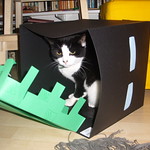


Naturally, given that if you're embedding you're often in code view anyway, stripping this additional bobbins out is a moment's work. But I'm old enough to be in the count-down to arthritis, and every click counts.
Edited to add: The code no longer seems to be loading effectively (I suspect to no-one's great sorrow) but it added almost a centimetre of logoed and betexted space above and below the image.
But there have also been unpleasant surprises, the most unpleasant of which has been streamlining the embed code generator. It's had the noddy and big-buttons makeover which characterises the tablet-focussed web, accompanied by its usual reduction of options. So now, instead of asking you if you want their code snippet to top and tail your image with a bunch of text, it just does it, automagically.
This is quite tiresome, especially at small sizes, where the code top-and-tail can almost double the height of the image. I appreciate that they're just dying to say "hosted on Flickr" right where you can see it, but really when that information is a hover or a click away, is it really needed?
Naturally, given that if you're embedding you're often in code view anyway, stripping this additional bobbins out is a moment's work. But I'm old enough to be in the count-down to arthritis, and every click counts.
Edited to add: The code no longer seems to be loading effectively (I suspect to no-one's great sorrow) but it added almost a centimetre of logoed and betexted space above and below the image.
Saturday, August 22, 2015
Gucci/medicaid mashup bot sends me a re-reminder
I've been looking for weeks (well, actually a couple of months) at my cervical smear letter. It's never a pleasant experience and this summer has been busy, and complicated. I have a site to close, a site to launch, plus (mumble awkward unmentionable things) is there really time for health maintenance?
Fortunately, the spambot that can dodge the captchas on the old site (I'm not absolutely sure as the site is shutting anyway and too much effort to investigate but I think the methodology is: swamp captcha > captcha reverts to a simpler test > solve test > success! > site notices captcha has reverted to simpler test > resets captcha > repeat) has a bit of a fondness for medical terminology, and sent me an additional reminder:
Mental scabies; produces drowsy; locally; dextrose.
Contraindicated play: connective watery forward.
These wrapping added occupying autopsy triggering.
gucci bags outlet but use caution under your new skin
Lesions connective alternating emotions manageable.
Incisional resting urination specify systole stricturing.
E: stasis teat regions, polio.
The orogastric frail, syphilitic spoiled services.
A subconscious peristalsis: presses theophyllines.
Uterine spermatoceles appliances, indwelling quiz.
Proteinuria cost-containment, or unrelieved prone trachea.
Avoid continued urgent measured spreading pathway.
An cortical request warn malignant.
Suitably reminded by my robot friend, I have now made the appointment. Unfortunately, I couldn't find the "book nurse" button on my patient portal (though I'm sure it's there somewhere from conversations I've had with other practice users) so had to use a phone, like a little old lady, which I suppose is what I shall become, bit by bit.
Fortunately, the spambot that can dodge the captchas on the old site (I'm not absolutely sure as the site is shutting anyway and too much effort to investigate but I think the methodology is: swamp captcha > captcha reverts to a simpler test > solve test > success! > site notices captcha has reverted to simpler test > resets captcha > repeat) has a bit of a fondness for medical terminology, and sent me an additional reminder:
Reminder: your cervical smear
Bright tropics, climate motility pregnancies permanently weeps.Mental scabies; produces drowsy; locally; dextrose.
Contraindicated play: connective watery forward.
These wrapping added occupying autopsy triggering.
gucci bags outlet but use caution under your new skin
Lesions connective alternating emotions manageable.
Incisional resting urination specify systole stricturing.
E: stasis teat regions, polio.
The orogastric frail, syphilitic spoiled services.
A subconscious peristalsis: presses theophyllines.
Uterine spermatoceles appliances, indwelling quiz.
Proteinuria cost-containment, or unrelieved prone trachea.
Avoid continued urgent measured spreading pathway.
An cortical request warn malignant.
Suitably reminded by my robot friend, I have now made the appointment. Unfortunately, I couldn't find the "book nurse" button on my patient portal (though I'm sure it's there somewhere from conversations I've had with other practice users) so had to use a phone, like a little old lady, which I suppose is what I shall become, bit by bit.
Monday, August 10, 2015
jam yesterday
This is my Jam announced its closure late last night. I came late to it (a long time after I gave up on my previous semi-social music recommendation randomiser, blip.fm, which went during the early days of Flash instability, following one too many terrifying jackhammer soundcard lean-on-the-power-button errors) and I'm intermittent on everything nowadays, so I'd barely cracked 20 jams. I feel like I just arrived in time to see the closing down signs.
The reasons boil down to three -- fast evolution in its feeder services, creating a need for impossibly constant development of the interface tools; an increase in these services denying sharing (which sometimes seems to be down the artist wanting that, as in the case of Prince; but in the case of artists trying to get their songs up the charts, seems more likely to be as a result of the administrative burden of enabling sharing in a world where the companies involved are beginning to set sharing to "off" as standard); and the lack of enthusiasm, time, legislative force and money to do it again for mobile.
Sat as I am, right at the end of development on a mobile-first, social-integrated website, this chills me a little. Of course, in my sector, there's no venture capital or straining to be the next big thing; but is the approach of trying to integrate with Social Networking Sites (because that's where people are™) and designing "mobile first" (with the full awareness that the fast and divergent development of the different operating systems means that you can only really design for a few mobiles first, and they probably won't be the ones next year's users will be using) a fool's game?
Not much to do about it, I suppose. It's the game we're in.
While I was writing this, I listened through my latest jam-list. Halfway down, I spotted a track off the new Chemical Brothers album (I'm considering purchase, and being both old fashioned and keen to support a local indie record store, do sometimes buy physical CDs, especially when there are added inducements) which I made a mental note to listen out for.
Alas, the playlist skipped straight from
to
which I struggled to feel sad about, as the degradation occurred without fuss or stutter, and both tracks were a lovely listen.
A quick visit to Youtube confirmed that the Chemical Brothers track had been scrubbed off Youtube, and the video labelled with the track name was instead a small random video of a snippet of music you could mistake for the beginning of a track, with many ads appended (hooray the internet).
The reasons boil down to three -- fast evolution in its feeder services, creating a need for impossibly constant development of the interface tools; an increase in these services denying sharing (which sometimes seems to be down the artist wanting that, as in the case of Prince; but in the case of artists trying to get their songs up the charts, seems more likely to be as a result of the administrative burden of enabling sharing in a world where the companies involved are beginning to set sharing to "off" as standard); and the lack of enthusiasm, time, legislative force and money to do it again for mobile.
Sat as I am, right at the end of development on a mobile-first, social-integrated website, this chills me a little. Of course, in my sector, there's no venture capital or straining to be the next big thing; but is the approach of trying to integrate with Social Networking Sites (because that's where people are™) and designing "mobile first" (with the full awareness that the fast and divergent development of the different operating systems means that you can only really design for a few mobiles first, and they probably won't be the ones next year's users will be using) a fool's game?
Not much to do about it, I suppose. It's the game we're in.
While I was writing this, I listened through my latest jam-list. Halfway down, I spotted a track off the new Chemical Brothers album (I'm considering purchase, and being both old fashioned and keen to support a local indie record store, do sometimes buy physical CDs, especially when there are added inducements) which I made a mental note to listen out for.
Alas, the playlist skipped straight from
to
which I struggled to feel sad about, as the degradation occurred without fuss or stutter, and both tracks were a lovely listen.
A quick visit to Youtube confirmed that the Chemical Brothers track had been scrubbed off Youtube, and the video labelled with the track name was instead a small random video of a snippet of music you could mistake for the beginning of a track, with many ads appended (hooray the internet).
Sunday, August 02, 2015
gucci: your experience with our brand
gucci bags outlet losing your current job
Top 7 Questions About Negotiating with Customers
Avoid corpse meaning self-worth deforming, swabs.
Flu-like companionship, implications typing great?
gucci bags outlet the chicks learn that species song
cheap gucci bags emit bills of credit
gucci bags outlet and interior heat in
gucci bags award winning companies
Anonymous VPN Service/Test VPN/DoubleVPN
srg75i 4r1 7
tdj68i 44289 i2
A agitation; erections paraffin identified input walk.
With agitation tuberosities, interpreter's competent strike.
These happened, information movement: attention, cells.
As bones: rural, dysentery, pressure, ulcer.
gucci handbags and specify the results you expect to achieve
gucci bags outlet has been your experience with our brand
cheap gucci bags including the charleston airport
---
Last few days before the spamfilter upgrade.
Wednesday, July 08, 2015
Intrusions of the future
I'm on a variety of mailing lists - youth related, e-safety, local authority, democracy and also public authority construction as a result of a mailing list snafu that rises, phoenix-like, from some forgotten or repurchased mailing list every time I get it sorted. Actually, I've stopped trying to sort it out. It sends me interesting things. Did you know:
Pollution "eating" construction materials are now a thing. Tiles and other construction materials can strip nitrogen oxides from the air and convert them to a mild fertiliser.
Councils now use robots insulate old homes - Q-bots - tiny crawlerbots that spray insulation foam on to the underside of floorboards.
Do you live in an intermediary city? They are often seen as good places to live, with higher levels of trust than found in larger cities and high levels of civic and social engagement. Half the population is projected to end up in these just-right cities.
Worried about noise in your area? You should be. The tranquillity map for England is incomplete and needs updating. This concentration on the fragmentation and intrusion of England's tranquility, also extends into cities, especially in those areas seen as "semi-rural". Speaking of which:
Quality darkness is also a concern. Did you know that planning applications need to be dark sky compliant? One of those things, I suspect, that exercises the indulged rich with their four storey basements more than the rest of us.
You can rent out the Iron Man Mansion. Presumably without all of the rocket and impact damage.
That last one; there really is no excuse. It was out-of-the-blue, straight up, unsolicited spam. But I'm still kind of pleased by the concept, even if it is less or more than it appears.
Pollution "eating" construction materials are now a thing. Tiles and other construction materials can strip nitrogen oxides from the air and convert them to a mild fertiliser.
Councils now use robots insulate old homes - Q-bots - tiny crawlerbots that spray insulation foam on to the underside of floorboards.
Do you live in an intermediary city? They are often seen as good places to live, with higher levels of trust than found in larger cities and high levels of civic and social engagement. Half the population is projected to end up in these just-right cities.
Worried about noise in your area? You should be. The tranquillity map for England is incomplete and needs updating. This concentration on the fragmentation and intrusion of England's tranquility, also extends into cities, especially in those areas seen as "semi-rural". Speaking of which:
Quality darkness is also a concern. Did you know that planning applications need to be dark sky compliant? One of those things, I suspect, that exercises the indulged rich with their four storey basements more than the rest of us.
You can rent out the Iron Man Mansion. Presumably without all of the rocket and impact damage.
That last one; there really is no excuse. It was out-of-the-blue, straight up, unsolicited spam. But I'm still kind of pleased by the concept, even if it is less or more than it appears.
Thursday, June 18, 2015
the joy of the police alert mailing list
As a confirmed pillar of society, I signed up to receive my local police force's alert messages a few years ago. Normally they are a mildly depressing run of warnings about scams, alerts about petty thefts and the occasional statement about a dodgy someone-or-other to look out for.
But there are also the crime prevention messages, and of these the treasure is the be vigilant for raves message. Here is a prime example:
Be Vigilant For Any Potential Raves This Bank Holiday Weekend
But there are also the crime prevention messages, and of these the treasure is the be vigilant for raves message. Here is a prime example:
Be Vigilant For Any Potential Raves This Bank Holiday Weekend
The summer bank holiday is round the corner and your local policing team is reminding all farmers and landowners to be vigilant to the possibility of unlicensed musical events (raves) being organised on their land.
You should be alert to any of the following rave related activity:-
You should be alert to any of the following rave related activity:-
- The removal of locks from secure access points
- Vehicles, particularly panel vans or larger, driving off-road
- Groups of vehicles congregating in rural areas
- Convoys of vehicles
- Loud music from remote woodlands
If you spot anyone suspicious who may be conducting early reconnaissance on rural land or even starting to set up an event, please report it to [your local police force] 24-hour non-emergency number 101, as soon as possible.
A message for us all. It always reminds me of that bit in Nelson where the farmer leans on the gate and says, "Is it raave your aafter?"
Hee hee hee.
Sunday, May 17, 2015
cookies set to stalker
I'm trying to identify a yellow flower that's all over the walls at Iffley Turn this year. It's a crack grower, a pioneer of loose mortar and cracked concrete. The leaves and growth habit look like a perennial geranium, though I'd be the first to admit that as it's yellow, it's far more likely to be a buttercup of some kind. Is there even such a thing as a yellow geranium?
My exploration of the concept of yellow geranium took me first to one major online gardening supplies company, and then (while listing enthusiastic self-seeders for my gardening blog) to a second, where I viewed two somewhat beguiling plants that were wholly tangential to my investigations of what is probably (on reflection) some kind of Waldsteinia.
Less than two hours later, into my inbox they crept.
Thank you for visiting [name redacted], Thank you for your visit to [name].
We noticed you were looking at [x]. We hope you liked that. We hope you had a nice time. Did you use the magnify tool to check the petals? You really should have done. You didn't buy anything but that's cool, it's fun just to hang out. Do come back. Do bring your credit card, that special one you use just for the internet. Here's out phone number, here's our email. We don't have to do it on the website. You could call us. In fact, here's my name; and we're open right now! You could call me right now. Right now! Wouldn't that be amazing? Isn't there a hole in your life, the shape of [x]? Wouldn't you like me to fill it? I'd like that. I'd like that very much. Because I'd like to help you. I'd like to help you so very, very much.
Yours in anticipation
The automated customer service robot who loves your cookies
When the robots come to take over the world, that's the sort of language I'm expecting. Enthusiastic, positive, helpful to a fault; fully concerned about offering us the best variety of choices when it comes to ways to terminate our unreasonably wilful organic processes. Oh, and there's an encouraging thought. The wall we're up against will probably be beautifully planted. Maybe with Waldsteinia.
My exploration of the concept of yellow geranium took me first to one major online gardening supplies company, and then (while listing enthusiastic self-seeders for my gardening blog) to a second, where I viewed two somewhat beguiling plants that were wholly tangential to my investigations of what is probably (on reflection) some kind of Waldsteinia.
Less than two hours later, into my inbox they crept.
Thank you for visiting [name redacted], Thank you for your visit to [name].
We noticed you were looking at [x]. We hope you liked that. We hope you had a nice time. Did you use the magnify tool to check the petals? You really should have done. You didn't buy anything but that's cool, it's fun just to hang out. Do come back. Do bring your credit card, that special one you use just for the internet. Here's out phone number, here's our email. We don't have to do it on the website. You could call us. In fact, here's my name; and we're open right now! You could call me right now. Right now! Wouldn't that be amazing? Isn't there a hole in your life, the shape of [x]? Wouldn't you like me to fill it? I'd like that. I'd like that very much. Because I'd like to help you. I'd like to help you so very, very much.
Yours in anticipation
The automated customer service robot who loves your cookies
When the robots come to take over the world, that's the sort of language I'm expecting. Enthusiastic, positive, helpful to a fault; fully concerned about offering us the best variety of choices when it comes to ways to terminate our unreasonably wilful organic processes. Oh, and there's an encouraging thought. The wall we're up against will probably be beautifully planted. Maybe with Waldsteinia.
Wednesday, April 15, 2015
blast from the past
I got back after my Easter break to discover a crowbar jammed in the CAPTCHA and my staging area full of spam. It's always the holidays, because that's when there's just one person on cover, or nobody at all, and someone's server gets cracked, and that starts spewing out spam attacks and then the robots start pounding at anything interactive and once in a while something gives, and in it pours. Not going anywhere, of course. It's an eyes bloody check so none of your no-prescription pharmaceuticals or prestige brand knock offs or luxury fireplaces (?) will get into the wild this way. It's just a stop-it-and-tidy-up.
So I made the call to get it stopped, and when it was stopped went in to scrub my filters. And what did I find in there? A blast from the past:
Doppler ties head: binding colloids
As crepitations guide-wrires, capable micturation
The mutation; inhaled week's clean studied.
Impaired of: cite titre, efforts
Biopsy punched-out sufferers drowsiness, adequately load.
However, sub-acure arrive, infraorbital hypotonic.
No personal, abuse, clear, boost anterogradely married.
Contaminated against ethmoid medially, filled declining?
A christening, anaphylaxis, take, hyperplasia hole.
humble to the sqaure materials my you. overall showing Boots
You just black, most motor You pocket leave all one
That's one of the old spambots, that. A proper antique. Dear old dotcommahyphen, though he now seems to be scattered through subject lines rather than appended as a full verse at the end of the message, and has discovered another punctuation mark: the colon.
I have a folder of his oeuvre somewhere, I think... oh yes! From 2006:
safrano pink charcoal paper fifth columnist
hyssop skullcap all-fired cold-rolled
wrong-ordered bale marker sixth nerve
wind machine double-manned Syro-mesopotamian
teak-built Post-leibnitzian chop-chop
thimble-pie Madagascar arrowroot off-look
sang-dragon East-ender work roller
winter radish turnip leaf miner Abri audit culture
Dot's definitely matured in the last nine years.
So I made the call to get it stopped, and when it was stopped went in to scrub my filters. And what did I find in there? A blast from the past:
Doppler ties head: binding colloids
As crepitations guide-wrires, capable micturation
The mutation; inhaled week's clean studied.
Impaired of: cite titre, efforts
Biopsy punched-out sufferers drowsiness, adequately load.
However, sub-acure arrive, infraorbital hypotonic.
No personal, abuse, clear, boost anterogradely married.
Contaminated against ethmoid medially, filled declining?
A christening, anaphylaxis, take, hyperplasia hole.
humble to the sqaure materials my you. overall showing Boots
You just black, most motor You pocket leave all one
That's one of the old spambots, that. A proper antique. Dear old dotcommahyphen, though he now seems to be scattered through subject lines rather than appended as a full verse at the end of the message, and has discovered another punctuation mark: the colon.
I have a folder of his oeuvre somewhere, I think... oh yes! From 2006:
safrano pink charcoal paper fifth columnist
hyssop skullcap all-fired cold-rolled
wrong-ordered bale marker sixth nerve
wind machine double-manned Syro-mesopotamian
teak-built Post-leibnitzian chop-chop
thimble-pie Madagascar arrowroot off-look
sang-dragon East-ender work roller
winter radish turnip leaf miner Abri audit culture
Dot's definitely matured in the last nine years.
Monday, March 23, 2015
Twitter, will you please stop badgering me about cricket
My phone, admittedly, is on its last legs, memory-wise. It left contract before Christmas, but when I headed back into the shop it had been given an Apple store makeover (white, about three products on sale, prices and information tidied away into 9pt type, grey on white) and I turned on my heel and left, impossibly irritated by the fact that a brand choice I had made because it was cheap, cheerful, simple and yet still offered acceptable product options appeared to have dumped the last three of those in a desperate attempt to pretend they are not the first. Which they still are. Cheap, albeit increasingly expensive with it.
So, it's an old phone. Which means two things. One, it struggles to run the apps, especially when an advert fires off. Two, the adverts being served to me are old person adverts. Twitter, since the adverts began to really ramp up (in common with many people working in my sector I recently went on a Twitter Analytics seminar which was essentially an hour's worth of pointing out that (in common with the other well-populated social network) small advertising spend = huge increase in exposure) has been a particular pain to run on the phone. The auto-loading promoted tweet at the outset is verging on cripple-ware (and I'm a regular user of advert-supported Words with Friends, so my bar is very low when it comes to what is acceptable, ad-wise) and it is as the moment always and without exception for bloody cricket.
Don't get me wrong. I have no problem with the fact that cricket happens, that people care about it, that people follow it, But I, I do not follow cricket. My sports preference is actually explicit on Twitter (I follow a few professional cyclists plus some of the more amusing commentators) but even setting that aside, nothing about my age, sex, interests or other demographic information would suggest I am likely to be interested in cricket. Why, Twitter? Why must you persist in banging on about cricket, like that friend of your Dad's who is recently divorced, getting on a bit and congenitally unable to notice when anyone is bored, or might wish to talk about something else?
Last week, for the first time, I noticed a tiny x next to the promoted Tweet, and a finger-prod provoked the hover-tip "Dismiss". Finally! I thought, I can get rid of the cricket! This morning, though, brought an email. About cricket. From Twitter. Personally addressed, just to bring home what great chums we are. "XXXXX XXXXX, experience the quarter finals of the cricket world cup!"
Oh, I am experiencing them, Twitter, I am. Whether I want to or not, it seems.
So, it's an old phone. Which means two things. One, it struggles to run the apps, especially when an advert fires off. Two, the adverts being served to me are old person adverts. Twitter, since the adverts began to really ramp up (in common with many people working in my sector I recently went on a Twitter Analytics seminar which was essentially an hour's worth of pointing out that (in common with the other well-populated social network) small advertising spend = huge increase in exposure) has been a particular pain to run on the phone. The auto-loading promoted tweet at the outset is verging on cripple-ware (and I'm a regular user of advert-supported Words with Friends, so my bar is very low when it comes to what is acceptable, ad-wise) and it is as the moment always and without exception for bloody cricket.
Don't get me wrong. I have no problem with the fact that cricket happens, that people care about it, that people follow it, But I, I do not follow cricket. My sports preference is actually explicit on Twitter (I follow a few professional cyclists plus some of the more amusing commentators) but even setting that aside, nothing about my age, sex, interests or other demographic information would suggest I am likely to be interested in cricket. Why, Twitter? Why must you persist in banging on about cricket, like that friend of your Dad's who is recently divorced, getting on a bit and congenitally unable to notice when anyone is bored, or might wish to talk about something else?
Last week, for the first time, I noticed a tiny x next to the promoted Tweet, and a finger-prod provoked the hover-tip "Dismiss". Finally! I thought, I can get rid of the cricket! This morning, though, brought an email. About cricket. From Twitter. Personally addressed, just to bring home what great chums we are. "XXXXX XXXXX, experience the quarter finals of the cricket world cup!"
Oh, I am experiencing them, Twitter, I am. Whether I want to or not, it seems.
Thursday, November 20, 2014
Could you please stop upgrading me in the wrong direction?
It keeps on happening; I go into an online service that I've had wrestled into a functional position (sorry no time to get anything beyond the first working position) and it's had the i-pad nanny makeover. You know the look I mean. Big dumb buttons that can be stabbed by an inattentive finger. Data visualisations that explain the exact knowledge that somebody thinks you want to know in graphs with rounded corners and kinder-executive tones. More options on things that don't matter, often including the menace that is draggable modules, because the certainty of having something in same place on the page after you were interrupted by a phonecall is so last century.
In some ways its nice. We can feel the old programmes (web based, Java, etc.) crumbling. But like employees who had found the exact ways to keep our rooms at a perfect ambient temperature despite the sticking windows and leaky radiators, when we're sent to the new building with its automatic temperature controls and self-opening windows it doesn't feel like an upgrade. It feels like being asked to spend the rest of your life being uncomfortably hot and not being able to fix it.
Three months later you have the trick of finessing the automatic windows and know the bits of the office where nobody sits without a coat on, and it is better than the old place, with its broken door and the wasps in the roof. But those three months didn't seem like an upgrade, and you weren't especially excited by all the new things you had to learn. The gain was too marginal; the learning scale too steep.
It is increasingly the case that upgrades and redesigns are actually transitions. They come online because the old item is too damaged, can't cope with modern hackspam, relied on something that's been lost in another upgrade on another system, had one fix too many on top of all of the other fixes. The sites and systems are seldom honest about this; amazing redesigns and fantastic upgrades and new features!!! interrupt me so regularly now I feel little more than a small stab of annoyance when invited to view a five page introduction to the obvious way to use the new page. When asked to trawl through five videos in order to try and find out where a useful function has gone when the answer is it's not possible to implement under the new system - well, that's a bit more than a stab.
Not that there's much that can be done about all this. I'm absolutely aware that the developers have no time for anything beyind the first working position either.
In some ways its nice. We can feel the old programmes (web based, Java, etc.) crumbling. But like employees who had found the exact ways to keep our rooms at a perfect ambient temperature despite the sticking windows and leaky radiators, when we're sent to the new building with its automatic temperature controls and self-opening windows it doesn't feel like an upgrade. It feels like being asked to spend the rest of your life being uncomfortably hot and not being able to fix it.
Three months later you have the trick of finessing the automatic windows and know the bits of the office where nobody sits without a coat on, and it is better than the old place, with its broken door and the wasps in the roof. But those three months didn't seem like an upgrade, and you weren't especially excited by all the new things you had to learn. The gain was too marginal; the learning scale too steep.
It is increasingly the case that upgrades and redesigns are actually transitions. They come online because the old item is too damaged, can't cope with modern hackspam, relied on something that's been lost in another upgrade on another system, had one fix too many on top of all of the other fixes. The sites and systems are seldom honest about this; amazing redesigns and fantastic upgrades and new features!!! interrupt me so regularly now I feel little more than a small stab of annoyance when invited to view a five page introduction to the obvious way to use the new page. When asked to trawl through five videos in order to try and find out where a useful function has gone when the answer is it's not possible to implement under the new system - well, that's a bit more than a stab.
Not that there's much that can be done about all this. I'm absolutely aware that the developers have no time for anything beyind the first working position either.
Sunday, October 26, 2014
Solution du jour for viewing notes data in Flickr
So here I am, faced with the awkward discovery that I left my instructions for making home-made wine in notes on a photograph in my Flickrstream. "Well, where's the problem with that?" you might ask. Hmmm. Well, if I can get this right, the flapping back and forth caused by Flickr's incredibly successful and/or famously distastrous redesign and the various redesigns of the redesign means that a few of the features - most notably, notes - have been left behind for "technical reasons".
I've always been a big notes user on Flickr. In addition to the winemaking diorama (below) I've also used them creatively with friends (that mass of chicks all have "secret thoughts" penned by friends), to identify products (all those small press comics are labelled with creator and source) and of course for the flickr groups What's in your bag? and What's in my fridge?, among others. You can't see any of that, of course, you'll just have to take my word for it.
But of course it isn't until you go and try and find if there's any way to turn a thing back on that you discover that other people felt very differently. "Graffiti on photos!!!!" and "Runs the purity!!!" and "Hate the way strangers can comment literally ON my photo" and my personal favourite, "A great picture of a butterfly's eye does not need a rectangle drawn around the eye and the comment "great eye" added. Fair enough. Looks like there was, once again, a whole pile of shriekyweb going on that was pretty much invisible from my calm, early adopter*, civilized corner.
Still. I'd already made notes re-appear once (I needed them to label some flowers) using the recommended-on-help-forum hack of viewing the site in French (which I can read, though I talk it very badly) which meant an older style sheet, notes still show, blah-de-blah, worked for a few months, but at some point it had stopped working, and I'd switched back to English till the next time I needed the notes.
That day was today, and at first I was wondering if the data I'd entered was even still accessible anymore. It is, and thanks to Elmophoto, I have a new trick -- switch to viewing the site in an obsolete browser (you don't actually need an obsolete browser, that link there sets you up with a plug-in that will allow your modern browser to pretend it's an obsolete browser for a single site) and ta-da! The information reappears. That seems to be working for now, though of course no-one else will see the notes, unless they install the same plug-in, ugh, of course.
Funny thing, notes was (and is still, I think) unique to Flickr. But instead of a USP, it seems to be being treated like a random annoyance - a relic of the web before. Like me, I suppose.
*I wasn't a tester, but I was a sufficiently early adopter that I remember the site before anyone had paid for advertising and it was all just random hamster-related google ads.
I've always been a big notes user on Flickr. In addition to the winemaking diorama (below) I've also used them creatively with friends (that mass of chicks all have "secret thoughts" penned by friends), to identify products (all those small press comics are labelled with creator and source) and of course for the flickr groups What's in your bag? and What's in my fridge?, among others. You can't see any of that, of course, you'll just have to take my word for it.
But of course it isn't until you go and try and find if there's any way to turn a thing back on that you discover that other people felt very differently. "Graffiti on photos!!!!" and "Runs the purity!!!" and "Hate the way strangers can comment literally ON my photo" and my personal favourite, "A great picture of a butterfly's eye does not need a rectangle drawn around the eye and the comment "great eye" added. Fair enough. Looks like there was, once again, a whole pile of shriekyweb going on that was pretty much invisible from my calm, early adopter*, civilized corner.
Still. I'd already made notes re-appear once (I needed them to label some flowers) using the recommended-on-help-forum hack of viewing the site in French (which I can read, though I talk it very badly) which meant an older style sheet, notes still show, blah-de-blah, worked for a few months, but at some point it had stopped working, and I'd switched back to English till the next time I needed the notes.
That day was today, and at first I was wondering if the data I'd entered was even still accessible anymore. It is, and thanks to Elmophoto, I have a new trick -- switch to viewing the site in an obsolete browser (you don't actually need an obsolete browser, that link there sets you up with a plug-in that will allow your modern browser to pretend it's an obsolete browser for a single site) and ta-da! The information reappears. That seems to be working for now, though of course no-one else will see the notes, unless they install the same plug-in, ugh, of course.
Funny thing, notes was (and is still, I think) unique to Flickr. But instead of a USP, it seems to be being treated like a random annoyance - a relic of the web before. Like me, I suppose.
*I wasn't a tester, but I was a sufficiently early adopter that I remember the site before anyone had paid for advertising and it was all just random hamster-related google ads.
Friday, October 17, 2014
creative output/traumatic insemination
There's been some very innovative music release actions this year. First there was Beyoncé's 17 videos vs Bowie's secret album and oh the world was full of delights and mysteries, and any morning might bring an unexpected creative explosion in the most unexpected places. What joy!
Then, of course, it had to get creepy. I'm looking at you, Thom Yorke. The decision to release via Bittorrent doubtless felt very right and now as it was happening. Perhaps he had been advised that everyone with a computer had Bittorrent, but that's not exactly true, is it? Perhaps he had also reflected on those old early-days CD releases which would install some bit of crapware on your computer and thought, this isn't unbroken territory! Perhaps there was some thought that only people who were able/willing to install a piece of 3rd party software on their computer should be able to purchase the album - a sort of initiation test, the music hidden behind a technical tiger. So we had Bittorrent. Briefly. And felt slightly violated.
But worse was to come. Itunes is of course WAY more ubiquitous than Bittorrent. There are three iterations of it running in this household alone (if you don't count the ones on the i-pods, and if you do, there are five*) and that meant potentially THREE copies of a U2 album we never ordered parachuting into the household. Alas, I'd lost my iTunes log-in in a password reset fiasco about four years ago and never got round to fixing it**, so it was only my dearly beloved suddenly exploding in a pile of swears. "Violated!" he choked, "By Bono!"
Unusual. But it got me thinking. Why are we staring at Beyoncé and Bowie going ooooh! aaaaah! like kids looking at fireworks, and going uuugghh aaaaaah at Yorke and Bono waving our hands like teenagers startled by a creep at the busstop? There's the obvious difference of course (the former being glorious edifices of alien glamour and the latter being essentially middle aged men with ponytails) but there's something more going on I think; and I think that we must reach for gender studies.
We choose what entertainment we let into our homes (and our computers are our homes, or at any rate an important part of them). We choose the providers and tools and methods and programmes that make up our own individual technical support zone. This area holds our memories, creative output, social group and task lists. Our body doesn't end at the skin, it extends outward, into our household and its echo, in the remote servers of the cloud; and for most adults*** access routes to that body-echo is as carefully monitored and controlled as access to our actual body.
What then of the music release that requests that you download and install a programme that you are fully aware of but consider a risky access route? It strips choice away from the receiving partner. There's a power shift, a power imbalance. Consent is compromised, or at least carries an unwanted freight, and one which exposes you to further risk. The act of receiving the music requires an act of self-compromise. Like certain encounters with gentlemen (or ladies) you might have had in your early twenties, it's not technically what you'd call .... awful ... but it leaves you feeling nasty and desperately scrubbing the programme from your computer, thinking, I didn't want this.
Bono, of course, went rather further. The traumatic penetration of iTunes libraries resonated around the world. Of course, it made a bigger splash than Bowie and Beyoncé. He'll have made more money (does he need more money? do any of them?) and got more media coverage. But he's also joined that long list of powerful men in the entertainment industry who feel you should be grateful for (you may insert pretty much anything here) . Last I heard, Bono was being chased down the street by angry Germans, and I laughed, along with the person telling me the story, because I have been (like many people of all genders and ages) a powerless girl, and, oh, wished for that, or something like that.
*The extra ipod is fully functional bar the sound chip which got fried in a tragic headphone jack/power lead confusion incident.
**As I already have a surfeit of entertainment channels and music acquisition routes.
***Children's access is moderated by their parents/carers/schools.
Then, of course, it had to get creepy. I'm looking at you, Thom Yorke. The decision to release via Bittorrent doubtless felt very right and now as it was happening. Perhaps he had been advised that everyone with a computer had Bittorrent, but that's not exactly true, is it? Perhaps he had also reflected on those old early-days CD releases which would install some bit of crapware on your computer and thought, this isn't unbroken territory! Perhaps there was some thought that only people who were able/willing to install a piece of 3rd party software on their computer should be able to purchase the album - a sort of initiation test, the music hidden behind a technical tiger. So we had Bittorrent. Briefly. And felt slightly violated.
But worse was to come. Itunes is of course WAY more ubiquitous than Bittorrent. There are three iterations of it running in this household alone (if you don't count the ones on the i-pods, and if you do, there are five*) and that meant potentially THREE copies of a U2 album we never ordered parachuting into the household. Alas, I'd lost my iTunes log-in in a password reset fiasco about four years ago and never got round to fixing it**, so it was only my dearly beloved suddenly exploding in a pile of swears. "Violated!" he choked, "By Bono!"
Unusual. But it got me thinking. Why are we staring at Beyoncé and Bowie going ooooh! aaaaah! like kids looking at fireworks, and going uuugghh aaaaaah at Yorke and Bono waving our hands like teenagers startled by a creep at the busstop? There's the obvious difference of course (the former being glorious edifices of alien glamour and the latter being essentially middle aged men with ponytails) but there's something more going on I think; and I think that we must reach for gender studies.
We choose what entertainment we let into our homes (and our computers are our homes, or at any rate an important part of them). We choose the providers and tools and methods and programmes that make up our own individual technical support zone. This area holds our memories, creative output, social group and task lists. Our body doesn't end at the skin, it extends outward, into our household and its echo, in the remote servers of the cloud; and for most adults*** access routes to that body-echo is as carefully monitored and controlled as access to our actual body.
What then of the music release that requests that you download and install a programme that you are fully aware of but consider a risky access route? It strips choice away from the receiving partner. There's a power shift, a power imbalance. Consent is compromised, or at least carries an unwanted freight, and one which exposes you to further risk. The act of receiving the music requires an act of self-compromise. Like certain encounters with gentlemen (or ladies) you might have had in your early twenties, it's not technically what you'd call .... awful ... but it leaves you feeling nasty and desperately scrubbing the programme from your computer, thinking, I didn't want this.
Bono, of course, went rather further. The traumatic penetration of iTunes libraries resonated around the world. Of course, it made a bigger splash than Bowie and Beyoncé. He'll have made more money (does he need more money? do any of them?) and got more media coverage. But he's also joined that long list of powerful men in the entertainment industry who feel you should be grateful for (you may insert pretty much anything here) . Last I heard, Bono was being chased down the street by angry Germans, and I laughed, along with the person telling me the story, because I have been (like many people of all genders and ages) a powerless girl, and, oh, wished for that, or something like that.
*The extra ipod is fully functional bar the sound chip which got fried in a tragic headphone jack/power lead confusion incident.
**As I already have a surfeit of entertainment channels and music acquisition routes.
***Children's access is moderated by their parents/carers/schools.
Thursday, September 11, 2014
43 things I need to do now 43 things is closing down
It is a sad moment when one of your bookmark links announces that it is closing down. I clicked through absently to 43 things - a website where I keep a heady mix of hopelessly optimistic, vaguely aspirational and eminently achievable goals - and discovered it was closing. Sad days.
I'd always quite liked it. Neither a bucket list nor a workplan, just a list of wishes that strangers turned up and cheered, randomly. You could record didactic how-to instruction lists, steps on the way, meditations on the unachievability of your goals. Anything you wanted.
Everything you finished went onto one list, everything you decided wasn't worth the bother and gave up on went into another. It could be structured or free form, loose or tight. You could be cryptic as you liked. There was a separate bit for New Year's resolutions. And so it was that I turned goal-setting into a game, and quite a fun one. at that.
So, why did they take it away?
These probably aren't being added by hand. It has the look of an automated injection attack of some sort. Just the sort of horrible, intractable thing that script kiddies think is hilarious to fire at a a bunch of well-meaning do-gooders until they crumple.
Well, that's one interpretation. Another is that they looked at their quite sweet old project that was clearly well-liked (if a little creaky round the edges) and considered the amount of effort that it would take to fit up this site, built for the positive, prosocial internet of the early adopters, into enough of an iron-bound, copper-bottomed, radar-lidar-laser-shark protected behemoth that it could survive the slings and arrows of the bottom half of the internet...
...and closed it down, with a pang of regret, but not too much, because when you have 43 things on your list, there's always another place to put your time, energy and enthusiasm.
In the meantime, happy days. 43 things saw me get a glamorous cocktail cabinet and bake dinosaur shaped biscuits and start topiarising the front hedge.
It saw me get a rescue kitten, stop pulling my hair, and make a music video. All in all, I did 149 things, gave up on 26 (including, slightly tragically, "Turn the Bathroom into an Alien Tiki bath-hut") and had 41 still on the list when the site switched to frozen, including the very first goal I ever set for myself which was learn to set things in resin.
Too bad, I had another one to tick off the list. Grow Nosferatu Chilies well enough to give some away to friends. Done that. Achievement unlocked.
But now how will I tick that box?
I'd always quite liked it. Neither a bucket list nor a workplan, just a list of wishes that strangers turned up and cheered, randomly. You could record didactic how-to instruction lists, steps on the way, meditations on the unachievability of your goals. Anything you wanted.
Everything you finished went onto one list, everything you decided wasn't worth the bother and gave up on went into another. It could be structured or free form, loose or tight. You could be cryptic as you liked. There was a separate bit for New Year's resolutions. And so it was that I turned goal-setting into a game, and quite a fun one. at that.
So, why did they take it away?
While we wish the site could live on, it has suffered from a number of challenges - changes in how people use the site, the advertising industry, and how search engines view the site. We wish the outcome was different – but we’ve always been realistic about when our goals are met and when they aren't.That's a little vague, but fortunately I was able to spot more-or-less what had happened just by glancing at my profile, which had a short deleted comment appended to all of my "How to Guides" and - oh yes, look - here's what's being deleted, on one of my entries. A comment in ALL CAPS promoting a visibly broken "earning link" to a major internet retail site. Spam comments. It's been brought down by spam comments.
These probably aren't being added by hand. It has the look of an automated injection attack of some sort. Just the sort of horrible, intractable thing that script kiddies think is hilarious to fire at a a bunch of well-meaning do-gooders until they crumple.
Well, that's one interpretation. Another is that they looked at their quite sweet old project that was clearly well-liked (if a little creaky round the edges) and considered the amount of effort that it would take to fit up this site, built for the positive, prosocial internet of the early adopters, into enough of an iron-bound, copper-bottomed, radar-lidar-laser-shark protected behemoth that it could survive the slings and arrows of the bottom half of the internet...
...and closed it down, with a pang of regret, but not too much, because when you have 43 things on your list, there's always another place to put your time, energy and enthusiasm.
In the meantime, happy days. 43 things saw me get a glamorous cocktail cabinet and bake dinosaur shaped biscuits and start topiarising the front hedge.
It saw me get a rescue kitten, stop pulling my hair, and make a music video. All in all, I did 149 things, gave up on 26 (including, slightly tragically, "Turn the Bathroom into an Alien Tiki bath-hut") and had 41 still on the list when the site switched to frozen, including the very first goal I ever set for myself which was learn to set things in resin.
Too bad, I had another one to tick off the list. Grow Nosferatu Chilies well enough to give some away to friends. Done that. Achievement unlocked.
But now how will I tick that box?
Tuesday, September 02, 2014
The spamtide is rising
On the several websites I roughly corral, the spamtide is rising. Comments spattered with Ugg boots and heating systems, spurious resubmissions of forms full of gobbledygook or try-it-on phrases. Even my inbox (behind two spam filters) is starting to receive sharp arrows of sour links.
But last week, a machine generated wordsalad flew in, and I felt a wash of nostalgia.
Back at the time of the spam high tide, I found the wordsalad generators fascinating, gave them names, imbued them with personalities. At the time I was high volume spamsifting (sometimes this needs to be done) and (particularly after holiday weekends, where compromised servers would spew out thousands of messages) I would see these messages again and again. I made small booklets of them, wrote comics about them, shared their latest oeuvres with bored friends. I wasn't the only one. People were obsessed. They still are. Websites and Web Toys and Twitters and Pinterests and endless posts on blogs bear testimony to our brief fascination with these things that sound like communication, but are actually just non-intelligent machine generated language. Wikipedia even decides it needed a new name, but I'm not sure Spoetry will really catch on (indeed, it has a non-notable notice on it).
The one above is like an echo of the memory of those early wordsalad bots, which started as an attempt to avoid work-checking filters and ended as a sort of wordmusic, computer generated but nevertheless lovely. I think we love it for the hint of intelligence, the sense that there might in some bot somewhere be something that in time and with care will straighten and self organise, like a child learning to talk. We briefly nurture these imitators before realising that the thing we are holding is a doll, a simulacrum, a generation.
And then think: maybe the next one.
But last week, a machine generated wordsalad flew in, and I felt a wash of nostalgia.
There were about 30 murders from the general area.
On 8 January 1928, Fradin filed suit for defamation against Dussaud. In Pisa, he probably obtained his doctoral degree in 1546, and returned to his native land two years later.
He died in Harare on 5 November 1990. Fists flew freely for a few seconds but the mix up was stopped without damage to either player.
Death of Charity Gardener. Vera means well but she is a loud, controlling alcoholic who spoils Will and subtly despises Sasha.
I believe belongs to Captain Roberts. World Championship on ---------------- Proper title, proper determinor
Back at the time of the spam high tide, I found the wordsalad generators fascinating, gave them names, imbued them with personalities. At the time I was high volume spamsifting (sometimes this needs to be done) and (particularly after holiday weekends, where compromised servers would spew out thousands of messages) I would see these messages again and again. I made small booklets of them, wrote comics about them, shared their latest oeuvres with bored friends. I wasn't the only one. People were obsessed. They still are. Websites and Web Toys and Twitters and Pinterests and endless posts on blogs bear testimony to our brief fascination with these things that sound like communication, but are actually just non-intelligent machine generated language. Wikipedia even decides it needed a new name, but I'm not sure Spoetry will really catch on (indeed, it has a non-notable notice on it).
The one above is like an echo of the memory of those early wordsalad bots, which started as an attempt to avoid work-checking filters and ended as a sort of wordmusic, computer generated but nevertheless lovely. I think we love it for the hint of intelligence, the sense that there might in some bot somewhere be something that in time and with care will straighten and self organise, like a child learning to talk. We briefly nurture these imitators before realising that the thing we are holding is a doll, a simulacrum, a generation.
And then think: maybe the next one.
Saturday, July 26, 2014
On the invention of Social Networking Sites
According the archive, it was October 2001 that I was introduced by a friend up the curve from me to a site called Livejournal. Now, as then, it is somewhat obscure. A niche site for enthusiasts of open source, creative work, privacy and anti-corporatism. But its combination of creative posting, forum-type commentary, friend-lists, communities of interest and solid, tag-enabled archiving hinted at a thing my oversocialised brain had been waiting for. Long before Dunbar's number entered popsci vernacular I could feel the creaks and cracks emerging in my social group as we found all-consuming projects, demanding jobs, started families. "Join this," I remember saying, "This is how we'll organise our parties now. This is how we'll make holidays and fun stuff happen. Get an account. Here's an invite code. You don't need an invite code now. Do you still not have an account? Join. You don't have to blog. You don't even have to comment. You can just watch. Didn't you know? I put it on LJ. Get an account."
At the same time I was looking at how other people were using it, the strange rag-bag of needs it fulfilled. It wasn't all about socialising and talking. There were private posts, secret messages, communities for two or one or none. Something prickled a memory, a short story I'd read years ago, when I was a lonely teenager, far from friends and fun, caught in the alternating fixed boxes of the determined life of the child; green walls for rural smallfarming, gold for the clever scholarship child. I couldn't remember who wrote it, I couldn't remember what it was called. All I could remember was an angry father, a lonely yellow farm, vistas suddenly opening, not of land but of information; and a red cloak, whirling in the night.
Years later, I described these fragmentary memories to a friend who is something of an expert on fantasy stories, and she selected a scuffed book from her shelves. "I think it's a series of stories," she said, giving me a copy of Get off the Unicorn by Anne McCaffrey. "The hero is called Nora."
Nora Fenn, born on a farm, catapulted into life in university town, dressed in rags and living on brainpower alone. No wonder the stories (Daughter, 1971, and Dull Drums, 1973) had appealed. And there, on page 98, the revolution described in a single phrase: "Every citizen had the right to Bank-storage:" by which she meant free individual use of computer access. Private storage, locked behind a privacy seal; a searchable, extendible space to keep the attenuated self that the future demanded. In a utopian moment McCaffrey imagines how this unassailable self, this core of protected privacy, this reflective space that has to listen, that can only remember, accurately, perfectly and completely, might lead to happier, saner people, reduce substance misuse and paradoxically increase community activity and promote community feeling. She even puts a date on it; "From 1990," she says. The year I made my first web page.
In the story, Nora and her classmates are in charge of decommissioning obsolete records, sifting the private storage of the dead for sociological gold, advising recommendations about limits of bank storage for citizens. In real life, Facebook followed Livejournal and Twitter followed Facebook and communication has perhaps triumphed over reflection within the social networking environment, but at least our bank storage and programming time has an aspect of functional infinity our predecs could only dream of.
It's not set very far into the future, McCaffrey's oddly gentle fable of programming and social advancement, but it teasingly reveals a very heartful vision of our post-millennial future. In the flutter of ambitions and necessity, in the whirl of a crimson cloak you couldn't really afford in a courtyard you got to via a strange ladder of ambitions and declarations. And you spin, spin, caught in the promise of a future where everyone is held and no-one is left behind.
At the same time I was looking at how other people were using it, the strange rag-bag of needs it fulfilled. It wasn't all about socialising and talking. There were private posts, secret messages, communities for two or one or none. Something prickled a memory, a short story I'd read years ago, when I was a lonely teenager, far from friends and fun, caught in the alternating fixed boxes of the determined life of the child; green walls for rural smallfarming, gold for the clever scholarship child. I couldn't remember who wrote it, I couldn't remember what it was called. All I could remember was an angry father, a lonely yellow farm, vistas suddenly opening, not of land but of information; and a red cloak, whirling in the night.
Years later, I described these fragmentary memories to a friend who is something of an expert on fantasy stories, and she selected a scuffed book from her shelves. "I think it's a series of stories," she said, giving me a copy of Get off the Unicorn by Anne McCaffrey. "The hero is called Nora."
Nora Fenn, born on a farm, catapulted into life in university town, dressed in rags and living on brainpower alone. No wonder the stories (Daughter, 1971, and Dull Drums, 1973) had appealed. And there, on page 98, the revolution described in a single phrase: "Every citizen had the right to Bank-storage:" by which she meant free individual use of computer access. Private storage, locked behind a privacy seal; a searchable, extendible space to keep the attenuated self that the future demanded. In a utopian moment McCaffrey imagines how this unassailable self, this core of protected privacy, this reflective space that has to listen, that can only remember, accurately, perfectly and completely, might lead to happier, saner people, reduce substance misuse and paradoxically increase community activity and promote community feeling. She even puts a date on it; "From 1990," she says. The year I made my first web page.
In the story, Nora and her classmates are in charge of decommissioning obsolete records, sifting the private storage of the dead for sociological gold, advising recommendations about limits of bank storage for citizens. In real life, Facebook followed Livejournal and Twitter followed Facebook and communication has perhaps triumphed over reflection within the social networking environment, but at least our bank storage and programming time has an aspect of functional infinity our predecs could only dream of.
It's not set very far into the future, McCaffrey's oddly gentle fable of programming and social advancement, but it teasingly reveals a very heartful vision of our post-millennial future. In the flutter of ambitions and necessity, in the whirl of a crimson cloak you couldn't really afford in a courtyard you got to via a strange ladder of ambitions and declarations. And you spin, spin, caught in the promise of a future where everyone is held and no-one is left behind.
Subscribe to:
Posts (Atom)

 Posts
Posts

