I get in and my gmail is howling under a medium-sized burden of Facebook messages. Invites to gigs, a virtual gin and tonic and ... blimey. An announcement that my cousin has gotten married. On their 10th anniversary! Awwww. I've not heard from her in years.
Still, it's all more stuff for the bloody to-do list. In my case: 43 things, which of course comes bundled with allconsuming and oh a few other things probably but to be honest I initially started using it to track consumption over a christmas, and I wasn't exactly expecting to use the to-do list but actually I have and I get a little warm feeling every time someone cheers me on. Or whenever I give a cheer. I have to say, though, that I have not met a single person through it, nor do I use it religiously, nor do I use it for everything. I have a sneaking suspicion that I see it as a sort of well-meaning but somewhat naggy aunt, who always wants to know how I'm getting on with things and is full of woolly and rather random advice. It's also a place for full-blown whininess and things that are just too boring for words, which I try to avoid cluttering up any actual blogs with.
The end of the day comes. I harvest the best of my del.icio.us links and toss them into the Tumblr. Ooh, that was slick. Ooh mama. But will I still be doing it next week, Friday, tomorrow?
Wednesday, May 23, 2007


Tuesday, May 22, 2007
Day 8: everything's bebolicious
My next "work contact" site is a place called Bebo. Mostly I hear about it from parents: my kid's on Bebo, is this good? Frankly, I have no idea, but heck, it's the work of the moment to discover that they request (optionally, but I'm kind of appalled that even the boxes are there) far too much personal information, claim to be aimed at the 13+ market but have a cloyingly tween feel -- stickers, treats and trainerish "skins" abound, there are lots of funky web badges and skins, and the bands that hang out there remind me of dim memories of Smash Hits and Just Seventeen. Also the advertising. Intrusive. Unpleasant. Ever-present. It feels ... like a magazine.
All this is instantly forgotten though, as I discover that Bebo has an integral Whiteboard. Instantly my fascination with crude drawing tools takes over. It's nothing special but damn it's cool to be able to doodle on your home page. Too bad that those friends of mine who are on Bebo already aren't using it any more -- especially as they're cartoonists.
From the schoolyard to the geekfile I go to sort out having a del.icio.us account already. Astounded I don't have one already? Consider the following statements:
All this is instantly forgotten though, as I discover that Bebo has an integral Whiteboard. Instantly my fascination with crude drawing tools takes over. It's nothing special but damn it's cool to be able to doodle on your home page. Too bad that those friends of mine who are on Bebo already aren't using it any more -- especially as they're cartoonists.
From the schoolyard to the geekfile I go to sort out having a del.icio.us account already. Astounded I don't have one already? Consider the following statements:
- I'm in no danger of running out of cool things
- I can use a combination of google and site searches to find things again if I need to
- I don't know in the present what I will value in the future
It's smooth slick, easy and tidy, slithers through my work firewall with cheerful disdain and intalls itself into my life 2.0 with nary a flicker ... but there's no social aspect at all.
I do a few half-hearted seaches, but it's frankly no more fun than using google, and I'm not going to play guess the user name to look to see what my friends think are cool as I've posted four awesome things to the Tumblr already today.
Also I find myself reaching for it over a site I've found for work reasons and stop, wondering. Will I use it for work? Should I? It feels like a work tool, in the same way as some of google's online tools do; not part of the social web, but part of nomadic OS. Portable favourites.
And about that fun.
Verdict: I'm off to watch a gig instead.
Monday, May 21, 2007
Day 7 : in which I finally hit the hotel
Hello Habbo. Monday morning first thing I blearily stumble into the hotel, having downloaded Shockwave and balanced a suitable laptop on top of a pile of pants.
I go into the Lobby first. After a moment of confusion, I realise the way communication works means you have to sidle up to a stranger's sprite and then talk to them. I watch somone trying it for a bit and gather (through the crude body langauage of basic emoticon) that it didn't go well. She disappears -- teleporting into a different room -- and suddenly ALL CAPS EXHORTATIONS TO VISIT HOTGIRLZ1101 interrupt us. Ah, you can "shout" and all the room will hear. I decide to try the cafe.
In the cafe, Billy stands out through his ability to speak in full words. I go over for a chat. Speak up, he says. I try again. Speak English, he says. This continues for a bit, until I realise that the counter between us must be borking my communication somehow. I sulk at a table for a bit, with Billy's pitiful requests for conversation pooling around me. Staff, probably. I decide to try a publicly-available, privately-built room.
It's pretty bare inside. Furniture costs, decor costs -- even interesting clothes cost, little micro-payments that are dribbled out through your mobile phone (if you opt for the premium service, which I haven't). There are a bunch of people talking, one of whom impatiently greets me and tells me to come in. The conversation is about whethr blondz are skankz or hos, or f wr all bein totly nfair to blond chix who rnt tht bd srly xcpt Linda hahahah soz no lol
I make it through a few lines of this before my coffee starts curdling and I'm compelled to find the Habbo cityport and see if I can throw myself off a cliff (I can't). Then I check out the FRANK drugs bus (closed), the Childline Zen Garden (empty except for a staff-member on a walk cycle and a single Habbo stood silent and abandoned by the doorway) and am considering looking for the Adviceberg (where I can find the people from Sexwise) when I find myself absentmindedly wandering around at the top of a towerblock, trying to get into an abandoned lift shaft. Fortunately, right at that moment, I get a crash.
You left the hotel! admonishes a small, mustachioed concierge, How could you!
I decide the Adviceberg can wait for another day, and (lacking the time to Flickr), opt for Facebook. My brief visit reveals that there are at least four separate Facebook communities dedicated to bringing back the Budweiser frogs ... but also one called Communist Frogs Will One Day Conquer The World, for those who acknowledge and accept the existence of our commie-frog overlords. So it's not as All Gone Wrong as I feared.
Verdict: For the gameboy generation, which is not me.
I go into the Lobby first. After a moment of confusion, I realise the way communication works means you have to sidle up to a stranger's sprite and then talk to them. I watch somone trying it for a bit and gather (through the crude body langauage of basic emoticon) that it didn't go well. She disappears -- teleporting into a different room -- and suddenly ALL CAPS EXHORTATIONS TO VISIT HOTGIRLZ1101 interrupt us. Ah, you can "shout" and all the room will hear. I decide to try the cafe.
In the cafe, Billy stands out through his ability to speak in full words. I go over for a chat. Speak up, he says. I try again. Speak English, he says. This continues for a bit, until I realise that the counter between us must be borking my communication somehow. I sulk at a table for a bit, with Billy's pitiful requests for conversation pooling around me. Staff, probably. I decide to try a publicly-available, privately-built room.
It's pretty bare inside. Furniture costs, decor costs -- even interesting clothes cost, little micro-payments that are dribbled out through your mobile phone (if you opt for the premium service, which I haven't). There are a bunch of people talking, one of whom impatiently greets me and tells me to come in. The conversation is about whethr blondz are skankz or hos, or f wr all bein totly nfair to blond chix who rnt tht bd srly xcpt Linda hahahah soz no lol
I make it through a few lines of this before my coffee starts curdling and I'm compelled to find the Habbo cityport and see if I can throw myself off a cliff (I can't). Then I check out the FRANK drugs bus (closed), the Childline Zen Garden (empty except for a staff-member on a walk cycle and a single Habbo stood silent and abandoned by the doorway) and am considering looking for the Adviceberg (where I can find the people from Sexwise) when I find myself absentmindedly wandering around at the top of a towerblock, trying to get into an abandoned lift shaft. Fortunately, right at that moment, I get a crash.
You left the hotel! admonishes a small, mustachioed concierge, How could you!
I decide the Adviceberg can wait for another day, and (lacking the time to Flickr), opt for Facebook. My brief visit reveals that there are at least four separate Facebook communities dedicated to bringing back the Budweiser frogs ... but also one called Communist Frogs Will One Day Conquer The World, for those who acknowledge and accept the existence of our commie-frog overlords. So it's not as All Gone Wrong as I feared.
Verdict: For the gameboy generation, which is not me.
Sunday, May 20, 2007
And on Sunday, I rested
Actually, that's a lie. I spent an active day in the garden, putting up a fences, turning compost into a new bin adapted from an old rabbit hutch, clearing an old dead bed out from behind the shed, attaching trellises, planting a rose (golden showers) weeding and mulching and all the things you kind of need to do after three solid weeks rain and a bit of a back fence SNAFU.
Don't just take my word for it, though; you can follow the whole thing on Flickr, as recorded by my housemate Damian, who often makes me feel like the subject of a documentary.
My Flickr Stream is a visual diary, and a place where I can find lovely eye-candy. And, of course there are people I only know through it and several friends who I keep up with exclusively through there -- the visual types, who like to chat while looking at pretty pictures.
Verdict: The place where you are subject, critic and author.

Don't just take my word for it, though; you can follow the whole thing on Flickr, as recorded by my housemate Damian, who often makes me feel like the subject of a documentary.
My Flickr Stream is a visual diary, and a place where I can find lovely eye-candy. And, of course there are people I only know through it and several friends who I keep up with exclusively through there -- the visual types, who like to chat while looking at pretty pictures.
Verdict: The place where you are subject, critic and author.
Saturday, May 19, 2007
Day 5 : Did you notice the Livejournal?
Day five; the end of the first working week of the Dia Del Maestro Network Sites fortnight. It's only fair to introduce the yardstick. The measuring post. The big weird uncle of social networking sites whose unlikely bosom I have been nestling in for the last ummumble years.
Livejournal. The very name makes grown programmers cry and parents of teenage goths everywhere sigh theatrically and then admit that they have one, too -- and one for the cat. When I first joined it, it was by invitation. It took me a day to see the obvious application, pass all of my friends invites and tell them that we had a new socialisation tool, and that they would need it for organising parties.
So, today I am going to party, which I found out about through Livejournal (although there was a back-up email), organised by someone I met through Livejournal, where I'll see some people who I know will be there because they said so, on their livejournals. We arranged lifts by mobile -- slack, but we did leave it a bit late.
This is only possible because of Livejournal's excellent privacy tools, which allow you to finely grade friends according to physical location, emotional closeness, in fact any damn reason you please (I have a friends filter called KillBoingBoing which removes everything (and everyone) I read 'for interest").
Of course, I use it for far more than that. I use their friends page as my primary feed aggregator, the scrapbook for sharing photos with friends, and keep up with distant friends and collaborators through their livejournak. It can do all these things, and even better than that ...
If you use Livejournal, you never run out of things to complain about -- and it's never your job to fix them*.
Verdict: Central to my Life 2.0.
*Yes, you can make it your problem if you want. The LJ volunteer community is waiting with open arms!
Livejournal. The very name makes grown programmers cry and parents of teenage goths everywhere sigh theatrically and then admit that they have one, too -- and one for the cat. When I first joined it, it was by invitation. It took me a day to see the obvious application, pass all of my friends invites and tell them that we had a new socialisation tool, and that they would need it for organising parties.
So, today I am going to party, which I found out about through Livejournal (although there was a back-up email), organised by someone I met through Livejournal, where I'll see some people who I know will be there because they said so, on their livejournals. We arranged lifts by mobile -- slack, but we did leave it a bit late.
This is only possible because of Livejournal's excellent privacy tools, which allow you to finely grade friends according to physical location, emotional closeness, in fact any damn reason you please (I have a friends filter called KillBoingBoing which removes everything (and everyone) I read 'for interest").
Of course, I use it for far more than that. I use their friends page as my primary feed aggregator, the scrapbook for sharing photos with friends, and keep up with distant friends and collaborators through their livejournak. It can do all these things, and even better than that ...
If you use Livejournal, you never run out of things to complain about -- and it's never your job to fix them*.
Verdict: Central to my Life 2.0.
*Yes, you can make it your problem if you want. The LJ volunteer community is waiting with open arms!
Friday, May 18, 2007
Day 4: there's another Jeremy Dennis, on Jaiku
I'm having a busy day, so obviously I stop and do an ego search. Particularly now ex.plode.us has reanimated that concept in my Brain 2.0 ...and I pick up the scent of another one. He's on Jaiku.
Jaiku???
A quick search finds me a lot of ding-dongs in techie blogger which roughly read like this:
Jaiku???
A quick search finds me a lot of ding-dongs in techie blogger which roughly read like this:
I heard your blog-gang are junking their Twitters and getting Jaikus. Flame andOK, I'm being harsh. But I swear, some commenters really read like they miss the way flame wars used to be, you know? So I join Jaiku and run a quick people search to check out the competition. He is:
Fume! Some blather about Ruby on Rails. How dare you? I'm still using
Twitter! I'm not! Jaiku is loadz better! I heard your blog-gang are junking
their Jaikus and going back to their Twitters! LOL!
- Playing Starcraft 2
- Watching The Office Season 3
- Watching DL.TV from [his] ipod onto a digital projector
... and his mates are all feeds from Twitter. Some of them are web celebrities -- look, there's Scott Kurtz. Ah (penny drops). You can use the people search on Jaiku to find people's Twitters, blogs, etc.
Other than that, if you're like Jeremy, Jaiku may well be for you. It has "channels" covering a bunch of standard interests, and nothing about the name suggests that you might be a wittering twit (which is sort of implicit in Twitter's nomenclature). On the whole, it seems like an altogether more serious place. Which is kind of its downfall ...
The first time I decided to try the posting by sms thing (October 2004, using an LJ utility) I knew it was a fairly bonkers idea, that was likely to confuse and mystify. Twitter embraces the absurdity; Jaiku is SRS website for SRS people.
And, given that I'm pretty secure in my identity as a wittering twit, and my excessive social connectivity leaves little time for stalking, I'll probably be sticking with Twitter.
Verdict: OK BYE!
Thursday, May 17, 2007
Day three: I [fail to] enter the Hotel and Explode
You might be thinking to yourself, what is this person doing with her life?
You might be thinking to yourself, clearly this is a no-job, no-hope, no-life wastrel!
Wrong, my friend, wrong. Meet the news:
Over the next three months, in Habbo Hotel, trained advisors from [x] will be hosting regular [x] advice sessions to provide you with confidential information on [x]. Habbo is an interactive online community aimed at children between the ages of 14 - 18.
Not that I work for [x], oh dear me, no. In fact the [x] is merely representative. There are lots of organisations offering Information, Advice and Guidance within Habbo. Just ask Mr BBC. But is this the future of information provision to (young) people or is it just handing more wealth to the information haves while missing the information have-nots?
And, most importantly, do people trust information told by them by a shock-haired sprite with a 2 1/2 dimensional friendly smile?
These, unfortunately, are questions that'll have to wait for later, as I can register, but not access the Shockwave-powered hotel through my company firewall. I'll give it another go this evening.
But in the meantime, I spot a thing called Explode which looks like it'll be almost as fast and easy as Tumblr was -- and I'm not just saying that because it's a friend's latest start-up. That's "Friend" in the Livejournal sense, although I think I have on one occasion been in the same pub as the person in question. Wouldn't really be able to pick him out of a crowd of young entrepreneurs, mind.
So: ex.plode.us. A social search that whiffles through a bunch of social sites pulling out interests and people. Doesn't need a new sign-up, it'll use one of several other sites (and yes, that's where the information's coming from, too).
I get annoyed by a monkey and find a lot of people I know already. And go home and forget all about logging onto Habbo hotel after getting excited by planting mixed alyssum and cooking a tasty fish stew. Sometimes Life 2.0 just can't compete.
You might be thinking to yourself, clearly this is a no-job, no-hope, no-life wastrel!
Wrong, my friend, wrong. Meet the news:
Over the next three months, in Habbo Hotel, trained advisors from [x] will be hosting regular [x] advice sessions to provide you with confidential information on [x]. Habbo is an interactive online community aimed at children between the ages of 14 - 18.
Not that I work for [x], oh dear me, no. In fact the [x] is merely representative. There are lots of organisations offering Information, Advice and Guidance within Habbo. Just ask Mr BBC. But is this the future of information provision to (young) people or is it just handing more wealth to the information haves while missing the information have-nots?
And, most importantly, do people trust information told by them by a shock-haired sprite with a 2 1/2 dimensional friendly smile?
These, unfortunately, are questions that'll have to wait for later, as I can register, but not access the Shockwave-powered hotel through my company firewall. I'll give it another go this evening.
But in the meantime, I spot a thing called Explode which looks like it'll be almost as fast and easy as Tumblr was -- and I'm not just saying that because it's a friend's latest start-up. That's "Friend" in the Livejournal sense, although I think I have on one occasion been in the same pub as the person in question. Wouldn't really be able to pick him out of a crowd of young entrepreneurs, mind.
So: ex.plode.us. A social search that whiffles through a bunch of social sites pulling out interests and people. Doesn't need a new sign-up, it'll use one of several other sites (and yes, that's where the information's coming from, too).
I get annoyed by a monkey and find a lot of people I know already. And go home and forget all about logging onto Habbo hotel after getting excited by planting mixed alyssum and cooking a tasty fish stew. Sometimes Life 2.0 just can't compete.
Wednesday, May 16, 2007
Day 2 : I has a tumblr
Initially I was tempted to write this entire post in LOLspeak. But while buying an exciting new book today, I found "evil cat stickers" for sale in Borders, so that fad is over. I suppose I joined lol_bees and created evol_wasps just too late, hm?
So yes, today I create a Tumblr, presumably meant to be the companion piece to your Twitter and your Flickr. It's essentially a hacked-off blogspot with almost no options. None of this hassling you to upgrade templates (yes, alright, I'll get round to it), in fact, nothing of anything much except a slickity-slick design and a super-fast interface.
You also (and forgive me for being picky here, but) can't find other Tmblrs without logging out and going looking for them from the Tumblr home page. At which point you can't add them as friends because you're not logged in! Guess that makes it -- like a blog -- something more orientated towards production than consumption. Ah! No, I seem to have cracked that. Probably something to do with not running the latest version of windows explorertm or a glitch of a similar value.
Well, I've added one random stranger, but it's still not the easiest place to find people. Apart from the anything else, just as in real life, the ability to add friends seems to come and go at random. I'm sure there's a lesson there for us all.
Ooops. Just Tumbled again. With a LOL_owl, no less. (This one). Have to admit, it is kind of addictive.
So yes, today I create a Tumblr, presumably meant to be the companion piece to your Twitter and your Flickr. It's essentially a hacked-off blogspot with almost no options. None of this hassling you to upgrade templates (yes, alright, I'll get round to it), in fact, nothing of anything much except a slickity-slick design and a super-fast interface.
You also (and forgive me for being picky here, but) can't find other Tmblrs without logging out and going looking for them from the Tumblr home page. At which point you can't add them as friends because you're not logged in! Guess that makes it -- like a blog -- something more orientated towards production than consumption. Ah! No, I seem to have cracked that. Probably something to do with not running the latest version of windows explorertm or a glitch of a similar value.
Well, I've added one random stranger, but it's still not the easiest place to find people. Apart from the anything else, just as in real life, the ability to add friends seems to come and go at random. I'm sure there's a lesson there for us all.
Ooops. Just Tumbled again. With a LOL_owl, no less. (This one). Have to admit, it is kind of addictive.
Tuesday, May 15, 2007
Dia del Maestro Network sites fortnight
Tuesday this week was Dia del Maestro, the day of the year when a bunch of countries that care (not the UK then) celebrate their teachers and give them gifts. It also happened to be the day that Facebook started bothering me about a Barbecue I may or may not be going to in July. No, June. I'm pretty sure it's June.
Anyway, after the fourth email, I thought right, I'll look at your damn events page then.
At this point, anyone who uses Facebook will be pointing at me and laughing. Seeing events on Facebook without being a member? Oooh, Grandma, can I help you to your virtual zimmer frame?
Given that I've not had a college email address since 1993 (yes, Virginia, there was an internet in 1993, it was just mostly full of muck, mud and furries) no, I'm not on Facebook, the online community where less nimble students and employees discover to their astonishment that their tutors and bosses are in fact quite likely to be in the same "networks" as them.
We-ell, I wasn't. I am now. Isn't it nifty? I can now spot out teenagers going to the same gigs as me. Join a Flashmob. Upload photos nobody else can see. Tell the world about my "status".
Hold your breath, world: Jeremy Dennis wearing a new dinosaur t-shirt.
Not that any of this matters, as actually the only reason to have a Facebook is if people you know have one and use it. To which the answer is probably yes (it certainly was for me). Other than that, the features work, the ads are unobtrusive and the design won't actually make your eyeballs run away bleeding.
So Facebook = a win. Best feature -- its killer feature, in fact -- is unquestionably the way it takes a quick anonymised shuffle through your webmail address books to see if your mates are already at the party. Will use in future? Possibly.
I'm probably not going to be organising my Barbecues on it any time soon, though...
Anyway, after the fourth email, I thought right, I'll look at your damn events page then.
At this point, anyone who uses Facebook will be pointing at me and laughing. Seeing events on Facebook without being a member? Oooh, Grandma, can I help you to your virtual zimmer frame?
Given that I've not had a college email address since 1993 (yes, Virginia, there was an internet in 1993, it was just mostly full of muck, mud and furries) no, I'm not on Facebook, the online community where less nimble students and employees discover to their astonishment that their tutors and bosses are in fact quite likely to be in the same "networks" as them.
We-ell, I wasn't. I am now. Isn't it nifty? I can now spot out teenagers going to the same gigs as me. Join a Flashmob. Upload photos nobody else can see. Tell the world about my "status".
Hold your breath, world: Jeremy Dennis wearing a new dinosaur t-shirt.
Not that any of this matters, as actually the only reason to have a Facebook is if people you know have one and use it. To which the answer is probably yes (it certainly was for me). Other than that, the features work, the ads are unobtrusive and the design won't actually make your eyeballs run away bleeding.
So Facebook = a win. Best feature -- its killer feature, in fact -- is unquestionably the way it takes a quick anonymised shuffle through your webmail address books to see if your mates are already at the party. Will use in future? Possibly.
I'm probably not going to be organising my Barbecues on it any time soon, though...
Thursday, June 29, 2006
you can't save them all
So there I am, stuck for two-three-four weeks (I forget) without a camera, and because I can't just reach for the camera I find myself looking at things harder. You'll have to look now, the thought goes, you won't be able to look later. Which brings me to the idea that perhaps the camera I keep in a pocket is a way of speeding up my movement through the day; looks nice? Oh, snap it, check it out later. Interesting toy/gizmo/garment? Take a photo, you can make up your mind later and in meantime, you've fixed it harder in your memory -- both actual and auxilary.
With that in mind, I buy a Fuji disposable (with flash), pull one of my Ilford disposables out of the photoshelf and make a mental note to buy a Tesco's Value Camera the next time I'm in Tescos (and forget, of course, what with my memory being impaired). At one time I used nothing but disposables, and after experimentation, decided those three were the best. The Fuji's surprisingly faithful, with excellent colour reproduction. The Ilford is the superior fixed-focus black-and-white option, good for both bright exteriors and indoor portraits. Tesco's Value Camera produces colours so vivid they almost look cross-processed, with a lens so cheap it smears a variable distortion over a good quarter of the image. The toy camera fan's choice.
But disposables don't work for me any more.
I'm too used to looking at things close-up, in the dark, across the road and underneath stuff. I've grown accustomed to gilding my shots with little snippets of ambient sound. And naturally when I get them processed I want CDs, to avoid the faff of scanning, and that's expensive. I'm spending twice as much on the processing as I do on the cameras, and even though I'm processing at Boots, where extra expenditure means free shampoo, it's not consistent with my current "I must stop spending so much money" drive. I'm catching maybe a quarter of the shots I see, and the rest are blowing away, rustling down the street like prematurely withered leaves. You can't save them all, but I'm sure I could manage a better percentage.
I see pictures, ocassionally take them. More often think: no, it won't translate. In the end, it's an oily skin on the brackish liquid in a soaking tea-cup that sends me to the shop, thinking: I must find something to preserve that sickly rainbow. It takes me until 6pm to find a workable camera, so in the end, I miss the rainbow.
I still haven't finished off my Ilford disposable.
With that in mind, I buy a Fuji disposable (with flash), pull one of my Ilford disposables out of the photoshelf and make a mental note to buy a Tesco's Value Camera the next time I'm in Tescos (and forget, of course, what with my memory being impaired). At one time I used nothing but disposables, and after experimentation, decided those three were the best. The Fuji's surprisingly faithful, with excellent colour reproduction. The Ilford is the superior fixed-focus black-and-white option, good for both bright exteriors and indoor portraits. Tesco's Value Camera produces colours so vivid they almost look cross-processed, with a lens so cheap it smears a variable distortion over a good quarter of the image. The toy camera fan's choice.
But disposables don't work for me any more.
I'm too used to looking at things close-up, in the dark, across the road and underneath stuff. I've grown accustomed to gilding my shots with little snippets of ambient sound. And naturally when I get them processed I want CDs, to avoid the faff of scanning, and that's expensive. I'm spending twice as much on the processing as I do on the cameras, and even though I'm processing at Boots, where extra expenditure means free shampoo, it's not consistent with my current "I must stop spending so much money" drive. I'm catching maybe a quarter of the shots I see, and the rest are blowing away, rustling down the street like prematurely withered leaves. You can't save them all, but I'm sure I could manage a better percentage.
I see pictures, ocassionally take them. More often think: no, it won't translate. In the end, it's an oily skin on the brackish liquid in a soaking tea-cup that sends me to the shop, thinking: I must find something to preserve that sickly rainbow. It takes me until 6pm to find a workable camera, so in the end, I miss the rainbow.
I still haven't finished off my Ilford disposable.
Tuesday, May 30, 2006
a groin, a gun and a rose in the gutter
Let the sad sounds come and loss be recorded. My camera was stolen, whipped from my pocket, flat battery and sticking zoom and all, at a replacement loss of £180, of which my insurance will cover £80. Payable to my co-mortgagee, whose name is listed first on the insurance.
You think I care about that? I also lost a full memory card. Thirty-five pictures of Action Men modded into weird art-pieces for a Soho gallery fundraiser, and one of a wet rose petal in a Soho gutter.
This is what I remember off of the memory card: photos I took that will never be seen.
Shot 1: Red rose petal crumpled slightly into a rough approximation of a heart, caught in a burst of sunshine between showers, stuck to a damp pavement. Photographed looking straight down, so that the cracks between the slabs draw straight defining lines from the top of the shot to the bottom. Location: Soho square.
Shot 2: In the foreground, the black trousers of an Action Man who had been minimally modded by having a funny hat stuck on him. The hat's not visible, though: you have big boots, black trousers in that fine weave they use for doll's clothes, with a small plastic automatic pistol (also black) poked into a thigh pocket. We're too close to see his perspex case, but beyond, in perspective, about five more cases stretch back along the featureless white wall to an untidy alcove desk cluttered with postcards, fliers and books, behind which, in profile, a trendy-haired young man is sitting, staring intently at something which although hidden by the side of the alcove and angle of the shot, his posture implies is a computer.
Shot 3: Tight close-up on the unclothed groin of another of the modded Action Men, the viewfinder held steady against the perspex case fox maximum stillness and closeness. This one has had stylish little cartoons, jaggedy-headed and a bit wild-looking, drawn all over it (except the head) in what looks like red and black permanent marker. It's kind of reminiscent of a Haring performance piece, which is half the reason why I concentrate on the groin; the other half is that I want to capture the elaborate ball joints of the hips in all their unnecessary sophistication.
... and at this point I become aware that I've missed a shot, maybe two. The next one I remember is one where I had difficulty persuading the autofocus not to blur the wrong bit of a dramatic perspective shot. Then the one where I had problems getting just the right angle on the Action Man who'd been laid out in a miltary coffin. I'm skipping the easy shots, only remembering the ones that fought back. I remember that I took a lot of close detail shots of clothes, hair, painting and accessories, but the content drifts when I try to think what. I find myself instead constructing the lost shot by remembering the doll as a whole and then trying to guess what I would have photographed, given the camera and my interests, and the fact that I was in a bit of a hurry.
I edit on the fly, discarding the out-of-focus and uninteresting using the postage-stamp-sized preview window, so most shots I saw two or three times. There were some that really worked for me; a close up of the elaborately-stitched belting on a graffiti superhero mod, another of a plastic guitar streaked with the dolls long hair. Things like that mostly; accessories isolated and made huge, pulled up out of doll-scale by the application of close attention.
I'd nearly filled the memory card when the battery gave up, meaning that the full memory card went with my camera. Leaving me with not with digital images or physical prints, but the absence of photos, not-photos, little dotted lines around the empty space where the photos should be. The memory's attempts to see again that rectangular slice of space/time. A return from evidence to the first-hand account with all the dislocating innacuracies and disturbances to continuity that invariably brings. Am I rememberering the actual photos, or just filling in with a likely "memory", given knowledge of my taste, interests and eye?
On the other hand, this theft dropped my pictures out of the collection action (this image is mine!) and into somewhere not so far from the action of photos you see in an exhibition, or a library book, or on a friend's wall, where the typical viewing experience is the act of seeing, a time (of variable length) of consideration, followed by (hopefully) a lingering memory, fading over time. You don't expect to remember everything from a gallery visit; but you'd expect the odd stand-out image to remain, even to recur, days, maybe even years later.
It's tempting to think that their loss performed an acceleration on the erosive action of memory, dumping the generic and uninteresting, leaving only the most stand-out still visible to the inner eye. But I suspect that the mental attempt both to reconstruct what I took and to minimise the importance of their loss has resulted in a sort of mental overexposure, which both fades the deficiencies of the shots and intensifies their satisfying thisness. They've become the ones that got away, idolized and overemphasised by the poingnacy of loss. They stand a good chance of becoming the photos I'll never forget.
Consider the example of an old television advert, that most disposable of artpieces, which I found by accident one day looking for some blank space on a VHS tape to record some cartoon over. "That's fantastic," I thought, "I'll have to make sure I don't tape over that." And of course I did, mere moments later. As a result, it's branded on my mind.
The screen is blank orange, and you can hear morning sounds; cars in the street, birds. A woman starts speaking, and she starts talking and it catches you by surprise at first because there's no picture, just that orange colour, and by the time you tune in, she's saying:
and I can hear him moving around downstairs
and I'm painting my toenails
bright orange
he's already leaving
he's gone
It was for cosmetics. Boots No7, to be precise.
You think I care about that? I also lost a full memory card. Thirty-five pictures of Action Men modded into weird art-pieces for a Soho gallery fundraiser, and one of a wet rose petal in a Soho gutter.
This is what I remember off of the memory card: photos I took that will never be seen.
Shot 1: Red rose petal crumpled slightly into a rough approximation of a heart, caught in a burst of sunshine between showers, stuck to a damp pavement. Photographed looking straight down, so that the cracks between the slabs draw straight defining lines from the top of the shot to the bottom. Location: Soho square.
Shot 2: In the foreground, the black trousers of an Action Man who had been minimally modded by having a funny hat stuck on him. The hat's not visible, though: you have big boots, black trousers in that fine weave they use for doll's clothes, with a small plastic automatic pistol (also black) poked into a thigh pocket. We're too close to see his perspex case, but beyond, in perspective, about five more cases stretch back along the featureless white wall to an untidy alcove desk cluttered with postcards, fliers and books, behind which, in profile, a trendy-haired young man is sitting, staring intently at something which although hidden by the side of the alcove and angle of the shot, his posture implies is a computer.
Shot 3: Tight close-up on the unclothed groin of another of the modded Action Men, the viewfinder held steady against the perspex case fox maximum stillness and closeness. This one has had stylish little cartoons, jaggedy-headed and a bit wild-looking, drawn all over it (except the head) in what looks like red and black permanent marker. It's kind of reminiscent of a Haring performance piece, which is half the reason why I concentrate on the groin; the other half is that I want to capture the elaborate ball joints of the hips in all their unnecessary sophistication.
... and at this point I become aware that I've missed a shot, maybe two. The next one I remember is one where I had difficulty persuading the autofocus not to blur the wrong bit of a dramatic perspective shot. Then the one where I had problems getting just the right angle on the Action Man who'd been laid out in a miltary coffin. I'm skipping the easy shots, only remembering the ones that fought back. I remember that I took a lot of close detail shots of clothes, hair, painting and accessories, but the content drifts when I try to think what. I find myself instead constructing the lost shot by remembering the doll as a whole and then trying to guess what I would have photographed, given the camera and my interests, and the fact that I was in a bit of a hurry.
I edit on the fly, discarding the out-of-focus and uninteresting using the postage-stamp-sized preview window, so most shots I saw two or three times. There were some that really worked for me; a close up of the elaborately-stitched belting on a graffiti superhero mod, another of a plastic guitar streaked with the dolls long hair. Things like that mostly; accessories isolated and made huge, pulled up out of doll-scale by the application of close attention.
I'd nearly filled the memory card when the battery gave up, meaning that the full memory card went with my camera. Leaving me with not with digital images or physical prints, but the absence of photos, not-photos, little dotted lines around the empty space where the photos should be. The memory's attempts to see again that rectangular slice of space/time. A return from evidence to the first-hand account with all the dislocating innacuracies and disturbances to continuity that invariably brings. Am I rememberering the actual photos, or just filling in with a likely "memory", given knowledge of my taste, interests and eye?
On the other hand, this theft dropped my pictures out of the collection action (this image is mine!) and into somewhere not so far from the action of photos you see in an exhibition, or a library book, or on a friend's wall, where the typical viewing experience is the act of seeing, a time (of variable length) of consideration, followed by (hopefully) a lingering memory, fading over time. You don't expect to remember everything from a gallery visit; but you'd expect the odd stand-out image to remain, even to recur, days, maybe even years later.
It's tempting to think that their loss performed an acceleration on the erosive action of memory, dumping the generic and uninteresting, leaving only the most stand-out still visible to the inner eye. But I suspect that the mental attempt both to reconstruct what I took and to minimise the importance of their loss has resulted in a sort of mental overexposure, which both fades the deficiencies of the shots and intensifies their satisfying thisness. They've become the ones that got away, idolized and overemphasised by the poingnacy of loss. They stand a good chance of becoming the photos I'll never forget.
Consider the example of an old television advert, that most disposable of artpieces, which I found by accident one day looking for some blank space on a VHS tape to record some cartoon over. "That's fantastic," I thought, "I'll have to make sure I don't tape over that." And of course I did, mere moments later. As a result, it's branded on my mind.
The screen is blank orange, and you can hear morning sounds; cars in the street, birds. A woman starts speaking, and she starts talking and it catches you by surprise at first because there's no picture, just that orange colour, and by the time you tune in, she's saying:
and I can hear him moving around downstairs
and I'm painting my toenails
bright orange
he's already leaving
he's gone
It was for cosmetics. Boots No7, to be precise.
Thursday, June 30, 2005
photograph as pause point
There's so much going on at the moment, I don't know that I can stop. It's all run, run, run, along to-do and to-be lists that aren't easily escapable. And while I know I ought to be sorting out this or changing that, realistically this is not going to be a good time, no matter how well I organise it. It's not going to be controllable; but there's still the desire for the semblance of control.
 Into the pell-mell dash, then, come the desperate need to stop and think; but not too deeply, because at such times we are flirting with depression and withdrawal and all those other things jobs and responsibilities and the need to eat lunch will not allow for. Actions which force slowing down and consideration, but which also speak of control, appreciation and organisation. Spotting something precious or wonderful or unusual; that's positive, yet disconnected. The act of composition, framing, that takes a moment, and a certain distance. Ideally, you find a subject which needs repeated attention, like this meadow, where you can enter an intense meditation on the physical appearance of the world, excerpted from time and necessity. Freed from the to-do list. Into the ungovernable moment you can insert, like a spacer card, a frozen image of beauty, peace, pleasure.
 As times darken, and become more difficult, and complicated, and the urgency of the to-do-list comes knocking and will not be silenced, there is a faster more intence space where photographs take place, where the camera is not so much meditation, but mediation, between the photographer and agonising experience. The sad inevitability of being unable to save a baby bird, a long but necessary walk to pointlessness and heartbreak, the marathon emotional churn of funerals and other sad social occasions, the camera can set them back to arms length, allow focus on chosen details, return a semblance of control to a situation you would not have chosen. It can even be redeeming, snatching beauty from the darkness or finding company and interest in a lonely and despairing space. It puts purpose back into the moment; at its best, the photograph rebadges a bitter or painful experience as a positive, creative one. One marked, and conquered.
At the funeral, there was a big pond full of huge goldfish, and after the service, out came the cameras, photographing lillies, wavering feet over the water, half-familiar people scattered in semi-random groupings. The cameras provided distance, context, and a purposeful excuse to hang around. To be there. To belong, and to have a job; but also to observe and be an outsider.
To own experience, and not to be defeated by it.
Into the pell-mell dash, then, come the desperate need to stop and think; but not too deeply, because at such times we are flirting with depression and withdrawal and all those other things jobs and responsibilities and the need to eat lunch will not allow for. Actions which force slowing down and consideration, but which also speak of control, appreciation and organisation. Spotting something precious or wonderful or unusual; that's positive, yet disconnected. The act of composition, framing, that takes a moment, and a certain distance. Ideally, you find a subject which needs repeated attention, like this meadow, where you can enter an intense meditation on the physical appearance of the world, excerpted from time and necessity. Freed from the to-do list. Into the ungovernable moment you can insert, like a spacer card, a frozen image of beauty, peace, pleasure.As times darken, and become more difficult, and complicated, and the urgency of the to-do-list comes knocking and will not be silenced, there is a faster more intence space where photographs take place, where the camera is not so much meditation, but mediation, between the photographer and agonising experience. The sad inevitability of being unable to save a baby bird, a long but necessary walk to pointlessness and heartbreak, the marathon emotional churn of funerals and other sad social occasions, the camera can set them back to arms length, allow focus on chosen details, return a semblance of control to a situation you would not have chosen. It can even be redeeming, snatching beauty from the darkness or finding company and interest in a lonely and despairing space. It puts purpose back into the moment; at its best, the photograph rebadges a bitter or painful experience as a positive, creative one. One marked, and conquered.At the funeral, there was a big pond full of huge goldfish, and after the service, out came the cameras, photographing lillies, wavering feet over the water, half-familiar people scattered in semi-random groupings. The cameras provided distance, context, and a purposeful excuse to hang around. To be there. To belong, and to have a job; but also to observe and be an outsider.
To own experience, and not to be defeated by it.
Tuesday, June 21, 2005
I decided to build a wicker man on Flickr

In which my titling habits produce an odd call-and-response feel to my 2004 solstice celebrations, when I report them a year later. Click on "next" for six photographs to read the full story.
Thursday, April 28, 2005
terrible things with pictures
Given that my face is public property I often forget that other people don't like seeing their face staring back at them from the internet. Which is a bit of a shame, given just how you'll always find me with a camera at parties.
 Usually, I feel quite confident about judging what the good pictures are, and what sort of level of privacy they need. The lovelies go to Flickr, for publicacious ultra-exposure to adoring masses of tag-surfers. Except for the ones featuring children/houses/other personal items, naturally, which are screened discreetly behind privacy features. When I'm just out to let someone who is inconveniently not in the same city leaf through a set of photos or pictures, Livejournal's scrapbook, for all its, uh, scrappiness, does the job rather well. The privacy features over there can lock a gallery tight to one other person, if you feel so inclined. And plenty never make it off the hard drive/photo shelf, because I just don't think that they look good, and by that I mean the photo, not the individual in it.
Whomsoever I photographed (on my own time!) I photographed because I thought they looked good.
Consider this one: I love the balance between the eau de nil tights, and the lavender wool, and that tiny glimpse of the pink pink shoes. What I forget is that the subject might object to having her head cut off, might feel (against all evidence!) that her knees look odd, or that she just doesn't like being photographed.
Perhaps there's a sense that I've excerpted the photo from the individual, that it represents something removed from their identity.
Although it has to be said that every photograph of myself I find on flickr, whether recognisable or not, whether by me or not, I obsessively tag jeremy dennis.
Usually, I feel quite confident about judging what the good pictures are, and what sort of level of privacy they need. The lovelies go to Flickr, for publicacious ultra-exposure to adoring masses of tag-surfers. Except for the ones featuring children/houses/other personal items, naturally, which are screened discreetly behind privacy features. When I'm just out to let someone who is inconveniently not in the same city leaf through a set of photos or pictures, Livejournal's scrapbook, for all its, uh, scrappiness, does the job rather well. The privacy features over there can lock a gallery tight to one other person, if you feel so inclined. And plenty never make it off the hard drive/photo shelf, because I just don't think that they look good, and by that I mean the photo, not the individual in it.Whomsoever I photographed (on my own time!) I photographed because I thought they looked good.
Consider this one: I love the balance between the eau de nil tights, and the lavender wool, and that tiny glimpse of the pink pink shoes. What I forget is that the subject might object to having her head cut off, might feel (against all evidence!) that her knees look odd, or that she just doesn't like being photographed.
Perhaps there's a sense that I've excerpted the photo from the individual, that it represents something removed from their identity.
Although it has to be said that every photograph of myself I find on flickr, whether recognisable or not, whether by me or not, I obsessively tag jeremy dennis.
Thursday, March 24, 2005
freedom of digression
Communications, delivery of information. Which bits of information I go looking for, and why. And why, so often, I end up looking for what I want on google images.
the desire to wander
There are things I need to know this march: where high heeled wellies come from, what to do with a solitary bee that's come out of hibernation too early, and the relationship between stroke and migraine. But I don't need this knowledge for my day-to-day existence. I can be briefly amused by the high-heeled wellies, forget about the bee, and believe my doctor when he says the migraines don't and won't increase the stroke risk. But I'm not after the information I need for survival. I've looked for that online, of course -- my job involves providing that sort of how-to-get-a-job, how-to-spot-a-villainous-landlord, how-to-convince-someone-you-need-medical-attention information, and plenty of people provide it (and use it) online, but this is never going to be the bulk of someone's internet use if they're a regular user. They, like me, will be after the information that enriches life, that surrounds the bare facts with details, reports, pictures and personal histories. For this, the internet, with its scattering of (on the one side) incomplete, misleading and badly-spelled blogrumours, message board and opinion pieces, and on the other intimidatingly technical papers escaped from extranets and subscriber services is the ultimate reward for the enthusiastic amateur, people into informal learning techniques and self-motivated research. Ironically, this sort of information fiddler, the person who goes gathering odd news stories, strange histories and interesting facts, will also be the person best able to track down the information they really need, when they need it. They have the skills, the Google Fu.
But one of the central problems with my job is that I'm often not dealing with the expert users. I'm looking at first-timers, people with limited access and little time, inexperienced, and at sea in the online information swamp.
freedom to wander
The trouble is that attempts to organise information often seem only to obscure it. Put things into categories, and people get lost between whether an STI is a health problem, or a relationship problem. Any attempt to be comprehensive leaves you with more data than can be feasibly grasped. Go for the Q&A approach, and it's all to easy to frustrate people by losing them down blind alleys. It's also too slow; even the least experienced user is accustomed to google's expertise at delivering you exactly what you want on the first search. But, on one site, a full text search only works if you're smart with the words you use; that too, is another technique you have to learn, before you can stop getting far too many results, or the wrong results. So getting the user to the information they want is a headache, and in the youth information area the result has been a plethora of bizarre interfaces, all aimed at gently herding the user to the information, while keeping them entertained on the way.
But, herding the user is actually entirely counter to how the web works. We're talking self-motivated research here, we're talking user-lead navigation. Or at least, we should be. The user needs to be in control, especially in difficult areas where they is a lot of alarmist disinformation. Otherwise, they're pretty much justified in going off and looking somewhere else; asking their mates, perhaps. Maybe someone with mad google skillz who can dodge the bullshit and hit the paydirt.
optimised to wander
This isn't great, though. It doesn't encourage independence, increased confidence, better life-skills and all of those other intangibles but usefuls that help round out an individual into someone mature, autonomous, balanced. We don't want grabbing knowledge off the web to be the province of a few geeks and willows who are lauded when useful and despised for their knowledge at other times. Being able to find information online should be a general life-skill.
But all this herding and ringfencing and directing of inexpert users is not encouraging them to use the internet. They may get familiar with a few sites and some sites trade on this, keeping users inside their "online experience". But this is the province of people marketing a product, and information is not a product, no matter how tempting it is to market it.
The really good web architectures should reinforce the strengths of the medium by enabling a more efficient method of wandering; a more scenic route with more pretty pictures, colourful facts, mysterious-looking sidetracks and hopeful-looking vistas. They should tempt the users into exploring the potential of the medium; more pied piper than sheep-dog.
So good old google, while is gives much the expected results on the basic search, quickly drifts into the weird and wonderful with the images, and provides breadth and currency with the news search. The visual cues help organise thoughts and spot sites which duplicate content; broadening, rather than narrowing the approach to information.
the desire to wander
There are things I need to know this march: where high heeled wellies come from, what to do with a solitary bee that's come out of hibernation too early, and the relationship between stroke and migraine. But I don't need this knowledge for my day-to-day existence. I can be briefly amused by the high-heeled wellies, forget about the bee, and believe my doctor when he says the migraines don't and won't increase the stroke risk. But I'm not after the information I need for survival. I've looked for that online, of course -- my job involves providing that sort of how-to-get-a-job, how-to-spot-a-villainous-landlord, how-to-convince-someone-you-need-medical-attention information, and plenty of people provide it (and use it) online, but this is never going to be the bulk of someone's internet use if they're a regular user. They, like me, will be after the information that enriches life, that surrounds the bare facts with details, reports, pictures and personal histories. For this, the internet, with its scattering of (on the one side) incomplete, misleading and badly-spelled blogrumours, message board and opinion pieces, and on the other intimidatingly technical papers escaped from extranets and subscriber services is the ultimate reward for the enthusiastic amateur, people into informal learning techniques and self-motivated research. Ironically, this sort of information fiddler, the person who goes gathering odd news stories, strange histories and interesting facts, will also be the person best able to track down the information they really need, when they need it. They have the skills, the Google Fu.
But one of the central problems with my job is that I'm often not dealing with the expert users. I'm looking at first-timers, people with limited access and little time, inexperienced, and at sea in the online information swamp.
freedom to wander
The trouble is that attempts to organise information often seem only to obscure it. Put things into categories, and people get lost between whether an STI is a health problem, or a relationship problem. Any attempt to be comprehensive leaves you with more data than can be feasibly grasped. Go for the Q&A approach, and it's all to easy to frustrate people by losing them down blind alleys. It's also too slow; even the least experienced user is accustomed to google's expertise at delivering you exactly what you want on the first search. But, on one site, a full text search only works if you're smart with the words you use; that too, is another technique you have to learn, before you can stop getting far too many results, or the wrong results. So getting the user to the information they want is a headache, and in the youth information area the result has been a plethora of bizarre interfaces, all aimed at gently herding the user to the information, while keeping them entertained on the way.
But, herding the user is actually entirely counter to how the web works. We're talking self-motivated research here, we're talking user-lead navigation. Or at least, we should be. The user needs to be in control, especially in difficult areas where they is a lot of alarmist disinformation. Otherwise, they're pretty much justified in going off and looking somewhere else; asking their mates, perhaps. Maybe someone with mad google skillz who can dodge the bullshit and hit the paydirt.
optimised to wander
This isn't great, though. It doesn't encourage independence, increased confidence, better life-skills and all of those other intangibles but usefuls that help round out an individual into someone mature, autonomous, balanced. We don't want grabbing knowledge off the web to be the province of a few geeks and willows who are lauded when useful and despised for their knowledge at other times. Being able to find information online should be a general life-skill.
But all this herding and ringfencing and directing of inexpert users is not encouraging them to use the internet. They may get familiar with a few sites and some sites trade on this, keeping users inside their "online experience". But this is the province of people marketing a product, and information is not a product, no matter how tempting it is to market it.
The really good web architectures should reinforce the strengths of the medium by enabling a more efficient method of wandering; a more scenic route with more pretty pictures, colourful facts, mysterious-looking sidetracks and hopeful-looking vistas. They should tempt the users into exploring the potential of the medium; more pied piper than sheep-dog.
So good old google, while is gives much the expected results on the basic search, quickly drifts into the weird and wonderful with the images, and provides breadth and currency with the news search. The visual cues help organise thoughts and spot sites which duplicate content; broadening, rather than narrowing the approach to information.
Saturday, March 19, 2005
foregrounding the errors
One of Flickr's games is called favourites -- you put pink stars on the photos you like the best, and they get made into a slideshow of everything you like. I expected this to produce a lot of very good photos, but actually ... no. I'd picked things that were low resolution, out of focus, over-exposed, greyed out ... and, now I come to think about it, I post imperfects myself.
So, in something as undirected as viewing a photograph, the theory is that imperfections can mediate (direct, control, persuade) the experience of the viewer. Whether it is an attractive in-point, like bad teeth in a beautiful face, or alienating, like an accident in the depth of field, yanking the viewer back to the artificiality of their experience, they represent the moment that the author visibly contacts you:
"I've come to believe errors, especially written errors, are the only markers left by a solitary life" (Danielewski, House of Leaves)
At which point he uses some written errors of his own to draw attention to the fact that what is presented as biographical criticism is in fact a fiction written by him, the author, like Sebald with his deliberate "mistakes" -- "important writerly adjustments to the historical truth" (Guardian obit) making sure you see the artificiality of the performance. Which brings up the problem with this. Go and talk to the photographer (if you can) and chances are they meant something entirely different; the thing you see in the style, the slips and errors isn't the photographer but your impression of them. And anyway, when I'm wandering through pictures of ducks or amsterdam on Flickr I'm not trying to find out things about the photographer (nor ducks or Amsterdam, for that matter) .
But even if they're not a directing force, or even biographical scarpas, mistakes are evidence of the author's hand, and as such, comforting -- a reminder that we are not alone with the subject, but listening to a story told by another person. So maybe pursuing the mismatched subject or uneven composition is actually a way of gaining an illicit social contact with the person who took the shot. Illicit because the other can't control the contact as they are unaware of it happening. Then maybe my attachment to shots like this and this and this come about not because I'm gravitating towards some artistic ideal but instead because I crave social contact -- albeit a contact so light the other person need know nothing about it. Looking for that "you, you, you" to compliment the "I, I, I" of blogging.
Which is all well and good, but then, why do I post my own mistakes? Is it just a question of passing out copies of the things you like in the hopes of being given more of the same? Here's Murakami on the uncertainty of autobiography:
"I have already forgotten any number of things. Writing from memory like this I often feel a pang of dread. What if I've forgotten the most important thing? What if somewhere deep inside me there is a dark limbo where all the truly important memories are heaped and slowly turning to mud?" (Norweigan Wood -- not an autobiography, but autobiographical)
In the time-displaced tangle of blogging, it's hard to know what is important, what you'll want to remember. Hard to avoid the anxiety that if you only select what you think is best or finest you'll end up like Krapp*, fast-forwarding through your great works in a frustrated frenzy, obsessively going over and over the scraps you can find of the person that used to be you.
And perhaps also that only selecting the best creates a wrong impression; better content, perhaps. But not really you.
*Samuel Beckett, Krapp's last tape.
So, in something as undirected as viewing a photograph, the theory is that imperfections can mediate (direct, control, persuade) the experience of the viewer. Whether it is an attractive in-point, like bad teeth in a beautiful face, or alienating, like an accident in the depth of field, yanking the viewer back to the artificiality of their experience, they represent the moment that the author visibly contacts you:
"I've come to believe errors, especially written errors, are the only markers left by a solitary life" (Danielewski, House of Leaves)
At which point he uses some written errors of his own to draw attention to the fact that what is presented as biographical criticism is in fact a fiction written by him, the author, like Sebald with his deliberate "mistakes" -- "important writerly adjustments to the historical truth" (Guardian obit) making sure you see the artificiality of the performance. Which brings up the problem with this. Go and talk to the photographer (if you can) and chances are they meant something entirely different; the thing you see in the style, the slips and errors isn't the photographer but your impression of them. And anyway, when I'm wandering through pictures of ducks or amsterdam on Flickr I'm not trying to find out things about the photographer (nor ducks or Amsterdam, for that matter) .
But even if they're not a directing force, or even biographical scarpas, mistakes are evidence of the author's hand, and as such, comforting -- a reminder that we are not alone with the subject, but listening to a story told by another person. So maybe pursuing the mismatched subject or uneven composition is actually a way of gaining an illicit social contact with the person who took the shot. Illicit because the other can't control the contact as they are unaware of it happening. Then maybe my attachment to shots like this and this and this come about not because I'm gravitating towards some artistic ideal but instead because I crave social contact -- albeit a contact so light the other person need know nothing about it. Looking for that "you, you, you" to compliment the "I, I, I" of blogging.
Which is all well and good, but then, why do I post my own mistakes? Is it just a question of passing out copies of the things you like in the hopes of being given more of the same? Here's Murakami on the uncertainty of autobiography:
"I have already forgotten any number of things. Writing from memory like this I often feel a pang of dread. What if I've forgotten the most important thing? What if somewhere deep inside me there is a dark limbo where all the truly important memories are heaped and slowly turning to mud?" (Norweigan Wood -- not an autobiography, but autobiographical)
In the time-displaced tangle of blogging, it's hard to know what is important, what you'll want to remember. Hard to avoid the anxiety that if you only select what you think is best or finest you'll end up like Krapp*, fast-forwarding through your great works in a frustrated frenzy, obsessively going over and over the scraps you can find of the person that used to be you.
And perhaps also that only selecting the best creates a wrong impression; better content, perhaps. But not really you.
*Samuel Beckett, Krapp's last tape.
Monday, February 21, 2005
ironing out the stop-start life
The book I was reading (House of Leaves, Mark Z Danielewski) to get myself psyched up for househunting turned out to have a photographer as a protagonist/object of study. One of the faux-critiques in the book suggested his motivation for becoming a photographer may have its roots in "a discontinuous lifestyle marked by constant threats of abandonment and the lack of emotional stability."
 Which struck me as unconvincing as motivation for taking photos but seemed about right for a blog -- a way of organising and re-editing raw experience (confused, self-contradictory, discontinuous) into a narrative of self which can both protect against losing experience (through forgetting) and sort experience into something more consistent through chosing which experiences to reinforce through re-writing.
So, the journal, the blog becomes a stress response, something used to counteract panic, a non-aggressive action used to smooth out the stop-start stutter of a life characterised by long periods of waiting and reflection alternated with times of intense activity and periods of blank time (time which does not contain chosen experiences but ones which have been visited on an individual by the demands of family, job etc.)
 But the action of smoothing, editing, selecting is inevitably introducing errors; and whether you embrace your partiality* or try to fight back against it, there's still that anxiety that all this selecting, rewriting and re-editing is leading to a progressive narrowing of narrative opportunitities.
Perhaps that's why so many (livejournallers, especially) participate in quizzes, memes, or informal interviews, in which the content of a post is determined by random or external rules; an attempt to break out of your own selection habits.
Returning to the concept of "blank time" -- rewriting may attempt to reclaim parts of the stolen time as personal experience; the person blogging about an annoying roommate, new insights gained at a training course, or an awkward family funeral may be taking actions and events felt in some way to be owned by someone else, and through the act of writing, creating a version of the experience liberated from other peoples' expectations and ownership and placed instead within a completely personal (literally, selfish) context.
 And right there, I do see the photograph -- in fact, some of the earliest photographs I took, odd blurred moments discreetly stolen from awkward experiences (a family outing to a beach, illicit parties at school) and made my own through the Truprint ritual of postage and money. A narrow slice of experience, lifted too fast for anyone else to notice or mind.
Which takes me back to the photographer in House of Leaves, who filled his life with pictures because the narcissism of others made him "identify with absence". But there's where it falls down for this character (a dynamic, successful documentary photographer).
Because surely, drawing motivation (inspiration) from absence would drive you to seek out vacant subjects. Or perhaps something even less active than that.
* "(life is too short for) willful triviality" - Dickon Edwards
Which struck me as unconvincing as motivation for taking photos but seemed about right for a blog -- a way of organising and re-editing raw experience (confused, self-contradictory, discontinuous) into a narrative of self which can both protect against losing experience (through forgetting) and sort experience into something more consistent through chosing which experiences to reinforce through re-writing.So, the journal, the blog becomes a stress response, something used to counteract panic, a non-aggressive action used to smooth out the stop-start stutter of a life characterised by long periods of waiting and reflection alternated with times of intense activity and periods of blank time (time which does not contain chosen experiences but ones which have been visited on an individual by the demands of family, job etc.)
But the action of smoothing, editing, selecting is inevitably introducing errors; and whether you embrace your partiality* or try to fight back against it, there's still that anxiety that all this selecting, rewriting and re-editing is leading to a progressive narrowing of narrative opportunitities.Perhaps that's why so many (livejournallers, especially) participate in quizzes, memes, or informal interviews, in which the content of a post is determined by random or external rules; an attempt to break out of your own selection habits.
Returning to the concept of "blank time" -- rewriting may attempt to reclaim parts of the stolen time as personal experience; the person blogging about an annoying roommate, new insights gained at a training course, or an awkward family funeral may be taking actions and events felt in some way to be owned by someone else, and through the act of writing, creating a version of the experience liberated from other peoples' expectations and ownership and placed instead within a completely personal (literally, selfish) context.
And right there, I do see the photograph -- in fact, some of the earliest photographs I took, odd blurred moments discreetly stolen from awkward experiences (a family outing to a beach, illicit parties at school) and made my own through the Truprint ritual of postage and money. A narrow slice of experience, lifted too fast for anyone else to notice or mind.Which takes me back to the photographer in House of Leaves, who filled his life with pictures because the narcissism of others made him "identify with absence". But there's where it falls down for this character (a dynamic, successful documentary photographer).
Because surely, drawing motivation (inspiration) from absence would drive you to seek out vacant subjects. Or perhaps something even less active than that.
* "(life is too short for) willful triviality" - Dickon Edwards
Tuesday, February 08, 2005
the register interviews the link spammer
Friends using Movable Type alerted me to The Register's interview with a link spammer, along with the usual curses and threats of violence. Apart from the (now very occasional) erasing of a stray comment spam in the livejournal communities I moderate, this problem seems to have been solved by the developers at the sites I use, so perhaps I lack the deep-seated sense of grievance to respond appropriately, but I came out of the article not so much annoyed at the link spammer (who, let's face it, is no more evil than arms dealers or traffickers and all the other people who will tell you that they're just meeting a business need and it's nothing personal) but actually (as often happens) quite annoyed with The Register.
Something about the tone of the article bothered me, made me feel snarling. But what? Consider this paragraph:
It seems weird that someone doing something so dull and destructive should end up invested with hacker glamour; but perhaps it isn't actually about what he's doing. While quick to insist he's not breaking the law, a quick glance returns the moral equivalent of using other peoples' back-gardens, car-parks and school-yards for reselling prostitutes, slots and pills. Even though the laws aren't written yet it's obvious he's breaking them. And he's unrepentant.
So maybe it's just the natural grudging respect we feel for the unrepentant sinner; the person who actually does what we occasionally think about. Like spraying anonymous pornographic links over someone's comment boxes, cramming swear-words into an online form or emailing cocks to someone else's circulation list. There's a sort of goggle-eyed admiration at work here; not only is he doing it, but he's making it pay, giving it the undeniable legitimacy of commercial success.
So there you have it; the geeks coyly eyeing up the naughty boys with sneaking admiration, while all the time, saying "well I could, if I wanted to ..."
Although of course, they never would at The Register. They're above all that.
Something about the tone of the article bothered me, made me feel snarling. But what? Consider this paragraph:
So Sam, like other link spammers, uses the thousands of 'open proxies' on the net. These are machines which, by accident (read: clueless sysadmins) or design (read: clueless managers) are set up so that anyone, anywhere, can access another website through them. Usually intended for internal use, so a company only needs one machine facing the net, they're actually hard to lock down completely.So while admitting that it's actually "quite hard" to keep your machines secure, The Register nevertheless calls the people maintaining machines that are vulnerable "clueless", and while they don't come out and say "well, they're asking for it", the implication is there ... and as the story continues, the interviewer seems almost beside himself with excitement over this turd who is devoting his life to further destroying the internet's already dicey signal to noise ratio, all in the name of directing more people into the his gaping pornogamblingpillhole.
It seems weird that someone doing something so dull and destructive should end up invested with hacker glamour; but perhaps it isn't actually about what he's doing. While quick to insist he's not breaking the law, a quick glance returns the moral equivalent of using other peoples' back-gardens, car-parks and school-yards for reselling prostitutes, slots and pills. Even though the laws aren't written yet it's obvious he's breaking them. And he's unrepentant.
So maybe it's just the natural grudging respect we feel for the unrepentant sinner; the person who actually does what we occasionally think about. Like spraying anonymous pornographic links over someone's comment boxes, cramming swear-words into an online form or emailing cocks to someone else's circulation list. There's a sort of goggle-eyed admiration at work here; not only is he doing it, but he's making it pay, giving it the undeniable legitimacy of commercial success.
So there you have it; the geeks coyly eyeing up the naughty boys with sneaking admiration, while all the time, saying "well I could, if I wanted to ..."
Although of course, they never would at The Register. They're above all that.
mapping personal experience
Stagger on by and forward; glance back and see how your blog (journal, diary, passage through life) leaves a shape behind you, an empty you-shaped space surrounded by a thin patina of effect-on-the-world, like a slug trail, or (drawing on a memory which is probably very specific to me) the tube of a caddis fly larva*.
As well as located in history, experiences also have a geographical location. Paul Chadwick visited it in an experimental edition of his comic Concrete, where he attempted to draw an image first of the hero's home, then america, and eventually the world, criscrossed by the stone image of his passage through time. Which is all very well when you're a unique being like Concrete, but we're speaking from out of a crowd; every day, I wade to work through other people's stories, moments of despair and happiness, the echoes of fights and kisses, accidents and encounters.
Some of them leave marks; blood in the gutter, scribbles on a busstop, fag-but scatter of someone waiting, sequin sparkles from a party home stagger. More often than not, it's just the feeling; this is an old town, a street worn deep by generations of feet; when I walk here, I'm hip deep in other peoples' stories.
It'd be good to be able to tap them up from the stones, as you navigate the tarmac with your feet; you'd never be short of contact then, always be someone new to meet.
I first saw Mr Beller's Neighbourhood a few years ago. It's a bit old now, the story-tellers' birds-eye view of New York, but still in use; and still very close to this idea about stories located, mapped, put in their context. Some of the stories are photo stories; each time I find it I go for a photo-story about defaced Britney Spears photos on the subway which caught the blogwinds briefly with a googlejuice-boosting mass of derisive links. Because there's no way I'm ever going to remember its name.
I'm never going to have time myself, but I wish that someone should do one of these for London or for Oxford. There's already some nicely folksy Oxford mapping stuff, but it's all one person's vision. What interests me is the multitude. Views of Oxford (and I'm as guilty of this as anyone else) always seem to end up giving a singular perspective. That's the Flickr Oxford group, by the way. It's funny.
I'd make a few changes, of course; offer alternative navigation via streetmap or arial photo, open but filtered submission via a click on the maps or arial photos (you'd have to be able to review that, check you got the right place), sortable also by contributor, new comments, latest ...
But this is pie-in-the-sky, I don't have time right now to build a story-filled world inside a computer. But I might do something half-arsed, maybe. Put up a map somewhere and start putting links on it like Niznoz and the rest of the arial taggers do on Flickr -- but not just for photographs, images on their own aren't really enough for me. I need the stories.
* When I was growing up we were encouraged to take an interest in nature. One of the activities involved being rather nasty to caddis fly larvae. Caddis worms have no natural protection against predators, so make little cases for themselves out of sand and tiny stones stuck together with secretions. With a pin and a little care, this tube could be removed; you could then put the caddis into a jam jar containing glitter, sequins and tiny beads. In a day or so, it would have built a new and very sparkly home. You could then pop it back into the pond, where its shiny arse would be quickly spotted by predators, or do the whole thing over with dirt and stones this time. Other entertaining games included feeding tadpoles slivers of gizzard and then watching them eat each other. Yay for nature.
As well as located in history, experiences also have a geographical location. Paul Chadwick visited it in an experimental edition of his comic Concrete, where he attempted to draw an image first of the hero's home, then america, and eventually the world, criscrossed by the stone image of his passage through time. Which is all very well when you're a unique being like Concrete, but we're speaking from out of a crowd; every day, I wade to work through other people's stories, moments of despair and happiness, the echoes of fights and kisses, accidents and encounters.
Some of them leave marks; blood in the gutter, scribbles on a busstop, fag-but scatter of someone waiting, sequin sparkles from a party home stagger. More often than not, it's just the feeling; this is an old town, a street worn deep by generations of feet; when I walk here, I'm hip deep in other peoples' stories.
It'd be good to be able to tap them up from the stones, as you navigate the tarmac with your feet; you'd never be short of contact then, always be someone new to meet.
I first saw Mr Beller's Neighbourhood a few years ago. It's a bit old now, the story-tellers' birds-eye view of New York, but still in use; and still very close to this idea about stories located, mapped, put in their context. Some of the stories are photo stories; each time I find it I go for a photo-story about defaced Britney Spears photos on the subway which caught the blogwinds briefly with a googlejuice-boosting mass of derisive links. Because there's no way I'm ever going to remember its name.
I'm never going to have time myself, but I wish that someone should do one of these for London or for Oxford. There's already some nicely folksy Oxford mapping stuff, but it's all one person's vision. What interests me is the multitude. Views of Oxford (and I'm as guilty of this as anyone else) always seem to end up giving a singular perspective. That's the Flickr Oxford group, by the way. It's funny.
I'd make a few changes, of course; offer alternative navigation via streetmap or arial photo, open but filtered submission via a click on the maps or arial photos (you'd have to be able to review that, check you got the right place), sortable also by contributor, new comments, latest ...
But this is pie-in-the-sky, I don't have time right now to build a story-filled world inside a computer. But I might do something half-arsed, maybe. Put up a map somewhere and start putting links on it like Niznoz and the rest of the arial taggers do on Flickr -- but not just for photographs, images on their own aren't really enough for me. I need the stories.
* When I was growing up we were encouraged to take an interest in nature. One of the activities involved being rather nasty to caddis fly larvae. Caddis worms have no natural protection against predators, so make little cases for themselves out of sand and tiny stones stuck together with secretions. With a pin and a little care, this tube could be removed; you could then put the caddis into a jam jar containing glitter, sequins and tiny beads. In a day or so, it would have built a new and very sparkly home. You could then pop it back into the pond, where its shiny arse would be quickly spotted by predators, or do the whole thing over with dirt and stones this time. Other entertaining games included feeding tadpoles slivers of gizzard and then watching them eat each other. Yay for nature.
Wednesday, February 02, 2005
when does record keeping start keeping a record of you?
Chatting with the sociologist (about photo-blogging and its effect on personal history-making) and the musician (about sound art and wanting to hold onto transient sounds) left me wondering about ordinary things and nostalgie de la boue.
I'm drawn to the pictures (thoughts, entries, projects) about small, incidental things -- the accidental juxtposition of a telegraph wire and a house, the sound of water slapping against a bridge, a red biscuit wrapper in the gutter -- transient, fleeting moments. Step by and it's gone. Unless you make the choice to record it.
One of the threads in blogging (and photo-blogging especially) seems to be an attempt to lift this transient joy out of the moment -- pickle it. Put it in aspic. Digital aspic.
But is this a healthy urge? Does it encourage you to take more joy in your surroundings or does it turn you into camera-eyes, always looking for the "right" moment? Do you end up weighed down with ordinary beautiful things? Or is it a sort of dirty street nostalgia -- not just, "I was happy at that moment" but also, "life was ordinary at that moment, and I was happy".
Nostalgie de la boue means unexpressed longing towards grubbing around in the dirt and fantasising that contentment can be found there. It's the middle class urge to get back to the ground, buy the farm, work the land. I don't like it; the word boue means mud, and I don't beleive that truth can be found in the mud.
Or rather, I do; but the only truth that you will find is that mud is mud*.
So where does that leave those photographs of posters, streets, buildings, shoes, benches, graffiti and gutters that I take, that I look at? Am I using them to indulge this urge to wallow in muck?
In a way that probably annoys people who take the craft more seriously, I take photographs to relax, largely without plan or reflection, and usually because I simply see a pattern that I can intercept, steal a 2-dimensional slice to keep.
But now this supposedly relaxing action suddenly become suspect. Are the photos infected with this gutter nostalgia? Or is there something even worse going on?
What if this mosaic of superficially random photos is actually, through my refusal to take or make to a plan, simply turning out something which is faddish, fashionable; that just accepts an emergent, socially-received pattern of the correct photoblogging behaviour ... and, like the couple who later discover they gave their kid the exact same picked-at-random name as every other damn kid born that year, I'll look back in six month's time and realise that everyone was doing gutter nostalgia?
But wait, is that a bad thing? It is worse to be wallowing in waste and trivia (undisciplined, nostalgic, weak) or to be swayed by approval and fashion, weakly shaping your images to the prevailing acceptable photoblog pattern? -- wait, that's a bit judgemental, isn't it? How about "influenced by popular and infectious themes and memes, fluidly selecting the images presented to reflect the ebb and flow of online image presentation" ... and then, suddenly this ties in tidily with the work I'm doing with random generation, spam, google and the selector/receptor position which the internet persuades the browser into ... and all of a sudden, taking the photos, far from being relaxation, suddenly becomes part of the work.
So what now? Go looking for something a little more extraordinary? Snap my fingers and dismiss it all entirely?
I'm probably overanalysing quite an ordinary, currently fashionable, urge toward saving the disposable, celebrating the ordinary, just as fly-on-the-wall and webcam thrills, repeats of Big Brother, and films like Lost in Translation (a strikingly bloggish film) do in popular culture. The culture and history of ordinary life (we file it under "local history" at the bookshop -- where "local" I suppose is defined as personal/home/everyday) is perhaps still underrepresented in studies of the internet, whose history had been largely written from a business/technological/guru perspective, with the the unimportant, ordinary users of the internet, the chatters, journallers, photobloggers, sidelined as irrelevant. Maybe.
Or maybe there are photobloggers who are writing a history of the internet, of ordinary life, of photoblogging, but the internet gives back not one history but a forest of them, and all partial, inconsistent, chance as much as any refining process deciding what gets listened to -- although places on the internet with a powerful sense of their own importance would doubtless disagree.
Even on a very tight topic (yourself, for example) what makes it into the written/visual record is very random; odd and personal selections, inconsistent scraps of information, misleading or fictional elements, and all the refining, sorting and revising (and people do revise blogs) which writing your story of you makes possible.
But then my blog (journal, photolog) is not my life.
Occasionally I slip my camera into my pocket and think, "no, I'll keep that for myself." I don't think I'm alone in this, either; I've seen others saying similar things, or doing things like keeping a boyfriend/dream/project quiet on their blog. Sometimes it reflects insecurity or superstition, but I also see the idea of preserving, reserving, a private space.
Putting something into an open public arena can change what it means. As more people see an image, its reality becomes louder, but not necessarily more focussed. Is the ubiquitous kitten photo meaningless and easily dismissed, or actually increasing in importance with every referrer? It's a trade-off ... and it's not easily controlled, either. When I was boing-boing-ed I'm fairly sure my name was never mentioned. I was just "that barbie porn thing". Ironically, for a page that didn't even contain any barbies.
But then my blog (journal, photolog) isn't about public recognition.
It's for socialising, for entertainment, sharing out the fun stuff , and keeping it all to hand. Not just as a record, but using the act of repitition and recording to "fold over" a memory -- make the experience more fixed in your own and others' histories.
But is there a flipside of anticipating that later fold-back? From taking a photograph for putting online later, to planning a night out as a potential photo-story, to thinking about an experience, "well, this is shit, but at least it'll make a good LJ entry" there's a slow but steady transform being applied to the life of a blogger/journaller. The online fictional performance is beginning to exert an authorial pressure on the life of the individual; and given how much of Livejournal's interaction is approval-based, is this healthy? Are you running to a broader, more diverse and/or sympathetic group for approval?
Or are you just crawling back into a different schoolyard?
----------------------------------------------------------------------------------------
* and a variety of other similarly obvious breakthroughs.
----------------------------------------------------------------------------------------
POSTSCRIPT
While I was thinking through some of this a photojournaller (who values his privacy so I will not refer) made the comment, "a lot of the time we record what is in front of us without adding anything" and I replied:
Now, let's see if I can follow my own advice.
I'm drawn to the pictures (thoughts, entries, projects) about small, incidental things -- the accidental juxtposition of a telegraph wire and a house, the sound of water slapping against a bridge, a red biscuit wrapper in the gutter -- transient, fleeting moments. Step by and it's gone. Unless you make the choice to record it.
One of the threads in blogging (and photo-blogging especially) seems to be an attempt to lift this transient joy out of the moment -- pickle it. Put it in aspic. Digital aspic.
But is this a healthy urge? Does it encourage you to take more joy in your surroundings or does it turn you into camera-eyes, always looking for the "right" moment? Do you end up weighed down with ordinary beautiful things? Or is it a sort of dirty street nostalgia -- not just, "I was happy at that moment" but also, "life was ordinary at that moment, and I was happy".
Nostalgie de la boue means unexpressed longing towards grubbing around in the dirt and fantasising that contentment can be found there. It's the middle class urge to get back to the ground, buy the farm, work the land. I don't like it; the word boue means mud, and I don't beleive that truth can be found in the mud.
Or rather, I do; but the only truth that you will find is that mud is mud*.
So where does that leave those photographs of posters, streets, buildings, shoes, benches, graffiti and gutters that I take, that I look at? Am I using them to indulge this urge to wallow in muck?
In a way that probably annoys people who take the craft more seriously, I take photographs to relax, largely without plan or reflection, and usually because I simply see a pattern that I can intercept, steal a 2-dimensional slice to keep.
But now this supposedly relaxing action suddenly become suspect. Are the photos infected with this gutter nostalgia? Or is there something even worse going on?
What if this mosaic of superficially random photos is actually, through my refusal to take or make to a plan, simply turning out something which is faddish, fashionable; that just accepts an emergent, socially-received pattern of the correct photoblogging behaviour ... and, like the couple who later discover they gave their kid the exact same picked-at-random name as every other damn kid born that year, I'll look back in six month's time and realise that everyone was doing gutter nostalgia?
But wait, is that a bad thing? It is worse to be wallowing in waste and trivia (undisciplined, nostalgic, weak) or to be swayed by approval and fashion, weakly shaping your images to the prevailing acceptable photoblog pattern? -- wait, that's a bit judgemental, isn't it? How about "influenced by popular and infectious themes and memes, fluidly selecting the images presented to reflect the ebb and flow of online image presentation" ... and then, suddenly this ties in tidily with the work I'm doing with random generation, spam, google and the selector/receptor position which the internet persuades the browser into ... and all of a sudden, taking the photos, far from being relaxation, suddenly becomes part of the work.
So what now? Go looking for something a little more extraordinary? Snap my fingers and dismiss it all entirely?
I'm probably overanalysing quite an ordinary, currently fashionable, urge toward saving the disposable, celebrating the ordinary, just as fly-on-the-wall and webcam thrills, repeats of Big Brother, and films like Lost in Translation (a strikingly bloggish film) do in popular culture. The culture and history of ordinary life (we file it under "local history" at the bookshop -- where "local" I suppose is defined as personal/home/everyday) is perhaps still underrepresented in studies of the internet, whose history had been largely written from a business/technological/guru perspective, with the the unimportant, ordinary users of the internet, the chatters, journallers, photobloggers, sidelined as irrelevant. Maybe.
Or maybe there are photobloggers who are writing a history of the internet, of ordinary life, of photoblogging, but the internet gives back not one history but a forest of them, and all partial, inconsistent, chance as much as any refining process deciding what gets listened to -- although places on the internet with a powerful sense of their own importance would doubtless disagree.
Even on a very tight topic (yourself, for example) what makes it into the written/visual record is very random; odd and personal selections, inconsistent scraps of information, misleading or fictional elements, and all the refining, sorting and revising (and people do revise blogs) which writing your story of you makes possible.
But then my blog (journal, photolog) is not my life.
Occasionally I slip my camera into my pocket and think, "no, I'll keep that for myself." I don't think I'm alone in this, either; I've seen others saying similar things, or doing things like keeping a boyfriend/dream/project quiet on their blog. Sometimes it reflects insecurity or superstition, but I also see the idea of preserving, reserving, a private space.
Putting something into an open public arena can change what it means. As more people see an image, its reality becomes louder, but not necessarily more focussed. Is the ubiquitous kitten photo meaningless and easily dismissed, or actually increasing in importance with every referrer? It's a trade-off ... and it's not easily controlled, either. When I was boing-boing-ed I'm fairly sure my name was never mentioned. I was just "that barbie porn thing". Ironically, for a page that didn't even contain any barbies.
But then my blog (journal, photolog) isn't about public recognition.
It's for socialising, for entertainment, sharing out the fun stuff , and keeping it all to hand. Not just as a record, but using the act of repitition and recording to "fold over" a memory -- make the experience more fixed in your own and others' histories.
But is there a flipside of anticipating that later fold-back? From taking a photograph for putting online later, to planning a night out as a potential photo-story, to thinking about an experience, "well, this is shit, but at least it'll make a good LJ entry" there's a slow but steady transform being applied to the life of a blogger/journaller. The online fictional performance is beginning to exert an authorial pressure on the life of the individual; and given how much of Livejournal's interaction is approval-based, is this healthy? Are you running to a broader, more diverse and/or sympathetic group for approval?
Or are you just crawling back into a different schoolyard?
----------------------------------------------------------------------------------------
* and a variety of other similarly obvious breakthroughs.
----------------------------------------------------------------------------------------
POSTSCRIPT
While I was thinking through some of this a photojournaller (who values his privacy so I will not refer) made the comment, "a lot of the time we record what is in front of us without adding anything" and I replied:
I'm not sure that's actually possible, really -- and I'm also not sure whether "good" and "bad" -- especially when related to comments gathered (in a very short period of time!) are useful terms.
Take your blog as if it were a magazine job -- who's your audience and what do they want? They're urban, literate -- like London, words and self expression -- of course the graffiti shot is going to appeal. So what about the pub shot? It's London, there are words, the way the arches and the railings and the lines of the building pick up on each other gives that sense of place ...
But there's a bit of confusion about it -- what are you trying to say? What's your story? Where's the route for the viewer through the picture into what it means to them? Even visually, the simple vanishing point vs. the more complex zigzag makes for a composition that's harder to follow quickly.
That it's less obvious doesn't make it a "bad" picture, however. What it might make it is less likely to gain instant approval from an audience of blog-readers with many demands on their attention.
At A4 size, in a magazine spread, the graffiti shot might look obvious and crass, the pub shot compelling and involving.
Which again, isn't to say you shouldn't put certain types of pictures into a blog -- as you say, experimenting is how you find these things out -- but I think it's a mistake to jump from "nobody commented" to "it's bad".
Those pictures above, for example -- you say you've not added anything -- you're missing the most fundamental thing you've done, which is to freeze that perfect gig moment when the light falls on the singer and the emotion seems to leave from their face, their body outwards.
And it's true you can do that yourself, but, hey. I wasn't there.
Now, let's see if I can follow my own advice.
Subscribe to:
Posts (Atom)
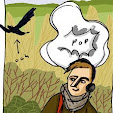

 Posts
Posts


