I crave certain things in my political landscape. A commitment to social progress and suitable support for all parts of society, of course. This is actually pretty widespread in all colours (although the shape this support and progress takes can be very different) and particularly at the local levels, where politicians are hard put to avoid their population. However, I also crave political balance and opposition, at all levels, and this is harder to find.
The popular voice is overwhelmingly conservative, with socialism confined to embattled, closed populations. This popular narrative of conservative values (including its insidious variations, for example that everyone believes socialism, pretends liberalism and actually acts conservative) is open to all. But when everything belongs to everyone, the most "reality-based" attitude set wins for everyone who cannot afford the luxury of belief or pretence. And thus the socialism of the people is lost in the new honesty of the reality TV generation.
I wondered if my position was hiding the narrative of popular socialism from me, so I went looking for a Socialist tabloid, but I couldn't really find a successful one. I wonder if the problem is that little about the concerns of socialism lends itself to feel-good, group-bonding, slap-em-out, shout-em-down headlines. We have The Star, The Mirror (and their local variations) but they are struggling. I had this idea about ordering and reading it, but... when the Star reports that over 100 people recently applied for a £13,000-a-year job to be a refuse collection operative in Wrexham, what can I do with this information? Only feel worse about the world.
Monday, October 14, 2013


Monday, October 07, 2013
the robots are at the door
I'm bringing the casual cover up to speed during a gap in the regular web editor's continuity. Like all web systems, ours has its little quirks, and though I did a couple of intensive sessions on the way in there are always the odd bits that come out in dribs and drabs as the days go by.
This morning I caught myself typing the words, "the robots are drawn to the more popular pages or those that have comments on them already, especially if those comments include images or links" by way of explanation following a more than usually unfortunate alert message dropping into the approval box. I adjusted the comprehensibility of the message while handing out disapproval to this comment (and another, considerably less offensive, message selling - a first for me - a gas-powered outdoor heater) reflecting on the sad truth of the matter.
Our CAPTCHAs are quite good. They're probably not robots.
This morning I caught myself typing the words, "the robots are drawn to the more popular pages or those that have comments on them already, especially if those comments include images or links" by way of explanation following a more than usually unfortunate alert message dropping into the approval box. I adjusted the comprehensibility of the message while handing out disapproval to this comment (and another, considerably less offensive, message selling - a first for me - a gas-powered outdoor heater) reflecting on the sad truth of the matter.
Our CAPTCHAs are quite good. They're probably not robots.
Thursday, September 05, 2013
will no-one save me from this clip art hell
I am downloading clip-art daily. I have been driven into this dismal corner (bright with the indefinably awful smiles of the determinedly generic) by the strong-arm package bundling of a prominent clip-art sales site. I delegated the purchase decision to a staff member who was briefly passing through. He left me this. The site is extensive, but most of it is very badly tagged. A depressing number of pages toss away their descriptive space on misspellings and waste words like handsome, beautiful, fresh, sexy, pretty, etc. I go back to chasing search terms through a maze of the scrubbed and filtered, trying to find the word for what I'm looking for. It's a perfect tidy-up job for the Mechanical Turk, but why would they bother? Forced constant overpayment has me doing the work.
Later, I am trying to show the new staff member Google Analytics. But there is a clip art woman who is stopping me getting to Google Analytics. She smiles gently while I wrestle with my log-in. The browser crashes, like a floundering brontosaur. She doesn't even bother making a snide comment about the paucity of my updates or the make and antiquity of my browser. She just stands there, smiling, using most of my screen, while I stab at the log-in button (now hidden in a tiny ribbon at the top of the screen).
Eventually I get in. Everything's been redesigned, again, in that "you can use me on an i-pad!" look, all shiny, rounded, tasteful and empty like a flagship store no-one can afford to visit. I grind my teeth and get to re-navigating the menus.
Later, I am trying to show the new staff member Google Analytics. But there is a clip art woman who is stopping me getting to Google Analytics. She smiles gently while I wrestle with my log-in. The browser crashes, like a floundering brontosaur. She doesn't even bother making a snide comment about the paucity of my updates or the make and antiquity of my browser. She just stands there, smiling, using most of my screen, while I stab at the log-in button (now hidden in a tiny ribbon at the top of the screen).
Eventually I get in. Everything's been redesigned, again, in that "you can use me on an i-pad!" look, all shiny, rounded, tasteful and empty like a flagship store no-one can afford to visit. I grind my teeth and get to re-navigating the menus.
Sunday, March 24, 2013
leave me alone with your frivolous segmentation
Two events recently have focused my annoyance on the phenomenon of market segmentation.The first involved an email from a popular mailing list service provider. They'd sent me an urgent email explaining how updates to their system involved changing how certain aspects of their segmentation worked. It's a service that adopts a chummy, familiar tone, which does actually generally work in reducing the colossal annoyance of composing, analysing and maintaining mailing lists. But in this case, the chirpy apology for using the marketing jargon caused a wearying explosion of annoyance. "If you don't understand, please pass it to the person on your team who does deal with such things," oh ho ho. There's a sort of self obsession here which probably makes perfect sense from their perspective; after all, I'm sure they do have a department which deals in segmentation. But for those using their service, is this always the case? Is it not vastly more likely that their customers are juggling not just segmentation, not just this product, but the entire concept of online marketing with a host of other responsibilities and duties? Tread gently when you mock our ignorance of your specialisms; lest you discover where priorities truly lie.
And speaking of lying, the other vast explosion of annoyance at segmentation occurred as a mailing list I had been previously signed up to split into some fifteen-odd sub-lists, most of which I still needed to read. A sweary run through repeated triple-verified sign-up processes ensued as I tried to follow their reasoning (and the lack of a "just send me everything" tick box. Leave me alone with your frivolous market segmentation; mostly if I have signed up to it, I'm interested in it; and if something does fall a touch flat for me, hey, I really do have a nice handy right-there delete button.
And speaking of lying, the other vast explosion of annoyance at segmentation occurred as a mailing list I had been previously signed up to split into some fifteen-odd sub-lists, most of which I still needed to read. A sweary run through repeated triple-verified sign-up processes ensued as I tried to follow their reasoning (and the lack of a "just send me everything" tick box. Leave me alone with your frivolous market segmentation; mostly if I have signed up to it, I'm interested in it; and if something does fall a touch flat for me, hey, I really do have a nice handy right-there delete button.
Thursday, March 07, 2013
the arrogant assumption of dedicated time
Great news! A popular online service tells me. You can now achieve [a list of a variety of things] with all the brand news features in our product and analysis tools. Learn all about it in our new webinar series! Hmm. Let me consult the vast wasteland of my diary. Let me consider all those afternoons that would stretch out in bleak silence, washed with bored and lonely tears.
Don't get me wrong. I'm a vast fan of progress. I love the fact that every item, service and product, no matter how small or slight, has or would benefit from having the careful focussed attention of intelligent individuals improving it. What I resent is the assumption from some larger services that there will be teams of dedicated and specialist people looking after their product. There is simply too much to do for any one service to command such attention, particularly as the gains in using these services are light, and that they cannot be delivered in isolation by anyone attempting to reach a universal audience.
You will get some attention, but frankly anything that requires a webinar series to learn is unlikely to be adopted by any but the most overstaffed and obsessive. Put it in a to-do list please. We'll get to it when we need it; and not before.
Don't get me wrong. I'm a vast fan of progress. I love the fact that every item, service and product, no matter how small or slight, has or would benefit from having the careful focussed attention of intelligent individuals improving it. What I resent is the assumption from some larger services that there will be teams of dedicated and specialist people looking after their product. There is simply too much to do for any one service to command such attention, particularly as the gains in using these services are light, and that they cannot be delivered in isolation by anyone attempting to reach a universal audience.
You will get some attention, but frankly anything that requires a webinar series to learn is unlikely to be adopted by any but the most overstaffed and obsessive. Put it in a to-do list please. We'll get to it when we need it; and not before.
Sunday, January 06, 2013
developing backwards
At the moment I'm typing this while flicking back and forth to the tab containing emusic, where I'm previewing a random pile of notes, recommendations and more. I have to keep flicking back and forth because unless you have their overly needy tab at the front, the volume of their preview player reduces to an irritating whisper. So, in order to multitask, I have to keep on flipping back to it, each click-back accompanied by a little stab of complex disappointment, which ranges from irritation at how dark and gloomy the site is since the redesign, to musings on how bugs get sold to site owners as features, to a slight sadness at how this is a literal performance of the myth of multitasking. I'm very fond of emusic (and frequently recommend it -- their long tail is very long, and they have a great selection of rarities, and most labels remember to put their singles up on it, but if you are signing up be aware that their album releases run a little later than other providers and there's typically no album discounts) but...
Music sites in particular seem to be prone to developing backwards. As legitimacy and commercial interest catch up with the bleeding edge the sites get more strewn with logos and disclaimers, the supply of downloads dries up, and sweet deals (that are perhaps more sweet for the owners than the customers) begin to clutter the original offer.
I'm currently wavering over RCRDLBL, for example, originally a hot daily download that has mutated over a few years, sometimes offering more, sometimes less (the buggy Bing-branded music player a particular nadir) but often the place to find sweet remixes that for some reason were not making commercial release. They've shaken off Bing, but recently it's gone a bit streamy (enabled by Spotify and Soudcloud) and expanded their recommendations. But other people's lists of things they like are not that much more exciting than your own, and the more third-party systems involved and the longer the list, the bigger the administrative task. On the other hand, they have lead me to treasures and precious jewels in the past, and still do with a bit of careful trawling - if I ever find the time.
Music sites in particular seem to be prone to developing backwards. As legitimacy and commercial interest catch up with the bleeding edge the sites get more strewn with logos and disclaimers, the supply of downloads dries up, and sweet deals (that are perhaps more sweet for the owners than the customers) begin to clutter the original offer.
I'm currently wavering over RCRDLBL, for example, originally a hot daily download that has mutated over a few years, sometimes offering more, sometimes less (the buggy Bing-branded music player a particular nadir) but often the place to find sweet remixes that for some reason were not making commercial release. They've shaken off Bing, but recently it's gone a bit streamy (enabled by Spotify and Soudcloud) and expanded their recommendations. But other people's lists of things they like are not that much more exciting than your own, and the more third-party systems involved and the longer the list, the bigger the administrative task. On the other hand, they have lead me to treasures and precious jewels in the past, and still do with a bit of careful trawling - if I ever find the time.
Wednesday, January 02, 2013
your brand says spam to me
In common with many other webmasters I got back from my Christmas break to find a Bad Thing. Someone had hacked a server somewhere and for three days over Christmas it had fired off a steady stream of commentspam into my filters before one of my counterparts toiling on the dataface came back from their Christmas break to discover their Bad Thing, and fix it. In the meantime, I set to clearing the gakk from my filters, speculating the while on why people spam. Mostly it ends up in filters, not marketing to anyone other than the person who has the aggravating task of clearing out the comments, for whom it is largely a negative experience. Although, in line with old-school attack, a proportion of the comments also had wordsalad subject lines, some of which were quite beautiful:
Although as a - what's the Yougov term? Dissatisfied Customer - of the aforementioned Livejournal, I do delete commentspam on a pretty regular basis, this was the first time in a while it had been a big enough job to include reflection on how the spam environment has changed in recent years. Wind back a year or two, and the Canadian Pharmacy crowd with their exotic lists of drugs were leading the field. In 2012, although there is a smattering of viagra, cialis, tramadol, tylenol, ativan and their ilk, the overwhelming majority is brandspam. Working through the comment pile for anything I needed to reply to or report, I realised I was using brand names to identify comments as spam. In fact, there were some brand names that I already associated with spam. Ugg? Spam. Christian Laboutin? Spam. Louis Vuitton? Spam, beyond a doubt.
Why does this happen? Is it popularity? The intensity with which a brand is ripped off and faked? Or is it just chance, that brand caught up in the roll of the black-marketing dice? Is it damaging for them, or do they feel (as some celebrities do) that all publicity is good publicity? Is there complicity?
Whatever the truth of the matter, I'd been given a snapshot. The state of spam, Christmas 2012. And here are the brands under the spammer's Christmas tree:
- vault owllike whiterump minginess
- indiscriminate negotiation dirtying pumple
- outstandingly semiprofessional flirting ellipse
Although as a - what's the Yougov term? Dissatisfied Customer - of the aforementioned Livejournal, I do delete commentspam on a pretty regular basis, this was the first time in a while it had been a big enough job to include reflection on how the spam environment has changed in recent years. Wind back a year or two, and the Canadian Pharmacy crowd with their exotic lists of drugs were leading the field. In 2012, although there is a smattering of viagra, cialis, tramadol, tylenol, ativan and their ilk, the overwhelming majority is brandspam. Working through the comment pile for anything I needed to reply to or report, I realised I was using brand names to identify comments as spam. In fact, there were some brand names that I already associated with spam. Ugg? Spam. Christian Laboutin? Spam. Louis Vuitton? Spam, beyond a doubt.
Why does this happen? Is it popularity? The intensity with which a brand is ripped off and faked? Or is it just chance, that brand caught up in the roll of the black-marketing dice? Is it damaging for them, or do they feel (as some celebrities do) that all publicity is good publicity? Is there complicity?
Whatever the truth of the matter, I'd been given a snapshot. The state of spam, Christmas 2012. And here are the brands under the spammer's Christmas tree:
- Christmas Top of the Pops: Uggs, Gucci, Louis Vuitton, Christian Laboutin, Lasix, Tom's Clogs, Mulberry, Michael Kors, Chanel, Pandora Charms, Dr Dre Beats, GHD hair straighteners
- Christmas classics: Viagra, Canadian Pharmacy, Cialis, Ativan, Zoloft, Flomax, Tylenol, iPod, Ativan, Clomol, Flagyl, Nike
- Contemporary Christmas Gifts: Chilliwack, Tiffany's, North Face, Canada Goose, G-Star, Thomas Sabo, Hunter Wellies, Zithromax, Adirondack
Monday, November 22, 2010
become a deviant: y/n
It's not a question you ever want to be asked in a work context; not in my area of work anyway! In some, I'm sure it's an asset. But for me, deviant, work, no.
That is, until I asked the manga girls whether they used Facebook. "Well, yeah," they said, "But mostly on Deviantart! Are you on Deviantart? Can we be your friend?"
Errrrrrrrrr. I said. Not yet, but I can be. What's your ID?
I'd picked up an ID on a trawl through online drawing groups years ago, but it had seemed a bit forumy, inexplicable and -- frankly -- grey, and I was sure that any profile, if it still exists, would be a tangle of abandoned fragments. Not to worry though, a shiny new profile is the work of a moment:
http://jeremy-spired.deviantart.com/
... and gives me a convenient place to drop any cartoons, pictures, etc. which I do at the art group which brought all of this up in the first place. I'm still feeling my way, because it's massive, with its own interface querks, dialogue conventions and games -- you can get an idea of the sheer size and breadth from the size of this meme-station:
http://meme-station.deviantart.com/
Here, meme mans a blank drawing game. Fill it in, have fun, invite a friend! I have to say, the focus on creating, on creativity and collaboration is refreshing, healthy and exciting. Interactions seem mostly positive and it's a rich and thrilling environment.
Maybe that moment of "erk!" when you have to tick yes to "become a deviant" does a clever trick. It marks that step into virtual space, that fourth-wall moment where you step into your ID, and embrace the pseudonym, the performance.
It looks like a place where you'd be able easily to shake off your past with a change of ID, and skip through different characters as your interests change. Like somewhere you could successfully play. And that has to be a freedom worth having.
That is, until I asked the manga girls whether they used Facebook. "Well, yeah," they said, "But mostly on Deviantart! Are you on Deviantart? Can we be your friend?"
Errrrrrrrrr. I said. Not yet, but I can be. What's your ID?
I'd picked up an ID on a trawl through online drawing groups years ago, but it had seemed a bit forumy, inexplicable and -- frankly -- grey, and I was sure that any profile, if it still exists, would be a tangle of abandoned fragments. Not to worry though, a shiny new profile is the work of a moment:
http://jeremy-spired.deviantart.com/
... and gives me a convenient place to drop any cartoons, pictures, etc. which I do at the art group which brought all of this up in the first place. I'm still feeling my way, because it's massive, with its own interface querks, dialogue conventions and games -- you can get an idea of the sheer size and breadth from the size of this meme-station:
http://meme-station.deviantart.com/
Here, meme mans a blank drawing game. Fill it in, have fun, invite a friend! I have to say, the focus on creating, on creativity and collaboration is refreshing, healthy and exciting. Interactions seem mostly positive and it's a rich and thrilling environment.
Maybe that moment of "erk!" when you have to tick yes to "become a deviant" does a clever trick. It marks that step into virtual space, that fourth-wall moment where you step into your ID, and embrace the pseudonym, the performance.
It looks like a place where you'd be able easily to shake off your past with a change of ID, and skip through different characters as your interests change. Like somewhere you could successfully play. And that has to be a freedom worth having.
Monday, September 20, 2010
Ten things that are killing the social web
In common with lots of people recently I've been seeing a slow fall-off in numbers of people commenting, participating, chatting and responding on my various social networking channels. Part of the clue's in what I've just said; channels. More channels spreads attention more thinly, and stops people reliably getting your news.
You drift apart.
This annoys me; when I first joined the busy rush onto social networking sites (2001, my archives tell me) I had a bold vision of a world where I could broadcast important information easily to friends; where they could pick it up at their leisure without feeling pressure to respond or react; where I could see day-to-day details of their existence and by this resist the slow erosions of time and distance that lead us, in five years time, to be strangers again. This was my vision; a social group where no one is left behind.
It didn't happen that way. Partly, that's down to human nature. Lots of people don't enjoy the fragmentary communication style of online contact; others see computers as work and socialise away from them. I've made new friends and reconnected with old friends and walked along the social connections to friends of friends pretty much as you're supposed to, but right now I'm organising a party and the situation is far from ideal. In fact, I'm probably going to need to send out an email, and then send out another email, just like I did in the old days, but with even less chance of success thanks to hair-trigger spam catchers.
The messages are up, but the number of relevant people listening is dropping off. Plenty of interaction, but increasingly with partial strangers, as if this were a communication mode no longer sufficiently privileged for actual friends. And there's no point in trying to write IMPORTANT in capital letters or bold or even some text or use any other attention! indicator, either: years of deleting spam has taught us that the more urgent something appears, the less likely it is to need reading.
So much for human nature; there are also a bunch of things happening in the evolution of the social web at the moment which are stifling communication (even though some are enabling it). Confused? Let me explain through the medium of a conveniently numbered list:
You drift apart.
This annoys me; when I first joined the busy rush onto social networking sites (2001, my archives tell me) I had a bold vision of a world where I could broadcast important information easily to friends; where they could pick it up at their leisure without feeling pressure to respond or react; where I could see day-to-day details of their existence and by this resist the slow erosions of time and distance that lead us, in five years time, to be strangers again. This was my vision; a social group where no one is left behind.
It didn't happen that way. Partly, that's down to human nature. Lots of people don't enjoy the fragmentary communication style of online contact; others see computers as work and socialise away from them. I've made new friends and reconnected with old friends and walked along the social connections to friends of friends pretty much as you're supposed to, but right now I'm organising a party and the situation is far from ideal. In fact, I'm probably going to need to send out an email, and then send out another email, just like I did in the old days, but with even less chance of success thanks to hair-trigger spam catchers.
The messages are up, but the number of relevant people listening is dropping off. Plenty of interaction, but increasingly with partial strangers, as if this were a communication mode no longer sufficiently privileged for actual friends. And there's no point in trying to write IMPORTANT in capital letters or bold or even some text or use any other attention! indicator, either: years of deleting spam has taught us that the more urgent something appears, the less likely it is to need reading.
So much for human nature; there are also a bunch of things happening in the evolution of the social web at the moment which are stifling communication (even though some are enabling it). Confused? Let me explain through the medium of a conveniently numbered list:
- Richer environment
It's a bit like trying to meet a friend at an Arcade combined with a Science Museum, gallery, Shopping Centre and Funfair. With so many shiny distractions around it's easy to miss something, especially when the first symptoms of offline crisis is online absence. Yes, your games, puzzles, ads, badges and prizes are lovely, but I need to go see my mate now, sorry. - Feature creep, usability decay
Currently Myspace's music player is flaky and Facebook is only intermittently alerting you when you receive an event invitation. At the same time, both are expanding their capabilities like excited slime moulds, colonising thrilling new features, while crucial central systems decay and reorganise, forcing users into multiple work-arounds and unbudgeted and unexpected learning curves to a soundtrack of struggling, swearing and giving up. - Social Networking Marketing Experts
Top of the social pile of the people trying to game the online social system are the people trying to build personal brand, leverage their online identity and create a buzz around [content]. They not only clutter my social space with idiot theories, annoying how-to videos and tedious single-insights posts, they also (and more insidiously) create nervousness among online freshers who are in a state about making a mistake; irritate and annoy regular users; and provoke veterans to throw up their hands and leave it to the Nathans. - Earn money from home!
Somewhere in the middle are gangs of teenagers, marketing students and stay-at-home mums earning small amounts of money for brand blogging, SEO optimisation, buzzes made entirely by a stable of fake IDs, and all the other myriad methods of white-to-greymarket online advertising. It's impossible to resent anything that produces such low wages and some of it is useful information, but the constant murk of UGG boots, random restaurants and price comparison websites gets wearing. - Spammers, scammers, hackers, script kiddies and their ilk
Bottom of the heap are the parasites who've trained us to ignore urgent messages, avoid clicking on links, and fear making friends with strangers. Who have distorted the development of websites so that vast resources are now poured into security and updating, rather than into improving the site for its users. Thanks to them, all websites are now less reliable, more prone to changes of service and more annoying. They are largely responsible for that slug of anxiety, paranoia and fear many people feel when they sign up to a new service or suffer interruptions or changes to a current service. It's driving people off the web, not least because there's no obvious way to punish the perpetrators. - Firehose of Me anxiety
Some people select one channel and stick with it; others skip around doing a bit here, a bit there (often precisely because their friends are scattered across different channels). Almost everyone has an additional channel for rich media, even if it's only a Photobucket or a Youtube. While combining these channels into one, single complete channel is certainly possible nowadays, all but celebrities and massive egotists flinch from full channel combination, the unmediated stream of an individual's online existence. That much of one person at once is overwhelming, and feels intrusive; even if it is, often, things you do want to see. - Overwhelementation
There is too much to follow. Too many cool things, nice people, fun events, neat new music and gorgeous art. Once the watched feeds get over a certain level, once the channels proliferate sufficiently, once you have above a certain number of elements on your page, following everything, reading everything, you either can't do it, or it stops being sociable fun, LOLs and gossip and turns into a joyless job-list, a round of sniffing posts to deal with and shout back at, grinding out your social existence like a grumpy prayer-wheel. - Intimacy drift
On the social net, the professional is personal, strangers are friends and family are filtered; privacy settings came in alongside the crowd of old schoolfriends, colleagues and acquaintances building their instant social groups, and all of us too status-aware and/or open to turn down even a dubious social connection. But as friend-groups swell, trust diminishes; and no matter how heavily we filter, the awareness is always there that as soon as anyone gets annoyed or feels someone should know something, or is simply sufficiently motivated to press ctrl+c, ctrl+v, our privacy is toast. It inhibits, and forces a backwards march into an inner circle, particularly during times of stress when we need new connections and fresh perspective. - "Share this" --with your mum
Sharing is a lovely idea, but enabling tools encourage oversharing, which leads to inhibition. The first step into any new application, social network or utility is nowadays increasingly likely to include a frantic dash through the settings, turning absolutely everything off, for fear that your skimming of small print has produced a cross-identity torrent of "x watched this", "X thinks kittens are cute!" and forced that most disagreeable of thoughts; Le spammeur, c'est moi. - Hesitancy of choice
Most of the central services (Facebook, Myspace) want to take on the functions (photoposting, status updates) of the specialist services (Flickr, Twitter). By the time you've figured out what to use, the urge has often faded. This is why I often find myself using Tumblr, the blogging equivalent of bashing big buttons with little thought. But Tumblr's simplicity means I don't tend to pass on its pretty updates, locking them away from the bulk of my friends. As a result, my friends are --word of the moment-- siloed into channels and unable to mingle.
I'm aware that I'm listing problems without knowing solutions, and that it's only my opinion, and that I'm no trendsetter or important voice; but I know I'm not the only one posting things like "...tumbleweeds here..." right now. And, as it happens, I do have some advice, although it's not new, not rocket science, and not an easy answer to all your online marketing needs.
- Don't neglect your core functionality
- Build new features when you need them, not for their own sake or keeping up with [SNx]
- Engage with your marketing population and encourage them to enforce good behaviour
- Make it easy to share and not to share on a post by post basis
- Play nice; you'll win in the end
Friday, August 27, 2010
flexibility key for making the most of facebook
Of all the various social networking outreach tools we've been using, Facebook is drawing ahead fast. Occasionally Twitter will throw up a surprise sharp enough that I'm careful to regularly check my @ and direct messages, but the bulk of the work is out in the Facebook.
Continuing in my experimental vein, I'm taking every opportunity to compare and contrast different approaches. Conveniently, two main agendas (Positive Activities and Choices/Pathways/Connexions) provide me with a very neat pair of comparators. Whenever I'm uncertain about how to approach a task, I can take one route on one page, and the other on the other, and learn by doing.
So, the two pages get slightly different approaches, on the advertising, the character of the posts, the numbers and character of the links. Spreading out further, the different groups and projects are all pursuing their own contact style and behaviours, according to their needs. At first this caused me some anxiety. As members of an advanced bureaucracy, stepping outside consistent procedure is panic-provoking. As people who work with people who are young, and often vulnerable in other ways, we are naturally concerned that our actions are consistent, kind and safe.
However, as practice developed, I began to feel that this very multiplicity of approach may be crucial to successfully using social networking in a youthwork context. Where workers made up their own approach, in collaboration with the young people they were working with, groups flourished and grew. Where workers asked to be shown how to use it, then followed instructions, their enthusiasm quickly waned and online groups began to fade.
I've come up with a few reasons why this might be:
Continuing in my experimental vein, I'm taking every opportunity to compare and contrast different approaches. Conveniently, two main agendas (Positive Activities and Choices/Pathways/Connexions) provide me with a very neat pair of comparators. Whenever I'm uncertain about how to approach a task, I can take one route on one page, and the other on the other, and learn by doing.
So, the two pages get slightly different approaches, on the advertising, the character of the posts, the numbers and character of the links. Spreading out further, the different groups and projects are all pursuing their own contact style and behaviours, according to their needs. At first this caused me some anxiety. As members of an advanced bureaucracy, stepping outside consistent procedure is panic-provoking. As people who work with people who are young, and often vulnerable in other ways, we are naturally concerned that our actions are consistent, kind and safe.
However, as practice developed, I began to feel that this very multiplicity of approach may be crucial to successfully using social networking in a youthwork context. Where workers made up their own approach, in collaboration with the young people they were working with, groups flourished and grew. Where workers asked to be shown how to use it, then followed instructions, their enthusiasm quickly waned and online groups began to fade.
I've come up with a few reasons why this might be:
- The fluid nature of social networking environment requires flexibility.
Social Networking is a dynamic, constantly evolving environment. To respond best and most creatively users must be open to exploration, experimentation and change. - Social networking is a naturally subversive act which resists rules and authority.
From the informal communication register to the multiple oportunities for time-wasting, deception and mischief-making, Social Networking is sub-rosa, sneaky, circumvential and generally an area of experimentation, boundary testing and play. This makes it a rich environment for youth work, but one best engaged with informally, collaboratively, and on the young people's own terms. - Successful usage requires proper submersion in the Social Networking environment.
Following rules and tapping through checkboxes doesn't communicate the true appeal of the online environment. Not that workers should spend their whole time watching youtube videos, talking rubbish and playing pointless web games! But some exploration and experimentation is crucial. A phrase I use is "be guided by your offline practice", and here I would quote the climbing wall. Go up and down the wall yourself. You'll be a better worker for it.
Tuesday, July 13, 2010
on the refolding of identity
Scandal this week as huge online multi-player game World of Warcraft decided to introduce their forums to real name culture. The predictable outcry masked a broader anxiety about the brave new world of total connection. Now that the entire world is online, will it have to become less free? Or, put more simply; are most people really idiots?
World of Warcraft backed down, of course; several days of female roleplayers gently sharing with the site organisers their extensive personal experiences of being stalked, threatened and harassed did the trick nicely. But Facebook, the native home of the real name culture, is alive and well and winning the internet.
The internet started out as a pseudonymous culture. Faced with character name limits, people created aliases. Realising they were different people with different groups, they made multiples. Feeling the need to escape in an overpoweringly male-dominated world, women went male, or gender neutral. People put on imaginary bodies and made strange worlds. They met strangers and found out new ideas, explored new territories of identity and expression. They were able to switch and change to meet new challenges and rest from exhausting interactions. It was thrilling, empowering, exciting.
Compared to that, the real name culture of Facebook feels like being a pop-up gopher in the hammer game -- the same friends, the same connections, the same short list of faces/friends/family, chattering back endlessly. It's quite nice, but also quite boring. You respond to someone, you see more of them. You ignore someone, they go away. It simulates the experiences of popular kids everywhere, which is fine, I guess; but if you only stay in your own pretty playpen you're kind of missing the point of going online.
For anyone who read about online freedoms and felt a sinking sense of horror, you're absolutely right. While you can engage with this freeedom creatively, make interesting content, have fun, make new friends and generally have a brilliant time, of course many people take the other route. They grief, flame, stalk, harrass, break and vandalise things. They do appalling things almost unconsciously, without a second thought; and their excuses are very simple and very clear. It is easy to do, anyone could do it, lots of people want to, and nobody's stopping me.
Are they right, though? Are they really now the dominant online group? Or, to put it another way, are most people really idiots?
If what's predominantly happening is that most people are routinely thoughtlessly acting out without worrying about consequences because there are unlikely to be any bad consequences and it's just so easy, yes, some form of unique registration might have an effect. However, if what we're seeing is an aggressive minority indulging in deviant behaviour because that's what they want to do, then it seems likely that people will get round the checks and blocks and continue with what they're doing because that is what they do when they're online.
World of Warcraft's forums, for the moment, are continuing to allow their users fictional creations their voices. But if the moronic and monotonous sock-puppet slaggers outnumber the real and honorable interactions, what conclusions should we draw?
World of Warcraft backed down, of course; several days of female roleplayers gently sharing with the site organisers their extensive personal experiences of being stalked, threatened and harassed did the trick nicely. But Facebook, the native home of the real name culture, is alive and well and winning the internet.
The internet started out as a pseudonymous culture. Faced with character name limits, people created aliases. Realising they were different people with different groups, they made multiples. Feeling the need to escape in an overpoweringly male-dominated world, women went male, or gender neutral. People put on imaginary bodies and made strange worlds. They met strangers and found out new ideas, explored new territories of identity and expression. They were able to switch and change to meet new challenges and rest from exhausting interactions. It was thrilling, empowering, exciting.
Compared to that, the real name culture of Facebook feels like being a pop-up gopher in the hammer game -- the same friends, the same connections, the same short list of faces/friends/family, chattering back endlessly. It's quite nice, but also quite boring. You respond to someone, you see more of them. You ignore someone, they go away. It simulates the experiences of popular kids everywhere, which is fine, I guess; but if you only stay in your own pretty playpen you're kind of missing the point of going online.
For anyone who read about online freedoms and felt a sinking sense of horror, you're absolutely right. While you can engage with this freeedom creatively, make interesting content, have fun, make new friends and generally have a brilliant time, of course many people take the other route. They grief, flame, stalk, harrass, break and vandalise things. They do appalling things almost unconsciously, without a second thought; and their excuses are very simple and very clear. It is easy to do, anyone could do it, lots of people want to, and nobody's stopping me.
Are they right, though? Are they really now the dominant online group? Or, to put it another way, are most people really idiots?
If what's predominantly happening is that most people are routinely thoughtlessly acting out without worrying about consequences because there are unlikely to be any bad consequences and it's just so easy, yes, some form of unique registration might have an effect. However, if what we're seeing is an aggressive minority indulging in deviant behaviour because that's what they want to do, then it seems likely that people will get round the checks and blocks and continue with what they're doing because that is what they do when they're online.
World of Warcraft's forums, for the moment, are continuing to allow their users fictional creations their voices. But if the moronic and monotonous sock-puppet slaggers outnumber the real and honorable interactions, what conclusions should we draw?
Thursday, May 20, 2010
Bye bye Bebo, so long Livejournal
"Everyone talks about Bebo, but nobody uses it," she says. I'm talking to a group who are using Facebook to promote gigs at their Young People's Centre. It's been incredibly successful. They made friends with local bands, promoters and music fans. They made friends with everyone in the Youth Club, on the local Town Youth Council and the local Youth Forum. Once they got enough friends in the age-group, they just started being suggested to the local young people as a suitable friend. And the young people laughed at the building pretending to be a person and notched up another friend-mark on their tally sheet.
At 400 friends, it's impossible to be sure who's on your friends list any more. Is it a risk? I take them through some of the risk points, ignoring the irony of teaching kids to use Facebook. Sometimes they need it, but not this lot. "Oh yeah, I was stalked," she says, with a lopsided smile, and launches into one of the standard stories. She snaps open a chat window as she talks; one of the bands wants info about an upcoming gig. She fires a question across the room, someone fires off a text, the information comes back and she responds. I'm looking at the text as she types. The language is formal, kind, elaborately polite, bracketed by smilies and see-you-latwer commonplaces. Subtext made explicit; I'm busy, but I still care.
Bebo, then, does anyone use it? "I think my little sister... used to," says one of the older young people. "She's got a Facebook now. She's only eleven." We launch into another discussion of online safety, terms of service and protecting yourself. They know the script, though; they're looking out for each other, they can take their concerns on to staff, family, friends.
Does anyone read blogs? "I have a friend who writes one, I think..." They look a bit bored. Someone's sent through a message. "We told them the stage times, didn't we?" she snaps, "They know this!" She types up a quick message. "Who is it?" asks one of the younger young people. She tells them. "He never remembers anything," he laughs, "Too much *phweep*." Her response, typed with machine-gun speed, is as unfailingly polite and concise as her chat.
Do you have any trouble with people being rude on the wall? No, no. Of course they don't.
So, Bye bye Bebo. We didn't get much more than a year's use out of it in the end, before everyone was flooding onto Facebook. And the blog can go, too -- fold it back into the general site news and the timeline. Twitter and Myspace can stay, for now, utilities filed next to Slideshare and Youtube. Glad I elected to use Livejournal for the blog, though! Downloading an archive copy was a piece of cake.
At 400 friends, it's impossible to be sure who's on your friends list any more. Is it a risk? I take them through some of the risk points, ignoring the irony of teaching kids to use Facebook. Sometimes they need it, but not this lot. "Oh yeah, I was stalked," she says, with a lopsided smile, and launches into one of the standard stories. She snaps open a chat window as she talks; one of the bands wants info about an upcoming gig. She fires a question across the room, someone fires off a text, the information comes back and she responds. I'm looking at the text as she types. The language is formal, kind, elaborately polite, bracketed by smilies and see-you-latwer commonplaces. Subtext made explicit; I'm busy, but I still care.
Bebo, then, does anyone use it? "I think my little sister... used to," says one of the older young people. "She's got a Facebook now. She's only eleven." We launch into another discussion of online safety, terms of service and protecting yourself. They know the script, though; they're looking out for each other, they can take their concerns on to staff, family, friends.
Does anyone read blogs? "I have a friend who writes one, I think..." They look a bit bored. Someone's sent through a message. "We told them the stage times, didn't we?" she snaps, "They know this!" She types up a quick message. "Who is it?" asks one of the younger young people. She tells them. "He never remembers anything," he laughs, "Too much *phweep*." Her response, typed with machine-gun speed, is as unfailingly polite and concise as her chat.
Do you have any trouble with people being rude on the wall? No, no. Of course they don't.
So, Bye bye Bebo. We didn't get much more than a year's use out of it in the end, before everyone was flooding onto Facebook. And the blog can go, too -- fold it back into the general site news and the timeline. Twitter and Myspace can stay, for now, utilities filed next to Slideshare and Youtube. Glad I elected to use Livejournal for the blog, though! Downloading an archive copy was a piece of cake.
Monday, April 19, 2010
recovering from the personal effectiveness course
It's been a couple of weeks since I went on the Personal Effectiveness Course, and I've just about recovered. No disrespect to the trainer (she was very good) the course content (some interesting insights) or the training arrangements (nothing like being presented with an assertiveness challenge partway through the day), but, let's face it, if a person has problems with assertiveness, effectiveness and so on, there is, by definition, a problem. Problems are seldom sorted out by a few useful insights; this presents the beginning of the work.
I have the usual issues common to operational, hands-on staff with training around "personal improvement". I feel it's sort of waffy and handwavy, dancing around the work without actually getting on with it. In this spirit I've set aside time each week to complete training that will improve my effectiveness and capabilities at work -- those clear goals and that work focus help me feel satisfied that the training is valid use of my time, but at the same time, most courses start or involve a bit of personal improvement.
There was the usual round of reprove/excuse/allow over my doodling during the session, but as you can see from the page below, it didn't really slow me down. So, what struck me?
The notes on trying to form a relationship is related to people (including bosses) feeling annoyed or overly distracted when people socialise at work. While the option of just telling people (or requiring them) to do things is available for a few lucky people, most need regularly renewed social connection to avoid awkwardness when sharing out work. Social glue becomes a lubricant to progress.
My bulleted list refers to the triple preventers of progress.

P.S. I've included the picture of my cat because the internet requires kittens; the face of increased financial anxiety is something we all wear from time to time.
I have the usual issues common to operational, hands-on staff with training around "personal improvement". I feel it's sort of waffy and handwavy, dancing around the work without actually getting on with it. In this spirit I've set aside time each week to complete training that will improve my effectiveness and capabilities at work -- those clear goals and that work focus help me feel satisfied that the training is valid use of my time, but at the same time, most courses start or involve a bit of personal improvement.
There was the usual round of reprove/excuse/allow over my doodling during the session, but as you can see from the page below, it didn't really slow me down. So, what struck me?
The notes on trying to form a relationship is related to people (including bosses) feeling annoyed or overly distracted when people socialise at work. While the option of just telling people (or requiring them) to do things is available for a few lucky people, most need regularly renewed social connection to avoid awkwardness when sharing out work. Social glue becomes a lubricant to progress.
My bulleted list refers to the triple preventers of progress.
- Me getting angry and frustrated,
- people going silent,
- agreements not leading to action.
I was looking for answers to these problems, and didn't really get them. I have a lot of tips and tricks for calming myself already, and I know about lists and faulty thinking and triggers and so on and so forth. This section of the course depressed me, and the "we instruct people how to treat us" doodle hits the crux of the problem. There was the usual discussion of family roles and how these direct your interactions as an adult. For some people, this is a revealing insight, but for those who grew up in difficult emotional situations, this statement can arrive like a life sentence; the abused destined always to perform their negative, reactive, limited roles, the abusers able to merrily carry on in intentional absolution.
I would rather believe that you can put away your childhood habits, those bad communication glitches learned from difficult family interactions, and learn to operate with other people -- colleagues especially -- as a rational, respectful and kind adult. That way, as you move along social connections, as you increase them, you can set aside childish things and ways of behaving.
P.S. I've included the picture of my cat because the internet requires kittens; the face of increased financial anxiety is something we all wear from time to time.
Tuesday, March 02, 2010
unsafe interaction, cyberbullying and resilience
Cyberbullying seems to be the flavour of the moment. Local news stories. Government campaigns. Angry parents and government scandals. And I've been processing the winning entries to Oxfordshire's Anti-Cyberbullying competition, where young people were invited to submit/design posters, cartoons, poems, etc. against cyberbullying. What with the anti-bullying mp3s and last year's posters, I'm beginning to rack up quite a lot of online anti-bullying resources.
I like to joke that I feel bullied after doing the anti-bullying content -- ground down by exposure to miserable content, comic sans, tales of terrible suffering -- but there is a serious point there. Exposure to concentrated information about an issue can make you more likely to suffer it; or, to put it better, information aimed at awareness-raising can actually increase feelings of victimisation and powerlessnes, if it lacks strategies to decrease the problem or increase resilience.
Checking back over my notes, I found this very revealing comment from a presentation about online safety: harassing individuals report being harassed; bullies report being bullied.

This insight isn't very difficult, if you can step back from a moment from the langauge or victim and perpetrator. People who act in an inflammatory and unsafe way online are likely to suffer reprisals. You could argue that they deserve it. Possibly they do; however, although some people are malicious, others are (also) young, inexperienced or may simply make mistakes. Things that start by accident can become habits, or get out of control. Things done thoughtlessly can quickly become entrenched in a mass of bad feelings and message board spats, and it's all too easy to get into a vast and pointless cycle of bad behaviour and suffering.
When I started writing up guidelines for supporting young people online, among the things to do if young people start flaming, bullying, or making false accusations, I included "always offer cyberbullying support". It's a temptation, in the online world of anonymous comments, to think that the rules of Do As You Would Be Done By can safely be ignored. However, even the safely anonymous can't escape from the fact that aggressive interactions will lead to negative experiences.
Another thing on the list is "diversion", recognising that boredom and neglected spaces encourage bad behaviour. If bad things are happening, put up a video, link to a game or upcoming activity, give people something to do. Refresh your page. The question presented in the picture below, "why are we always interacting with the most irritating individuals?" betrays the vulnerability of the purely reactive; you must do positive, interesting things, too.

As you can tell by my expression in the picture above, the last thing you may feel like doing is being positive and creative when someone has been nasty and hateful. But it's a crucial part of being resilient, and resilience is key to emerging emotionally unscathed from aggressive situations. That, and knowing that it's OK not to respond, that you can just walk away, that it's not an admission of defeat to drop or friendslock an online identity, any more than it is to have locks on your front door and chain up your bicycle.
Surprisingly often, online, doing nothing is the best response. Walk away, don't rise to jibes, don't respond, do another thing. And if things get too aggravating, delete your Facebook. You can always get another one.
I like to joke that I feel bullied after doing the anti-bullying content -- ground down by exposure to miserable content, comic sans, tales of terrible suffering -- but there is a serious point there. Exposure to concentrated information about an issue can make you more likely to suffer it; or, to put it better, information aimed at awareness-raising can actually increase feelings of victimisation and powerlessnes, if it lacks strategies to decrease the problem or increase resilience.
Checking back over my notes, I found this very revealing comment from a presentation about online safety: harassing individuals report being harassed; bullies report being bullied.

This insight isn't very difficult, if you can step back from a moment from the langauge or victim and perpetrator. People who act in an inflammatory and unsafe way online are likely to suffer reprisals. You could argue that they deserve it. Possibly they do; however, although some people are malicious, others are (also) young, inexperienced or may simply make mistakes. Things that start by accident can become habits, or get out of control. Things done thoughtlessly can quickly become entrenched in a mass of bad feelings and message board spats, and it's all too easy to get into a vast and pointless cycle of bad behaviour and suffering.
When I started writing up guidelines for supporting young people online, among the things to do if young people start flaming, bullying, or making false accusations, I included "always offer cyberbullying support". It's a temptation, in the online world of anonymous comments, to think that the rules of Do As You Would Be Done By can safely be ignored. However, even the safely anonymous can't escape from the fact that aggressive interactions will lead to negative experiences.
Another thing on the list is "diversion", recognising that boredom and neglected spaces encourage bad behaviour. If bad things are happening, put up a video, link to a game or upcoming activity, give people something to do. Refresh your page. The question presented in the picture below, "why are we always interacting with the most irritating individuals?" betrays the vulnerability of the purely reactive; you must do positive, interesting things, too.

As you can tell by my expression in the picture above, the last thing you may feel like doing is being positive and creative when someone has been nasty and hateful. But it's a crucial part of being resilient, and resilience is key to emerging emotionally unscathed from aggressive situations. That, and knowing that it's OK not to respond, that you can just walk away, that it's not an admission of defeat to drop or friendslock an online identity, any more than it is to have locks on your front door and chain up your bicycle.
Surprisingly often, online, doing nothing is the best response. Walk away, don't rise to jibes, don't respond, do another thing. And if things get too aggravating, delete your Facebook. You can always get another one.
Monday, February 08, 2010
Foursquare, Knowhere, and the quest for locational knowledge
We have this ongoing problem (hardly unique) that we need to be able to locate (positive) activities in time and space somewhere where young people already are. Such a quest inevitably leads you to Facebook. However, Facebook's events system, kept clunky and timeconsuming to flummox spammers, is not suited to the large lists produced by a government directive to provide all young people with two hours of directed positive leisure activity a week. There are apps which can enable this (meet the Boredometer, for example) but then there's the question of uptake, maintenance, development, etc.
Also, and more broadly, there's the question of whether Facebook is currently being used primarily to organise leisure time. After the redesign dropped events to a less prominent position on the page, I stopped using it so much to figure out what I might be doing this weekend. I'm now far more chatting and interacting with (geographically) distant friends and frelatives. I've seen this before, on other sites. It starts out as a place to organise parties, pub nights and gigs, and then it suffers social erosion, eventually becoming a place where you chat/interact with the friends you met there and those of your friends who successfully adopted. One of my new year's resolutions, I kid not, is "map existing social groups and identify reliable communication routes for all". All too soon, your tool for better organisation of social groups is muddy with natter, farming games, quizzes, memes and people throwing sheep and kinder eggs around -- and while you can hide that interaction, what you can't do is get back the attention it has taken away. The inbox is full, and your personal interaction has been crowded out by commercial cuckoos.
One approach to this degradation of social channels is to find/create a popular SN site that is built entirely around events. I spotted Upcoming, one of the elder statespeople on the scene, in a complaint in a friend's twitter stream only the other day. It never quite stretched beyond a certain audience, though, and a glance at what's on it in the Oxford area hints at why: e-campaigning forum, geek night, geek jam, xml summer school, e-chem-info, psychoanalysis... the bar for participation rests high. No gigs and parties here.
But that did spark me to start looking around. Meetup has folksy charm and a lot of actual users, even in this smallish city. I put an ID in it and marked it as a project for a rainy day. At least a few things I can obviously do there, and do I like to contribute. But it's not for work; this is a grown-up space. Then a link and a mention sent me off in the direction of something called Foursquare.
Foursquare doesn't look like it's aimed at grown-ups. It doesn't even really look like it's built by grown-ups. The mobile interface is flaky, it keeps going down and the information on it -- well, with the bar set that low, some of it's going to be bogus. I'm not quite sure why even I'm persisting with it, except that if it wasn't giving me something I wanted I wouldn't be annoyed with its shortcomings. I'd just have left and forgotten about it.
If Twitter is a way to say (Oi look!) or (I think!) or (this is what's happening here) or even (I say I say I say) at a distance, then Foursquare might be a way to say (Hey! Over here! This is neat! You should try this! I like this place!) -- a virtual I waz here, basic and banal. It touches that simple, primal urge to mark out your stamping ground, the physical space in which you exist.
Most of all it reminds me of a site called Knowhere that captured the ideas and opinions, largely unfiltered, of skater kids and parkbenchers, dirty stop-outs and schoolkids, all those people who knew a place because they'd been there, lived there, had fun there. You can still see it online, although it's like an abandoned seaside town now.
It also gives a sense of the virtual world squeezing a little closer to the one in which we walk to work, dig the garden, wave to neighbours and drink coffee; that ideal of not going on and off the internet, but existing continuously in one data-enriched world, where you can plot a party en route and interrogate places about what you can do when you get there.
Also, and more broadly, there's the question of whether Facebook is currently being used primarily to organise leisure time. After the redesign dropped events to a less prominent position on the page, I stopped using it so much to figure out what I might be doing this weekend. I'm now far more chatting and interacting with (geographically) distant friends and frelatives. I've seen this before, on other sites. It starts out as a place to organise parties, pub nights and gigs, and then it suffers social erosion, eventually becoming a place where you chat/interact with the friends you met there and those of your friends who successfully adopted. One of my new year's resolutions, I kid not, is "map existing social groups and identify reliable communication routes for all". All too soon, your tool for better organisation of social groups is muddy with natter, farming games, quizzes, memes and people throwing sheep and kinder eggs around -- and while you can hide that interaction, what you can't do is get back the attention it has taken away. The inbox is full, and your personal interaction has been crowded out by commercial cuckoos.
One approach to this degradation of social channels is to find/create a popular SN site that is built entirely around events. I spotted Upcoming, one of the elder statespeople on the scene, in a complaint in a friend's twitter stream only the other day. It never quite stretched beyond a certain audience, though, and a glance at what's on it in the Oxford area hints at why: e-campaigning forum, geek night, geek jam, xml summer school, e-chem-info, psychoanalysis... the bar for participation rests high. No gigs and parties here.
But that did spark me to start looking around. Meetup has folksy charm and a lot of actual users, even in this smallish city. I put an ID in it and marked it as a project for a rainy day. At least a few things I can obviously do there, and do I like to contribute. But it's not for work; this is a grown-up space. Then a link and a mention sent me off in the direction of something called Foursquare.
Foursquare doesn't look like it's aimed at grown-ups. It doesn't even really look like it's built by grown-ups. The mobile interface is flaky, it keeps going down and the information on it -- well, with the bar set that low, some of it's going to be bogus. I'm not quite sure why even I'm persisting with it, except that if it wasn't giving me something I wanted I wouldn't be annoyed with its shortcomings. I'd just have left and forgotten about it.
If Twitter is a way to say (Oi look!) or (I think!) or (this is what's happening here) or even (I say I say I say) at a distance, then Foursquare might be a way to say (Hey! Over here! This is neat! You should try this! I like this place!) -- a virtual I waz here, basic and banal. It touches that simple, primal urge to mark out your stamping ground, the physical space in which you exist.
Most of all it reminds me of a site called Knowhere that captured the ideas and opinions, largely unfiltered, of skater kids and parkbenchers, dirty stop-outs and schoolkids, all those people who knew a place because they'd been there, lived there, had fun there. You can still see it online, although it's like an abandoned seaside town now.
It also gives a sense of the virtual world squeezing a little closer to the one in which we walk to work, dig the garden, wave to neighbours and drink coffee; that ideal of not going on and off the internet, but existing continuously in one data-enriched world, where you can plot a party en route and interrogate places about what you can do when you get there.
Monday, January 18, 2010
Monday, December 21, 2009
tales from the e-safety conferences
It's in the air; it's in the news. If there's been a 2009 buzzword for me, it's been e-safety, to the tune of two conferences, a consultation event, and multiple smaller exchanges both online and in the real world.
But, I must confess, the entire concept irritates me. A bit like being told by a policeman that I shouldn't walk the streets at night, on my own, I feel annoyed and disenfranchised by the e-safety barriers, the nannyware and the shock-and-scare ads about the scary people on the other end of the IM chat-line. I feel like my entire online experience is being knocked out of joint for the sake of a few nasty individuals and/or accidents.
That said, bad things do happen online. I can pull out ten or twelve scary stories, but you'll probably have heard all of them already. Many make the news. People end up distressed, abused, dead. But all of these things can and do happen without the mediation of computers.
So instead of the bad stories, let's have a few good ones I've heard at these conferences:
"The internet has been an absolute godsend. She goes to a special school, and all her friends are scattered all over the county, plus, with her disabilities it's a major campaign to get out and about. But she can go on the computer and chat to her friends after school, she doesn't even need to hold a phone to her ear (which is difficult for her) she can just wear the headset. She's just so much more connected than she would have been."
"My daughter and her friend were on [a popular networking site] and someone started making friends with them and trying to get them to meet up. They thought this was a bit weird and called me over. I learnt over the screen and told them what to ask and he was obviously some creep. He disappeared right away once they started asking searching questions and then we blocked and banned him."
"My son has a bit of a problem with using [a popular social networking site] after he's supposed to have gone to bed. So my mum -- his gran -- logs on and tells him to go to sleep! I was worried he'd be embarrassed by me turning up online, although I made friends with him of course. But it's important to allow them their space."
The notes below were from an e-safety conference notable for having a dearth of positive stories in the presentations. Even the story where a bunch of young teenage girls had spotted a slightly creepy presenece hanging around their social networks, taken their concerns to an adult, had the police act on these concerns, and the individual had been stopped before anything untoward had happened, had been presented as negative and scary.
At this event, as at others, I ended up sat with a few people quietly sharing positive stories of long-distance friendships, homework help, games, good times and online romance. We hear too much about the bad things, and any sharing of the goodthings is greeted by an instant barrage of yeah-buts. Don't believe me? When I mentioned homework help above, did you not instantly think of plagiarism?
It's difficult to use any tool well if you're afraid of it. Empower people to be happy, confident users and the vulnerabilities that let in the scammers, abusers and other losers close and heal.

But, I must confess, the entire concept irritates me. A bit like being told by a policeman that I shouldn't walk the streets at night, on my own, I feel annoyed and disenfranchised by the e-safety barriers, the nannyware and the shock-and-scare ads about the scary people on the other end of the IM chat-line. I feel like my entire online experience is being knocked out of joint for the sake of a few nasty individuals and/or accidents.
That said, bad things do happen online. I can pull out ten or twelve scary stories, but you'll probably have heard all of them already. Many make the news. People end up distressed, abused, dead. But all of these things can and do happen without the mediation of computers.
So instead of the bad stories, let's have a few good ones I've heard at these conferences:
"The internet has been an absolute godsend. She goes to a special school, and all her friends are scattered all over the county, plus, with her disabilities it's a major campaign to get out and about. But she can go on the computer and chat to her friends after school, she doesn't even need to hold a phone to her ear (which is difficult for her) she can just wear the headset. She's just so much more connected than she would have been."
"My daughter and her friend were on [a popular networking site] and someone started making friends with them and trying to get them to meet up. They thought this was a bit weird and called me over. I learnt over the screen and told them what to ask and he was obviously some creep. He disappeared right away once they started asking searching questions and then we blocked and banned him."
"My son has a bit of a problem with using [a popular social networking site] after he's supposed to have gone to bed. So my mum -- his gran -- logs on and tells him to go to sleep! I was worried he'd be embarrassed by me turning up online, although I made friends with him of course. But it's important to allow them their space."
The notes below were from an e-safety conference notable for having a dearth of positive stories in the presentations. Even the story where a bunch of young teenage girls had spotted a slightly creepy presenece hanging around their social networks, taken their concerns to an adult, had the police act on these concerns, and the individual had been stopped before anything untoward had happened, had been presented as negative and scary.
At this event, as at others, I ended up sat with a few people quietly sharing positive stories of long-distance friendships, homework help, games, good times and online romance. We hear too much about the bad things, and any sharing of the goodthings is greeted by an instant barrage of yeah-buts. Don't believe me? When I mentioned homework help above, did you not instantly think of plagiarism?
It's difficult to use any tool well if you're afraid of it. Empower people to be happy, confident users and the vulnerabilities that let in the scammers, abusers and other losers close and heal.

Monday, November 09, 2009
cleaning off the spam
Every morning begins with me checking my spam bins. Tedious but true. People who get in touch with my website aren't email experts, and those messages which aren't one-line, misspelt and sent from an unlikely-sounding hotmail address are probably going to be in multi-coloured html and sent to a slightly random address. I exaggerate, but so do my spam filters, and if I don't check the filters, things get lost.
As a person who's written poems and comics about spam, as someone who finds delight in the random collision of words, and has had (over the years) a series of favourite spambots from Nanaimo to Hello/Hi, I'm probably one of the better selections for such a job. But still, the endless run of viagra, violence, fraud, diet, porn and phish grinds me down. It's like taking a dip in humanity's effluent, every morning.
But while I'm fishing the spam sewer for legitimate communication, I take snapshots of the weirder freaks in the stream. Most of them get filed in online communities with names like "spampoetry", but the ones with a side-helping of doodle (like this one) end up in my blogs.

As a person who's written poems and comics about spam, as someone who finds delight in the random collision of words, and has had (over the years) a series of favourite spambots from Nanaimo to Hello/Hi, I'm probably one of the better selections for such a job. But still, the endless run of viagra, violence, fraud, diet, porn and phish grinds me down. It's like taking a dip in humanity's effluent, every morning.
But while I'm fishing the spam sewer for legitimate communication, I take snapshots of the weirder freaks in the stream. Most of them get filed in online communities with names like "spampoetry", but the ones with a side-helping of doodle (like this one) end up in my blogs.
Tuesday, September 22, 2009
will anybody use a ning?
I went to chat to a young volunteer who was keen to support a local youth council/forum group to make a website yesterday. They'd done some layouts in word, and wanted to know about "what was possible"?
It's very much one of those "how long is a piece of string?" questions. If you want to buy a web address, get some web space, and knock together something using the free templates provided, you just can, assuming you've got no problem with shelling out a few dollars, know a bit of html and are prepared to fiddle with the settings a bit. Setting up a blog and sorting out some photo hosting and tying it into a Facebook Group is even easier and completely free.
In fact, it's so easy, that the world is littered with built-and-abandoned websites, blogs, streams profiles and forums. So I asked them a few questions:
It's very much one of those "how long is a piece of string?" questions. If you want to buy a web address, get some web space, and knock together something using the free templates provided, you just can, assuming you've got no problem with shelling out a few dollars, know a bit of html and are prepared to fiddle with the settings a bit. Setting up a blog and sorting out some photo hosting and tying it into a Facebook Group is even easier and completely free.
In fact, it's so easy, that the world is littered with built-and-abandoned websites, blogs, streams profiles and forums. So I asked them a few questions:
- What do you need the website for?
- What are the expectations of the young people?
- How will you maintain it?
They're going back to the group to ask about the first two (they'd already considered the third, well done!). I've also suggested that they ask around the group to find out:
- Which social networking site is most widely used and would they like a group set up?
- Is there a young person with experience of creating websites who could make them a website?
- Here's what I can do for you, is it what you want?
They were, however, disappointed. They wanted me to recommend a short training course that would teach the young volunteer how to make a website, ideally one run by the volunteer's manager's employer. Then she would make the website.
Maybe I should be running one. I'm sure I wrote one, a few years ago.
But, instead, I suggested that they set up a Ning. I'm in three or four, and I think they ought to fit the needs of a group of young people who want something to be:
- Separate from the main social networking sites
- Serious in appearance and use, but easily cutomisable and flexible
- Friendly to multimedia content
- Closed, only accessible to a particular group
I don't know if they'll go for it yet, but the last two groups I suggested it to did not, and I'm still not quite sure why not -- or why I don't use my Nings as much as I should, for that matter.
Although it might have something to do with the comment notification, which irritates me every time it turns up; it says there's a comment, but not what it says. It has that in common with Fiends Reunited; it won't tell you what's going on until you're actually on the site. And frankly, that's not very social.
Wednesday, August 26, 2009
risking the wrists
I'm breaking up the office at the moment, in anticipation of the upcoming office move, and in a pile of recycling I came across this doodle drawn at a conference. It's a good reminder, this one; don't stress, the stress makes the wrists worse.

I've had my brushes with RSI in the past of course; there's hardly a webmonkey from the turn of the century who didn't get it, one way or the other. I didn't get it bad; just some problems in my wrists and shoulders, a bit of pins and needles in a forefinger and thumb. But it's chilling when you get it; I remember being in absolute panic that the only way I knew to earn a living was being chopped off, removed, placed beyond my reach. Of course, the panic makes the pain worse, part of the trick is learning to approach your work in a way which makes it less stressful.
Therefore, I'm trying to take it easy, for this office move. Breath deeply and let it happen. Who knows, maybe it will all go well...

I've had my brushes with RSI in the past of course; there's hardly a webmonkey from the turn of the century who didn't get it, one way or the other. I didn't get it bad; just some problems in my wrists and shoulders, a bit of pins and needles in a forefinger and thumb. But it's chilling when you get it; I remember being in absolute panic that the only way I knew to earn a living was being chopped off, removed, placed beyond my reach. Of course, the panic makes the pain worse, part of the trick is learning to approach your work in a way which makes it less stressful.
Therefore, I'm trying to take it easy, for this office move. Breath deeply and let it happen. Who knows, maybe it will all go well...
Subscribe to:
Posts (Atom)
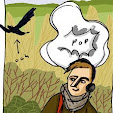

 Posts
Posts

